On the former site of Madrid’s Vicente Calderón Stadium, a new museum is taking shape at the meeting point of the city’s dense Pirámides neighbourhood and the open landscape of the Manzanares River. Designed by Luca Poian Forms and Frade Arquitectos, the EMT Museum is conceived as a public institution dedicated to Madrid’s transport history, but its architecture looks firmly towards what comes next.
The project emerged alongside the transformation of Madrid Río, occupying a site where the memory of the stadium is giving way to a new piece of civic infrastructure. Its geometry follows the surrounding urban alignments, while a translucent outer layer softens the building’s physical presence. From the outside, the museum has a deliberately filtered appearance, allowing light and silhouettes to move across its surface and keeping the boundary between exhibition space and city unusually open.
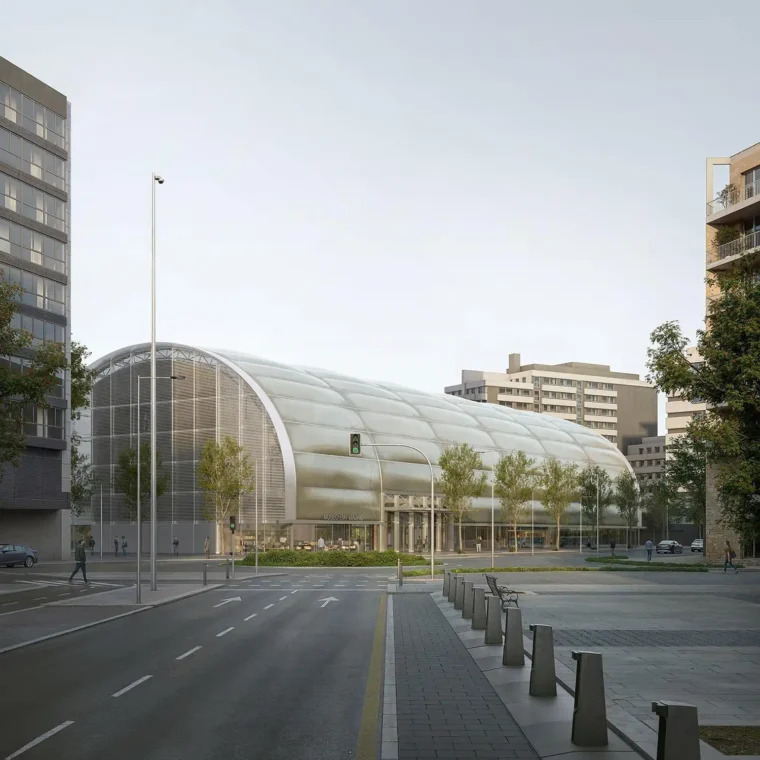
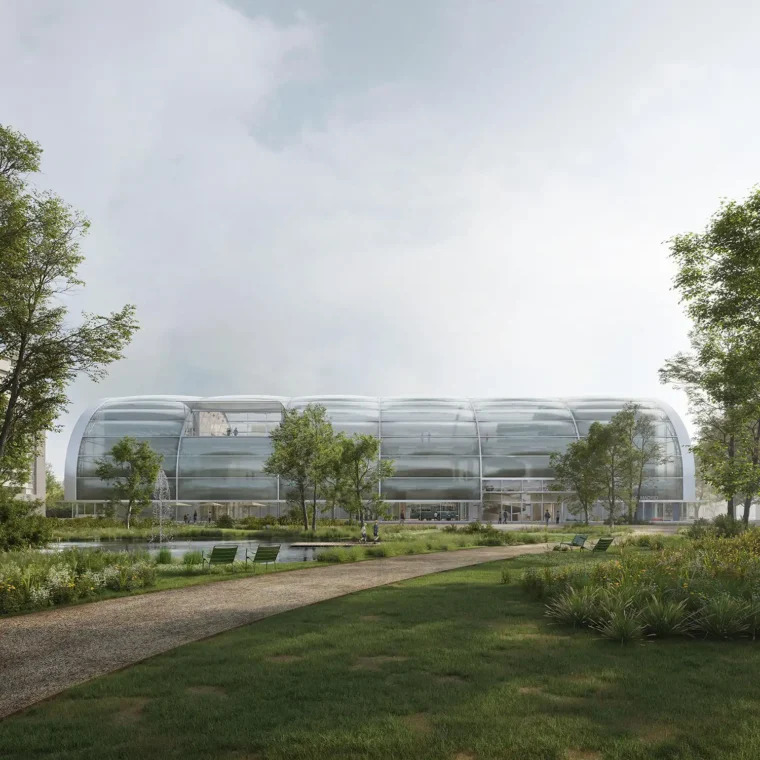
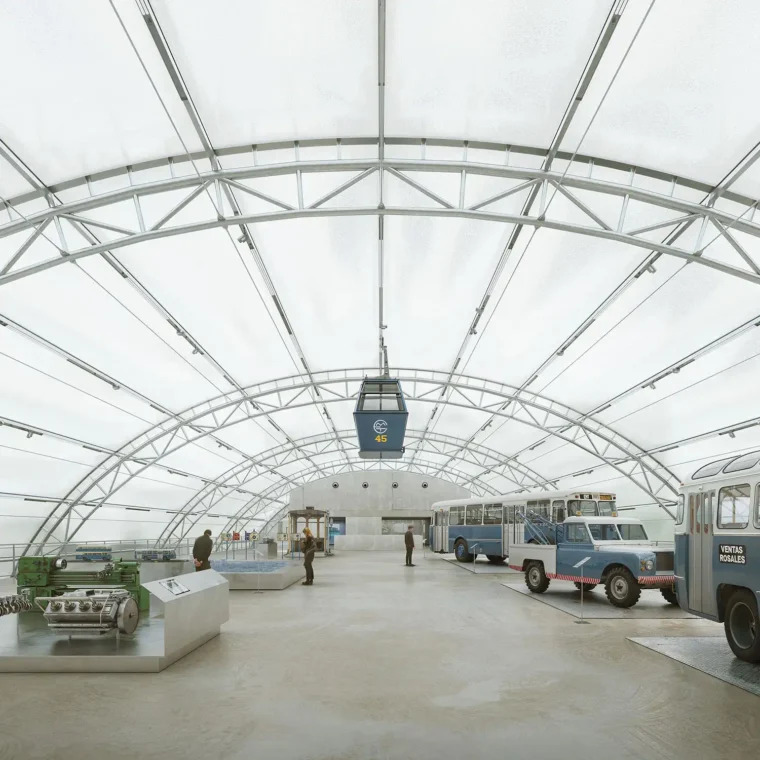
Inside, the scale of Madrid’s historic bus collection dictates the architecture. The building is structured around a reinforced-concrete bridge system combined with a lightweight metal frame, creating expansive exhibition halls without columns interrupting the movement of the vehicles. The buses become the fixed elements around which the museum unfolds, with generous volumes allowing visitors to encounter them at full scale rather than as isolated objects behind conventional displays.
The building’s most distinctive technical element is its ETFE air-cushion façade. The translucent material filters the intense Spanish sunlight, producing a softer illumination across the interior while contributing to the museum’s thermal performance. ETFE is also recyclable, adding another layer to the project’s environmental strategy without compromising the visual lightness of the envelope.
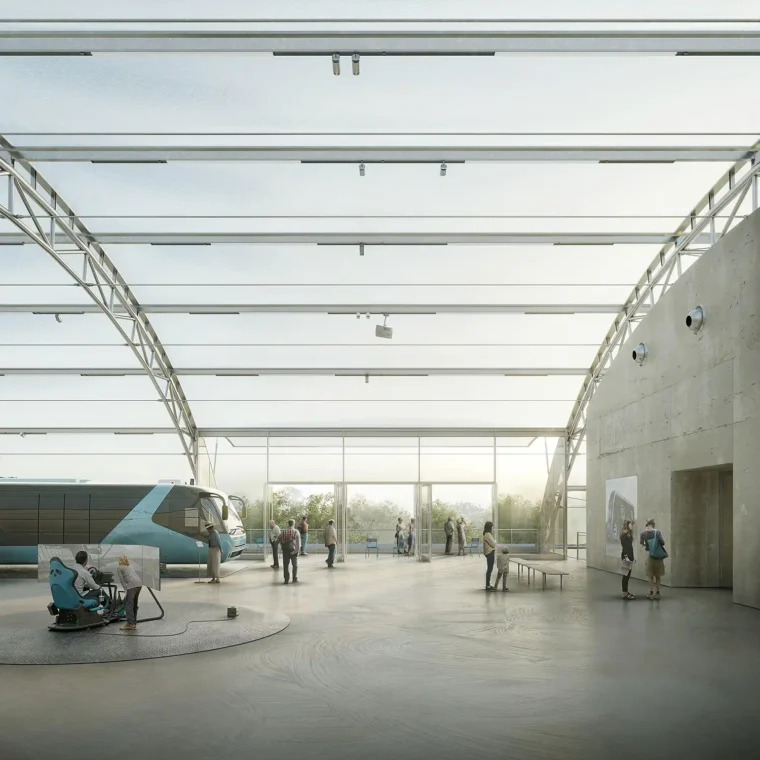
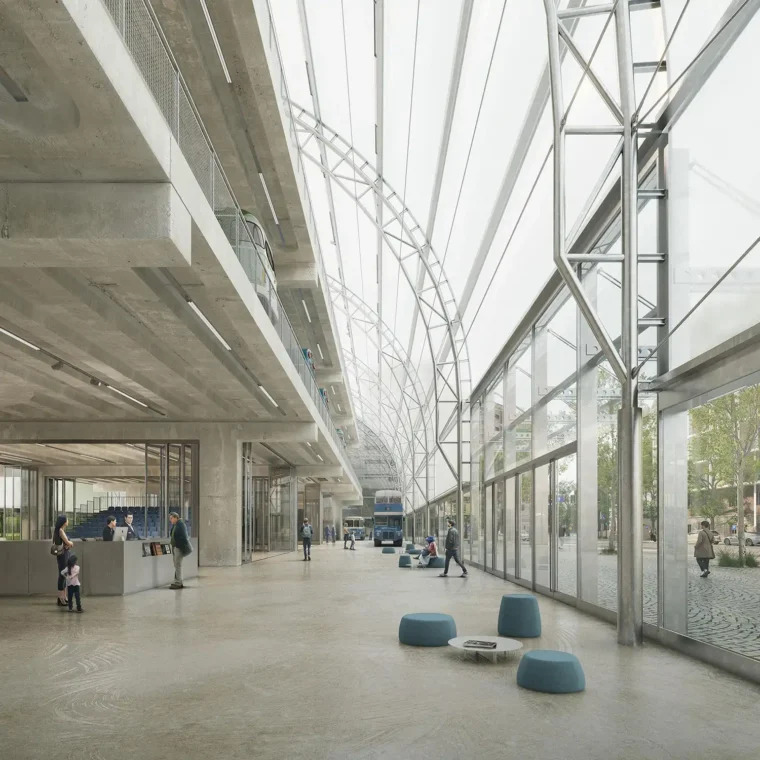
At ground level, the museum operates as more than an exhibition venue. Flexible areas accommodate workshops, conferences and digital installations, while separate visitor and service routes allow the building to handle different activities without disrupting public circulation. Augmented-reality elements and interactive displays extend the collection beyond the physical objects, allowing the history of EMT to be explored through movement, sound, information and digital interpretation.
The museum also places particular emphasis on the relationship between mobility and everyday life in Madrid. Its subject is not simply a collection of vehicles, but the infrastructure that has connected neighbourhoods, carried generations of residents and continuously altered the way the city is experienced.
By placing this history on a site already marked by major urban change, Luca Poian Forms and Frade Arquitectos give the EMT Museum a broader role. The project brings together transport, technology, public space and collective memory within a building designed to remain adaptable. Madrid’s buses become the starting point, but the architecture leaves room for the story of urban mobility to keep moving forward.
Luca Poian Forms online:
Website
Instagram
Frade Arquitectos online:
Website
Instagram
Images: (c) Filippo Bolognese