On the banks of the Yellow River, the Zhengzhou Grand Theater takes the form of a vast architectural vessel. Designed by the Architectural Design and Research Institute of Harbin Institute of Technology, the building translates the image of a boat carrying art into a civic structure that rises across the city with an unmistakable silhouette.
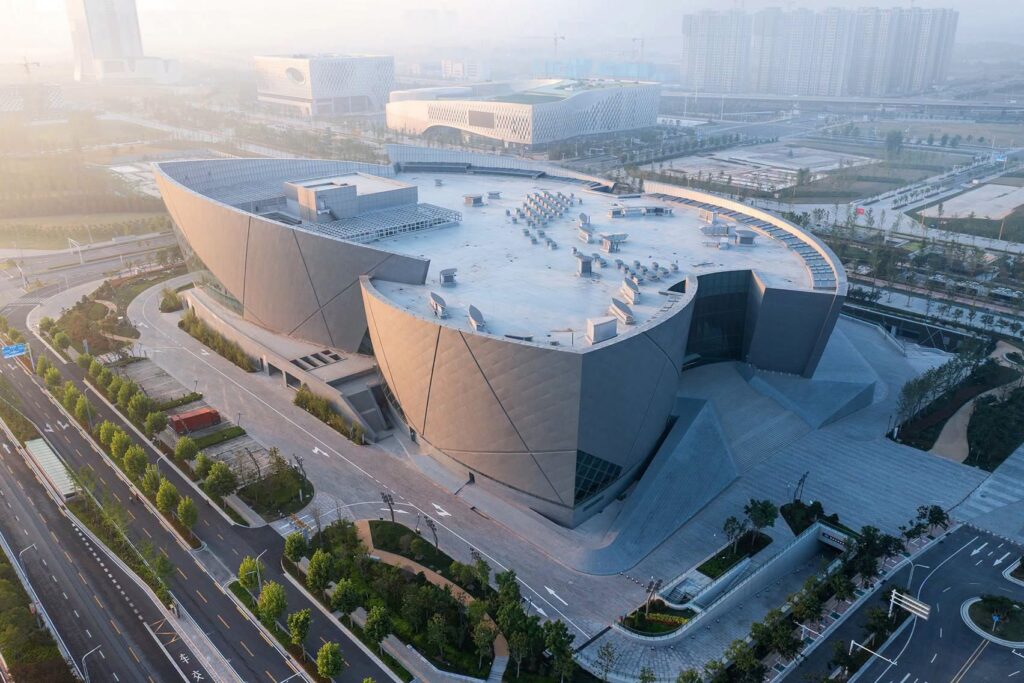
The concept, described as “A Boat of Art Sailing on the Yellow River,” runs through the building’s curved profile and expansive façade. Sweeping surfaces suggest sails caught in motion, while layered lines and changing angles give the exterior a sense of direction. The reference to the river is embedded in the architecture itself, tying the project to the geography and cultural history of China’s Central Plains.
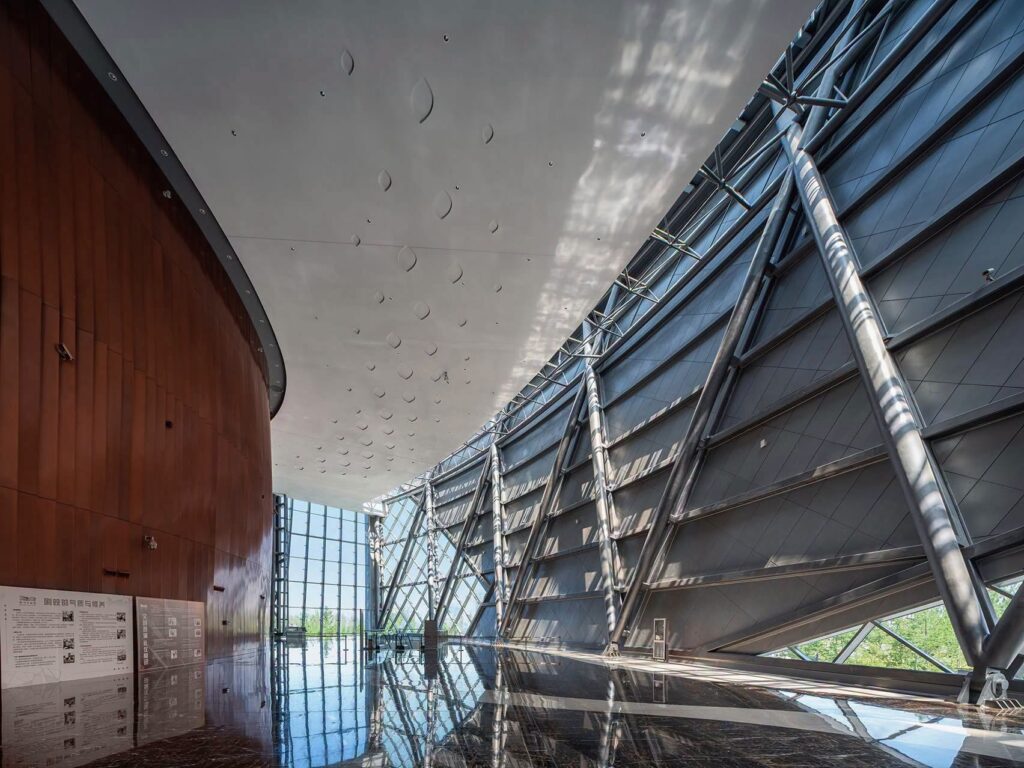
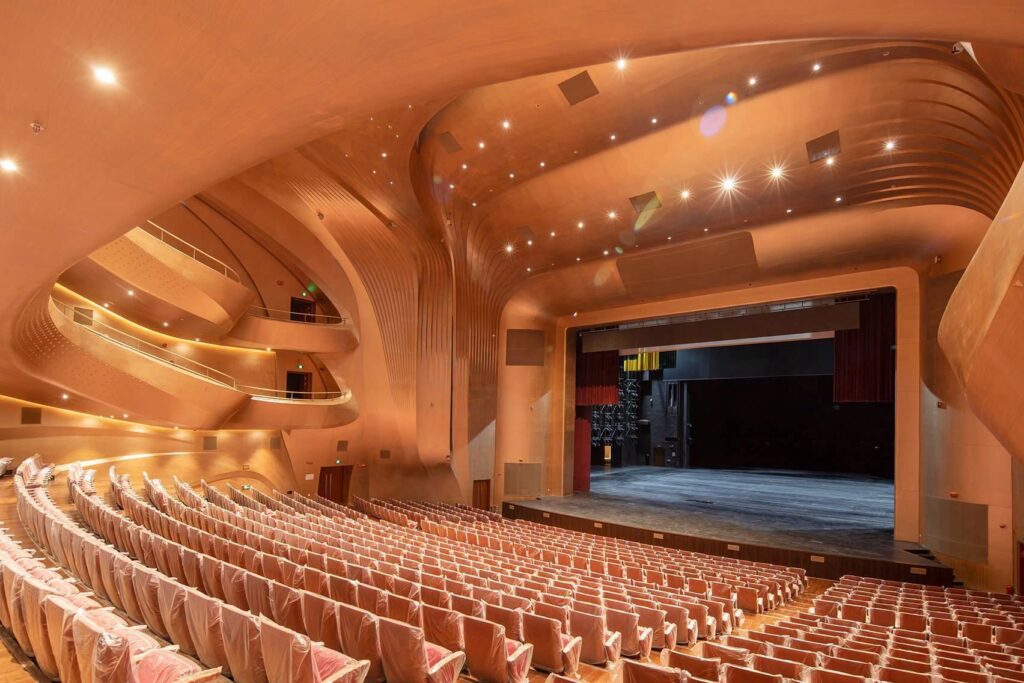
Completed in 2020, the 127,740-square-metre complex contains four principal performance venues: a 1,687-seat theatre, an 884-seat concert hall, a multifunctional hall and an opera rehearsal hall. Bringing these programmes together required the architecture to solve a considerable set of practical problems, from audience circulation and acoustic separation to structural coordination and fire safety.
Much of what gives the building its distinctive appearance is made possible by an equally ambitious structural system. Exterior steel trusses work alongside a roof grid and reinforced-concrete supports, allowing the large-span spaces to remain open while carrying the sweeping geometry of the envelope. The engineering is largely concealed within the finished composition, leaving the curved forms to dominate the experience.
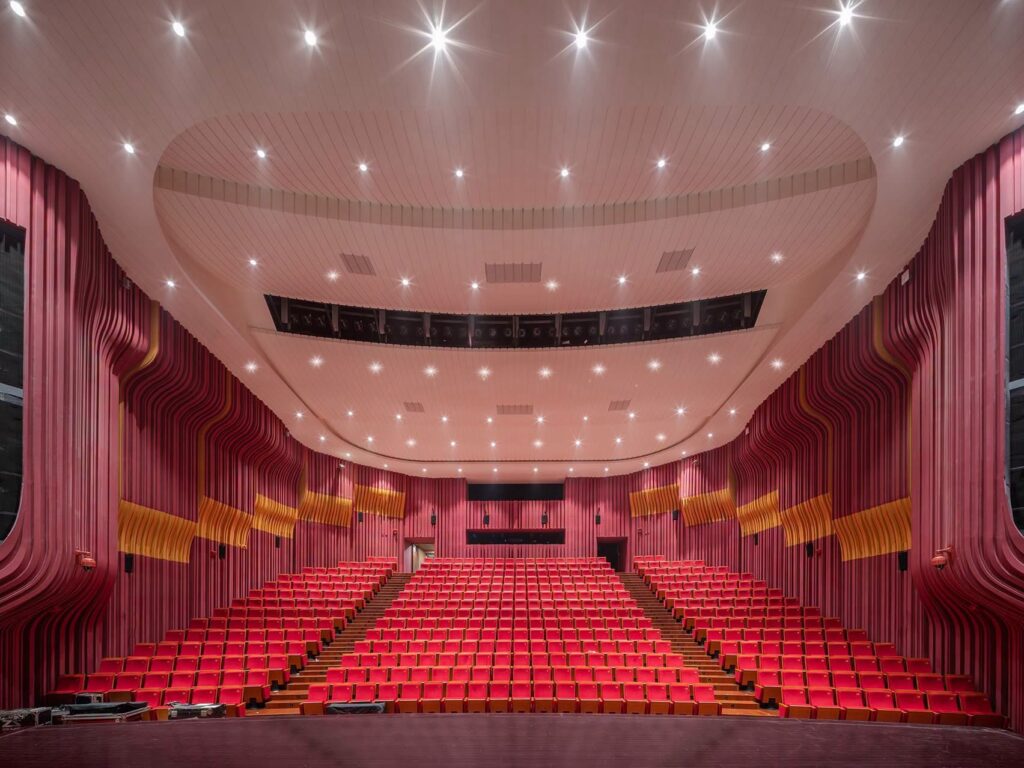
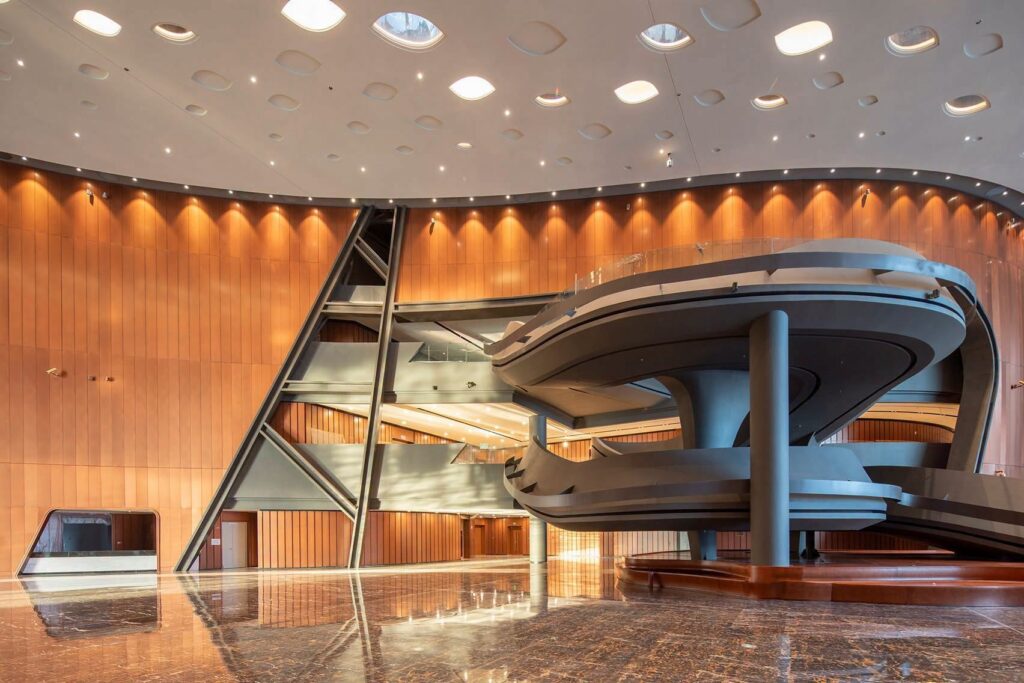
After dark, the building takes on another character. Light from the interior passes through the extensive glazed façade, illuminating the curved structures and turning the theatre into a glowing presence along the riverfront. Its architectural language becomes especially legible at night, when the forms associated with sails appear suspended against the darkness.
Zhengzhou Grand Theater ultimately operates on several scales at once: as a group of highly specialised performance spaces, as a major feat of structural coordination and as a public landmark rooted in the landscape of the Yellow River. Its ship-like form gives the complex a clear identity, while the machinery required to make that gesture possible remains embedded beneath the surface.
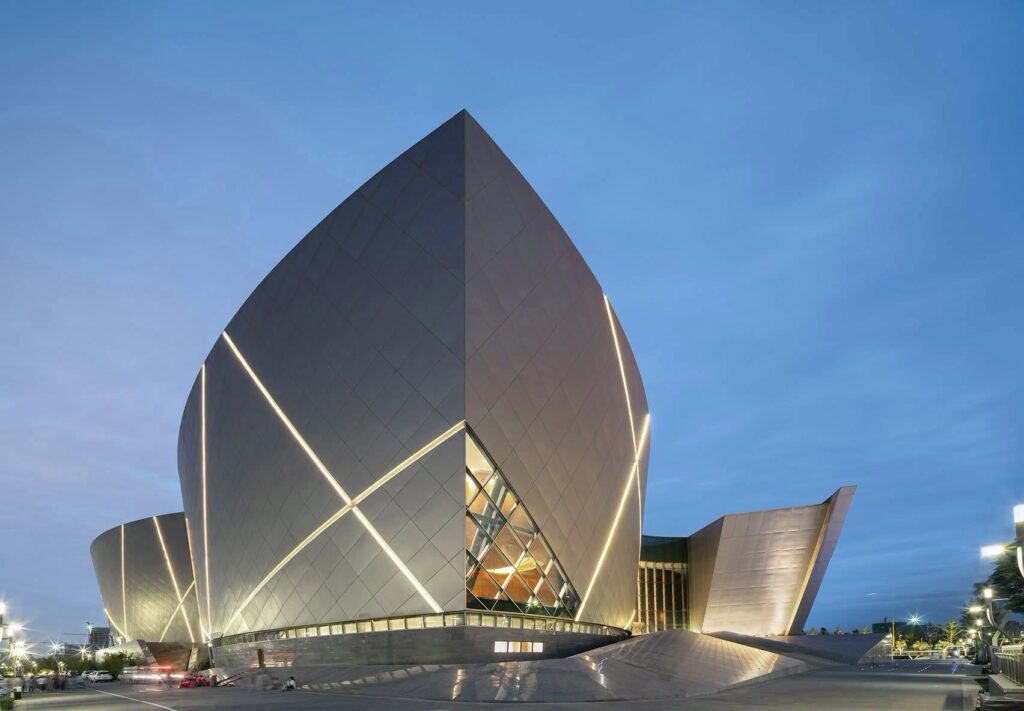
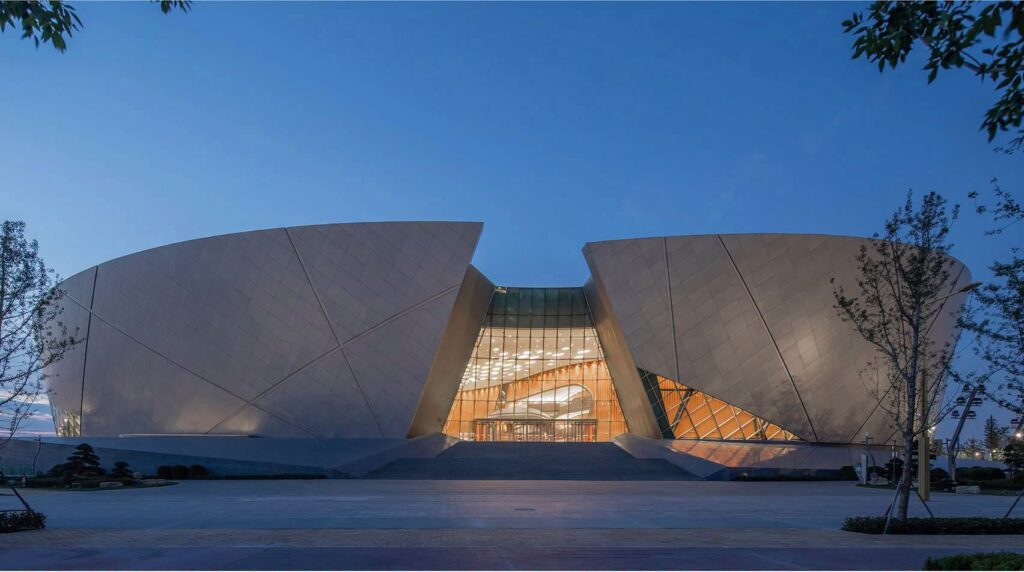
Photo: (c) Wei Shuxiang, TimeRaw Studio