Alyx, a patented junction system developed by Futurewave Lab, proposes a different way to build bicycle frames, beginning with the point where their components meet. Using metal 3D printing, the system produces biomimicry-inspired connectors that join aluminium tubes without welding or conventional moulds. Each junction is designed to fit into the next, turning frame assembly into a precise, modular process.

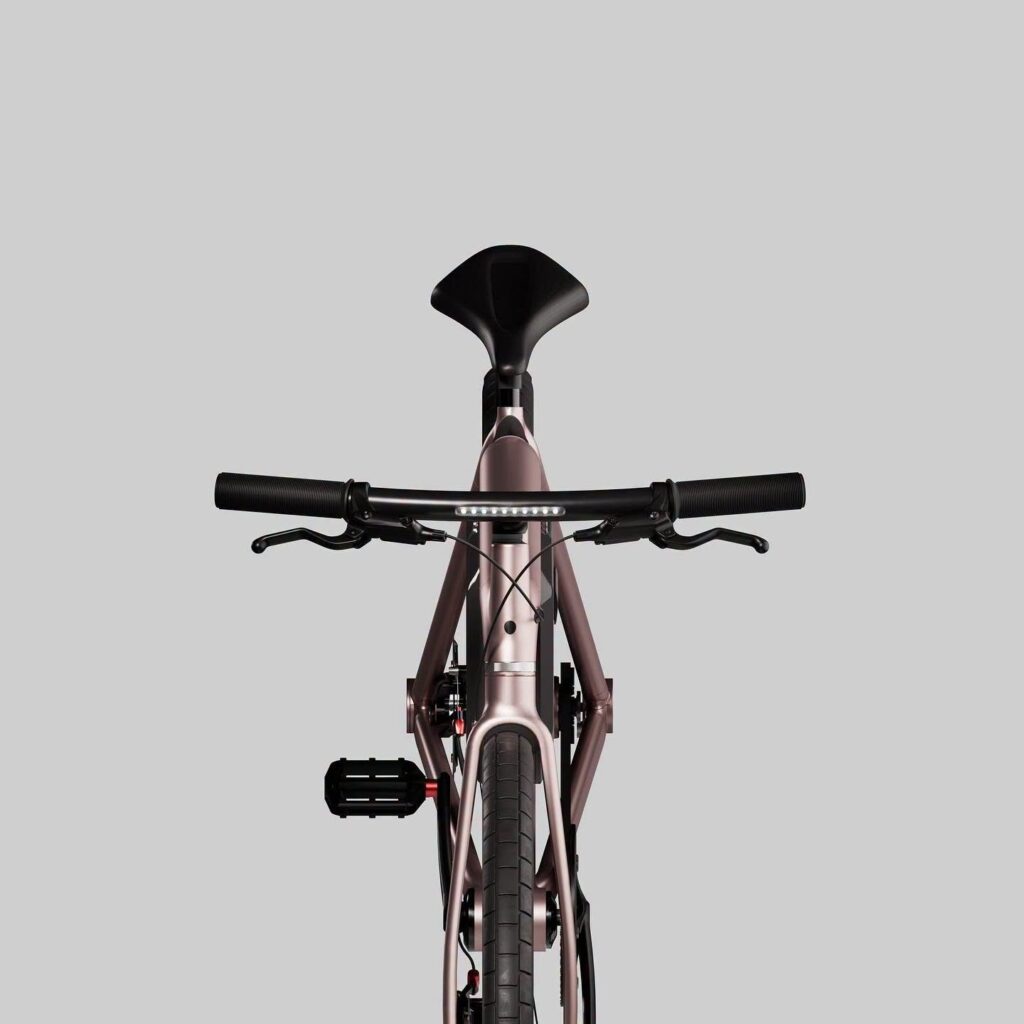
The technology changes more than the manufacturing sequence. By separating the frame into standardised components, Alyx makes individual parts easier to replace and allows the bicycle to adapt as its owner grows. A bike originally configured for a child can eventually accommodate an adult, retaining selected components while others are exchanged. The frame becomes a system with room for change, extending the usefulness of the original product.
Generative design tools helped shape the geometry of the junctions, drawing on structural principles found in nature. Their forms respond to the requirements of additive manufacturing while maintaining the precision needed for the final assembly. The resulting connectors give the frame its own visual language, making the engineering behind the bicycle visible at the points where its structure comes together.


That approach extends to the electric system. Alyx leaves the battery exposed, treating it as a defining part of the bicycle’s appearance rather than something to conceal inside the frame. Its presence establishes a direct relationship between the object and the technology that powers it, giving the design a more technical, assertive character.
By reconsidering the junction itself, Futurewave Lab opens up questions about how bicycles are manufactured, repaired and adapted over time. Alyx places modularity at the centre of the process, suggesting a production model in which a bicycle can evolve through component changes instead of being replaced in its entirety.

