During Milan Design Week, Poliform took over the historic Palazzo Clerici with an installation that blurred the boundaries between exhibition, architecture, and lived experience. Rather than presenting its latest collections through a traditional showroom format, the Italian design brand transformed the 18th-century palazzo into a carefully choreographed environment where furniture, light, materiality, and atmosphere unfolded as part of a unified spatial narrative.
Known for its richly decorated interiors and celebrated frescoes by Giambattista Tiepolo, Palazzo Clerici provided a dramatic counterpoint to Poliform’s restrained contemporary language. Throughout the piano nobile and extending into the courtyard, minimalist forms and soft tonal palettes interacted with ornate ceilings, aged textures, and historical ornamentation, creating a dialogue between modern design and the layered history of the space.
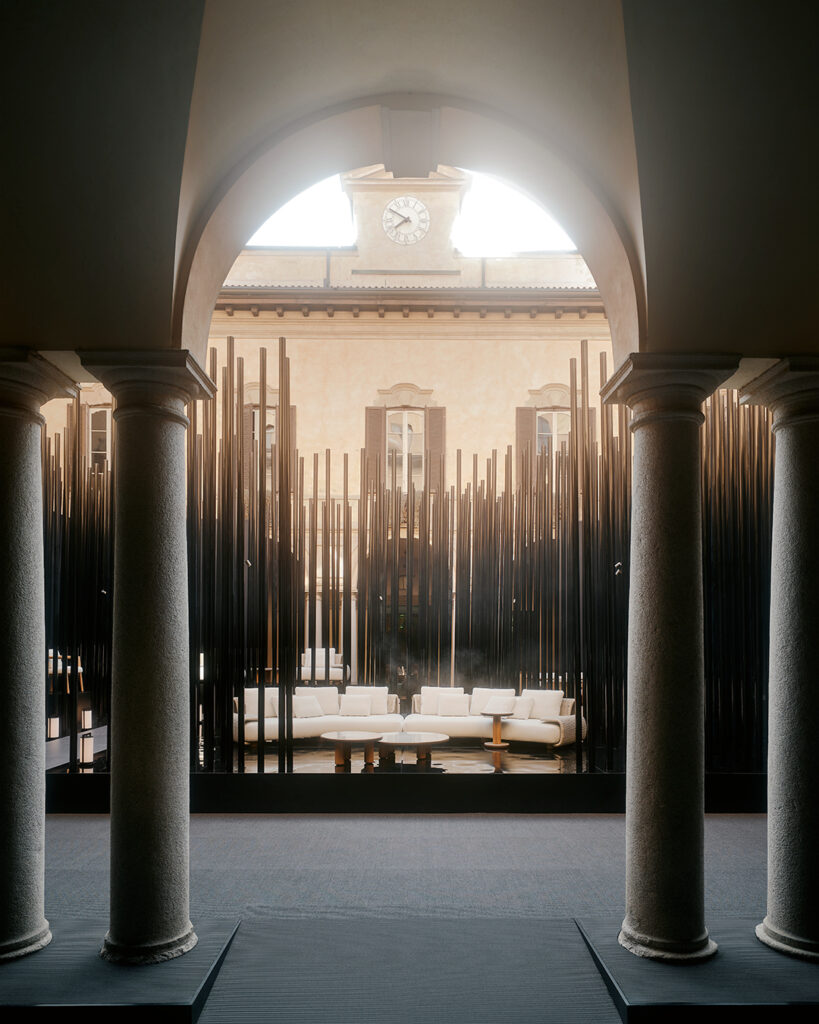
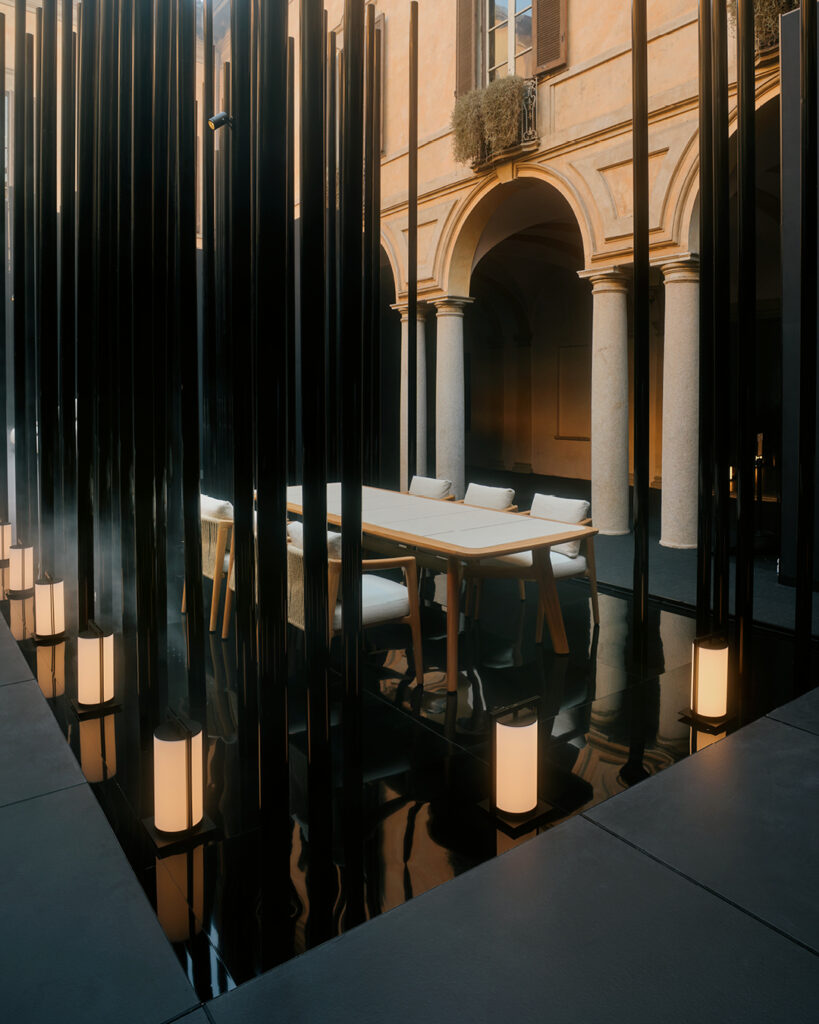
The presentation introduced a wide range of new collections spanning interiors, outdoor furniture, lighting, and kitchen systems. Designers Jean-Marie Massaud and Emmanuel Gallina returned with new contributions, while studio Yabu Pushelberg collaborated with the brand for the first time. Together, the projects reflected a shared emphasis on tactile materials, sculptural silhouettes, and understated elegance, qualities long associated with Poliform’s design identity.
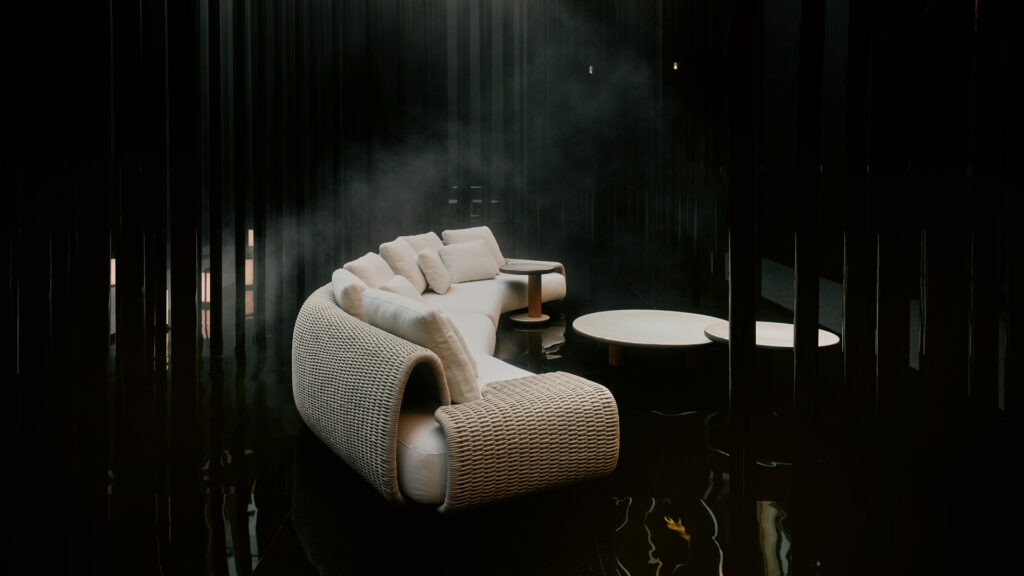
One of the most atmospheric moments of the installation unfolded in the courtyard, where Milan-based studio Studioutte created “Multitude,“ a large-scale site-specific intervention conceived as an abstract urban landscape. A dense arrangement of towering aluminum poles, reminiscent of bamboo forests, defined the space alongside drifting smoke, soft lighting, and narrow illuminated pathways. The installation carried a meditative quality, evoking a sense of stillness and ritual while subtly referencing East Asian landscapes through a minimalist lens.
Within this immersive environment, Poliform’s outdoor collections appeared almost suspended in space. Organic forms, muted tones, and lightweight compositions merged naturally with the installation’s dreamlike atmosphere, reinforcing the idea of design not as isolated objects, but as part of a broader sensory and architectural experience. Through its intervention at Palazzo Clerici, Poliform once again positioned itself at the intersection of contemporary living, craftsmanship, and spatial storytelling.
Poliform online:
Website
Instagram
Facebook
Youtube
Photo: (c) courtesy of Poliform