Aircraft hangars are rarely conceived as spaces of architectural expression. Built for performance, efficiency, and technical precision, they are typically environments where function leaves little room for atmosphere. The AEROTIM Hangar challenges that assumption through a design that translates the discipline of aviation into a highly refined industrial environment. Conceived by Ukrainian designer Dan Vakhrameyev, co-founder of +kouple, the project serves both as an aircraft maintenance facility and as a communal operational base for a team whose culture extends far beyond conventional aviation.
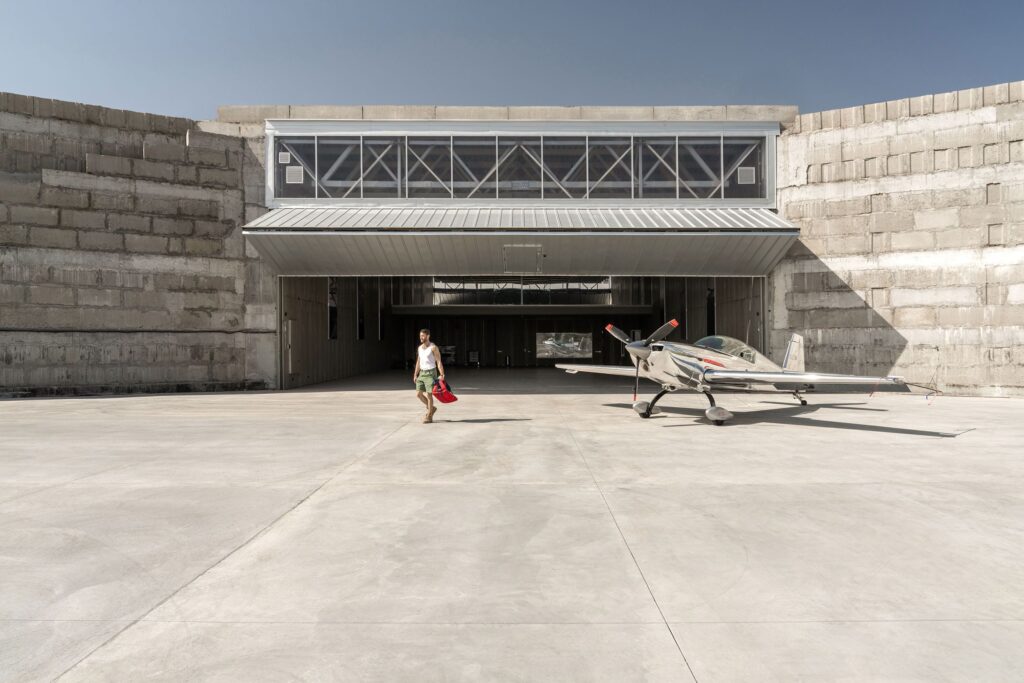
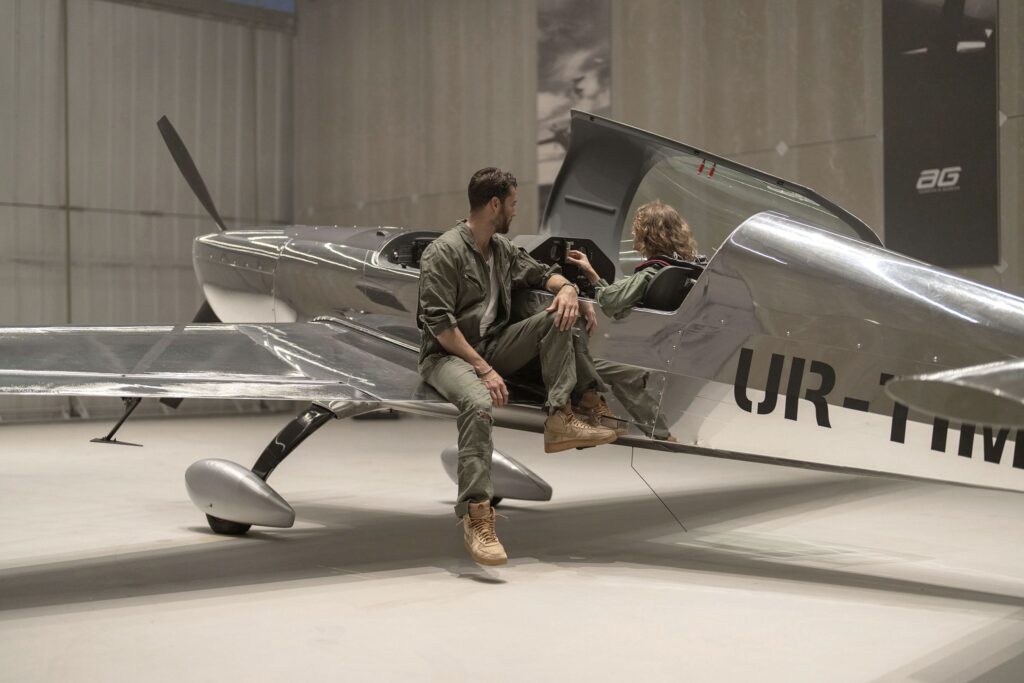
Founded by aerobatic pilot Timur Fatkullin, AEROTIM brings together athletes and creatives working across aerobatics, skydiving, and freestyle motocross. That multidisciplinary identity shaped the architectural brief from the outset. Rather than envisioning a purely utilitarian workspace, the project sought to create an environment reflecting discipline, performance, and a distinct design sensibility rooted in precision.
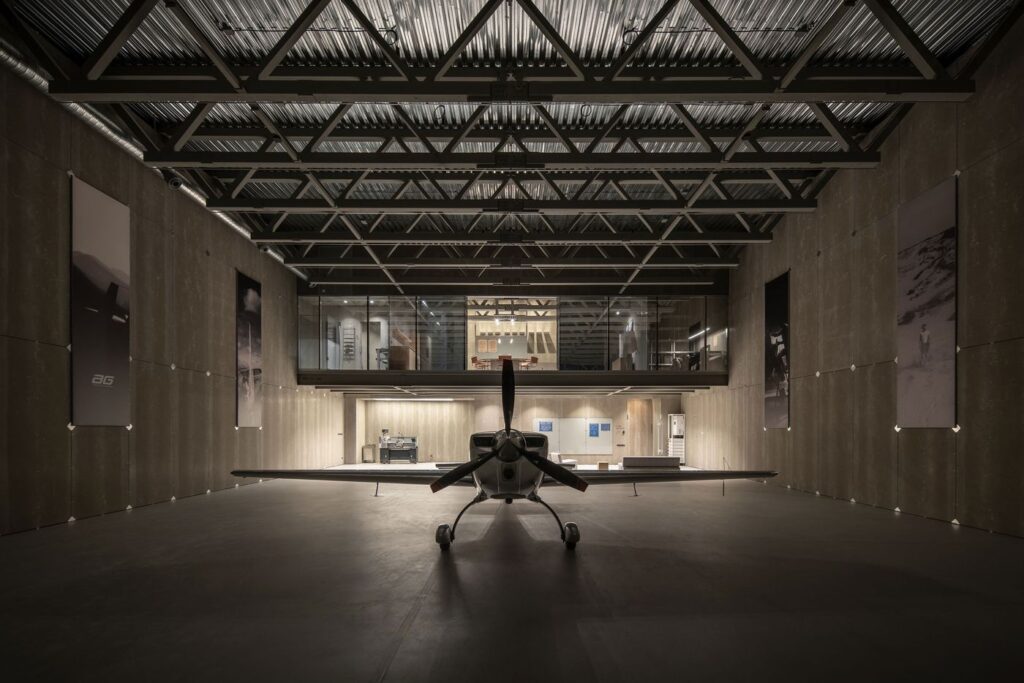
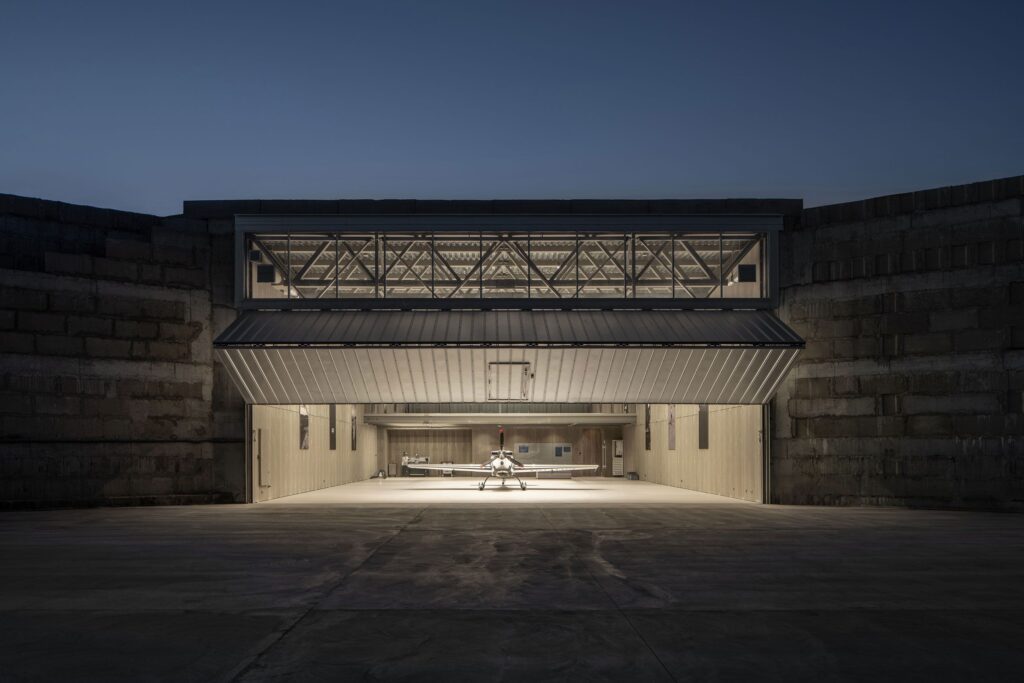
The architecture embraces a deliberately restrained industrial language. Inside the main hangar, exposed steel trusses, corrugated metal roofing, visible air ducts, and raw material surfaces establish an uncompromising structural clarity. A full-height entrance gate clad in unfinished zinc reinforces the building’s mechanical logic, while translucent polycarbonate sections introduce natural light deep into the expansive volume. Large cement-bonded particle boards line the walls, their exposed seams subtly echoing the fastening systems of aircraft fuselages. The same material reappears in doors, shelving, storage units, and worktables, creating a consistent visual vocabulary grounded in utility.
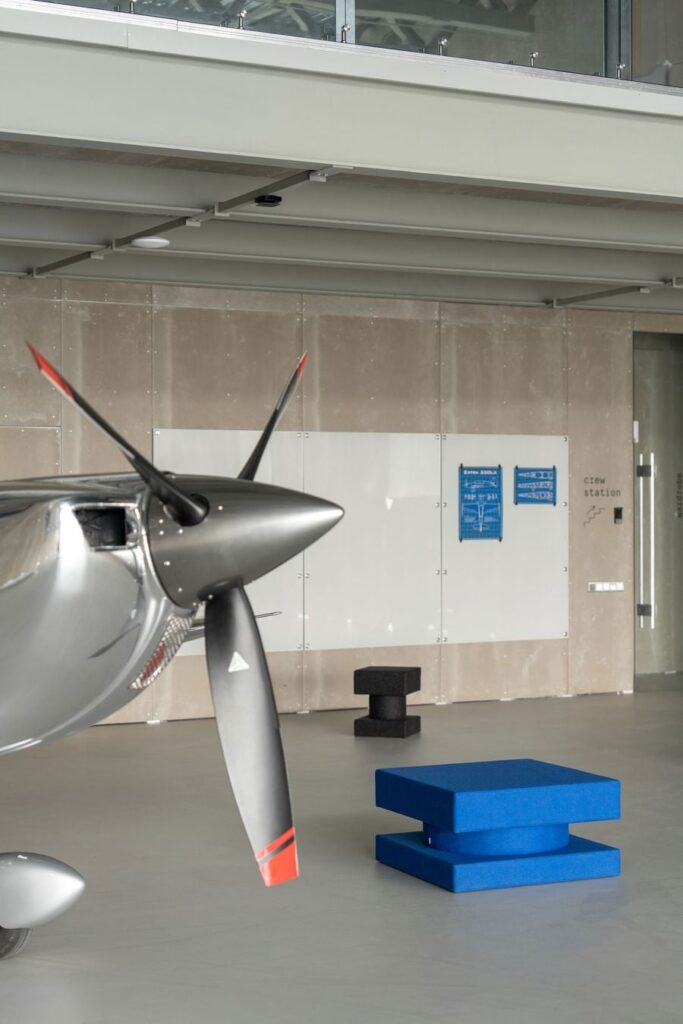
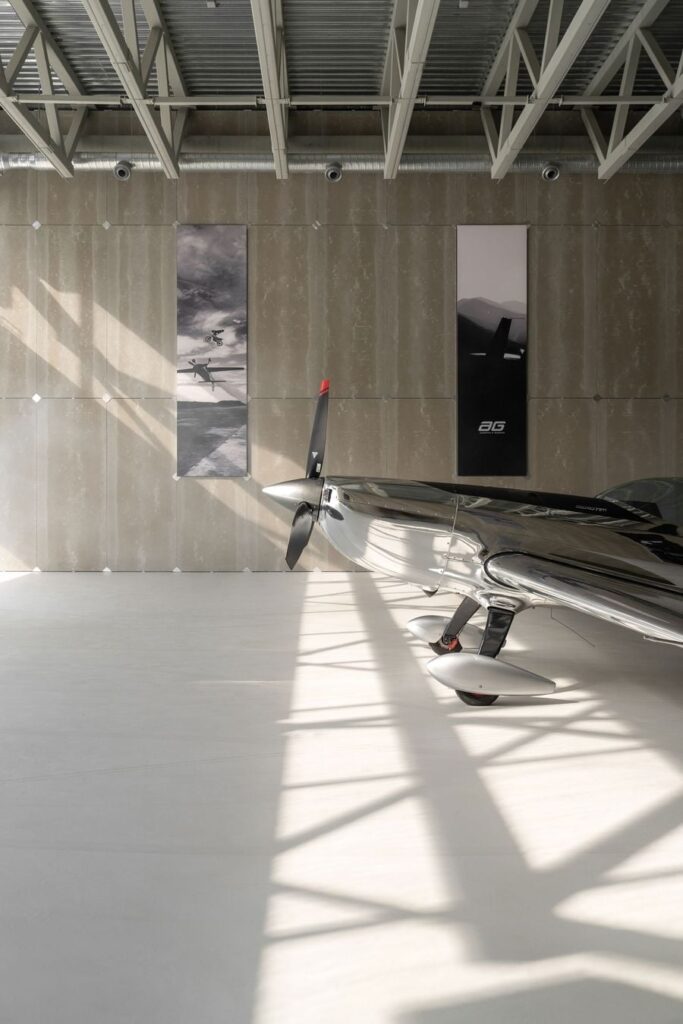
Yet despite its industrial rigor, the space is far from sterile. Large backlit photographic installations integrated directly into the walls reflect AEROTIM’s culture and ambitions, introducing narrative and atmosphere without disrupting the architectural order. Functional elements such as glass planning boards for technical notes and operational coordination are seamlessly embedded into the environment, reinforcing the project’s commitment to clarity and workflow.
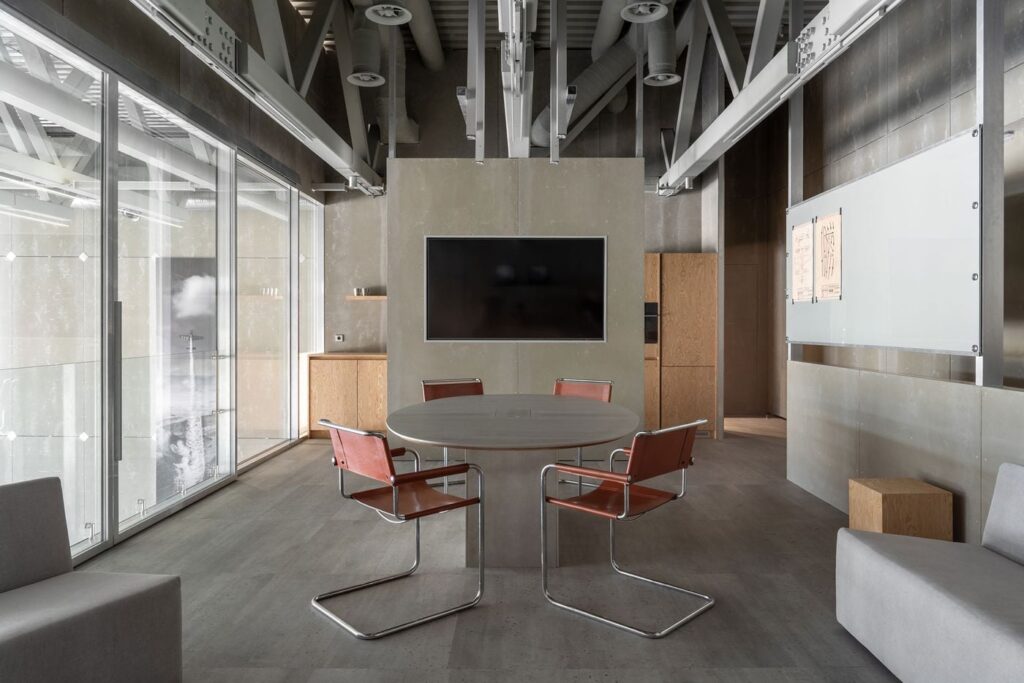
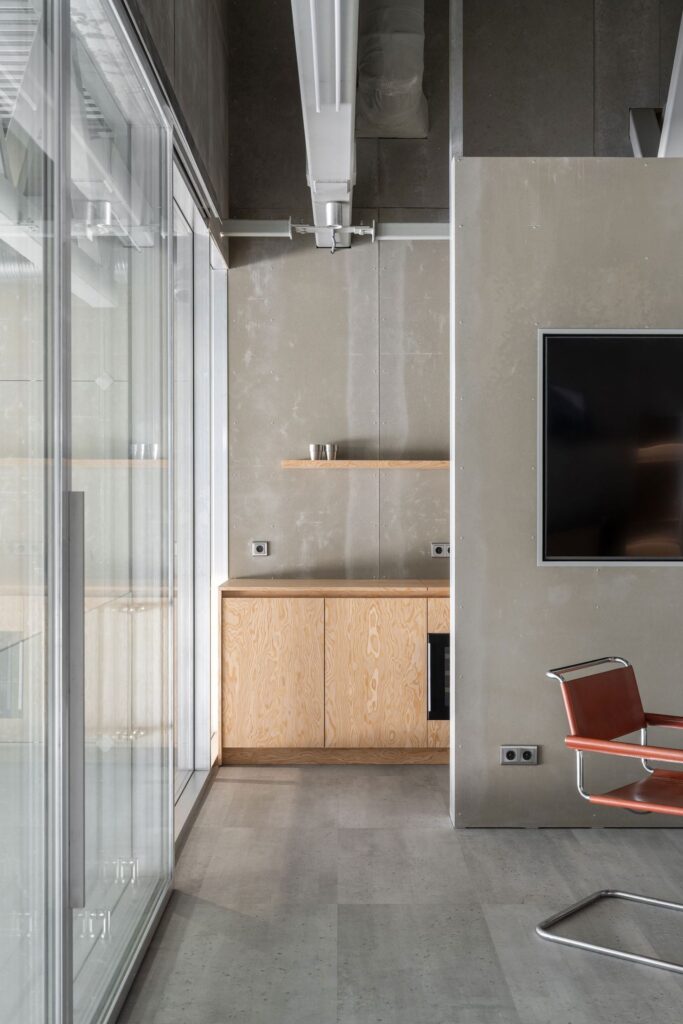
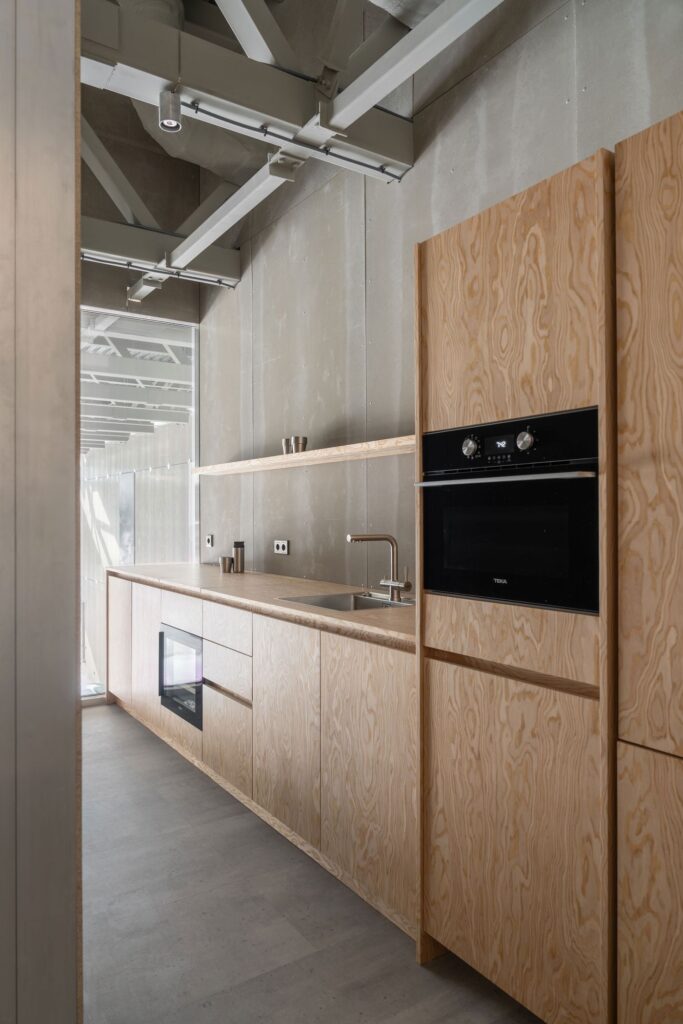
Above the hangar floor, a fully glazed second-level crew station overlooks the entire space. This elevated zone functions as the social and strategic heart of the project, combining briefing areas, communal seating, kitchen facilities, and compact workspaces. A muted material palette of beige surfaces, plywood cabinetry, and carefully selected furnishings introduces warmth without diluting the industrial character. Vintage leather seating adds a subtle note of softness, while custom-designed aluminum furniture fabricated from leftover wall-profile materials reinforces the project’s ethos of intelligent resourcefulness.
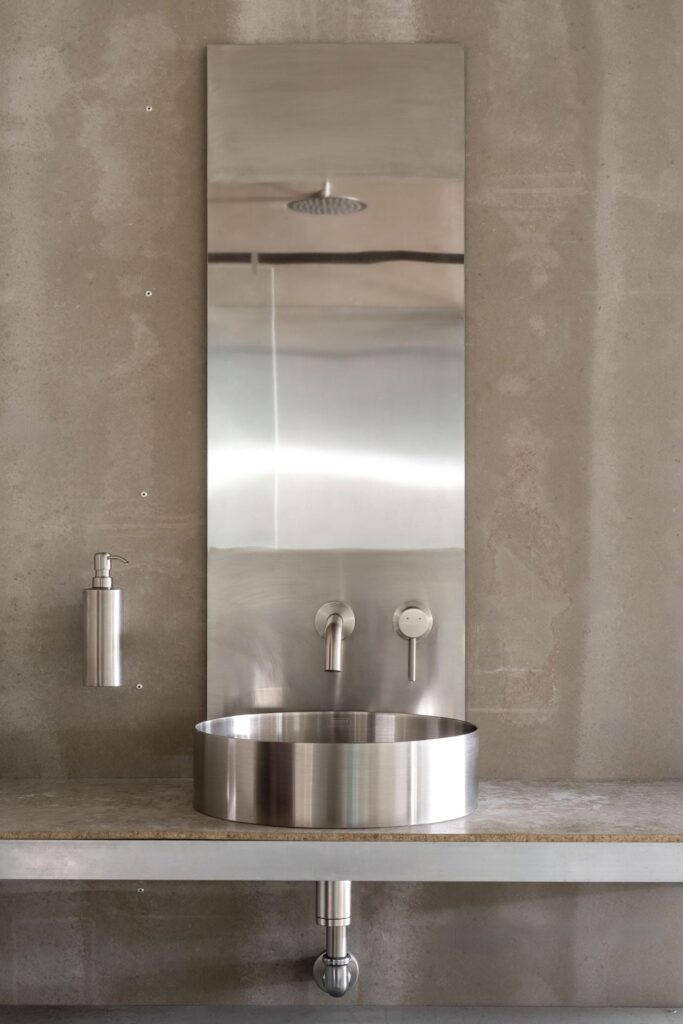
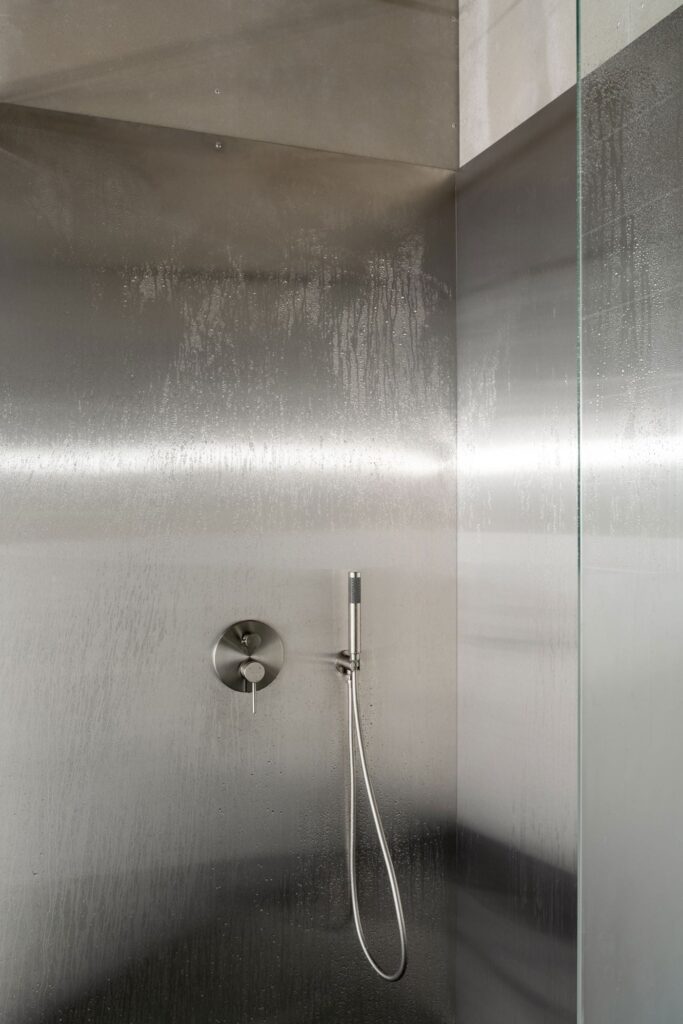
The adjacent private areas, including sleeping quarters, changing rooms, and rest spaces, maintain the same disciplined design language. Acoustic upholstered panels and restrained integrated lighting support recovery between flights, balancing performance with comfort. In one of the project’s most unexpected gestures, a stainless-steel shower positioned against the glass façade offers direct views onto the aircraft below, transforming a purely functional necessity into a striking spatial experience.
With the AEROTIM Hangar, +kouple redefines the typology of the aviation workspace. What emerges is not simply a maintenance facility, but a carefully orchestrated environment where engineering precision, minimalist design, and the culture of flight intersect with unusual sophistication.
+kouple online:
Website
Facebook
Instagram
Photo: (c) Andriy Bezuglov