Around 20 kilometres from Hanoi, within the Quang Minh Industrial Zone, the Huy Hoang Lock Factory occupies a three-hectare site dedicated to one of Vietnam’s leading lock manufacturers. Designed by Baumschlager Eberle Architekten, the complex brings together three production buildings: two operating with German technology and a third using Italian systems, all connected by a multifunctional building at the front of the site.
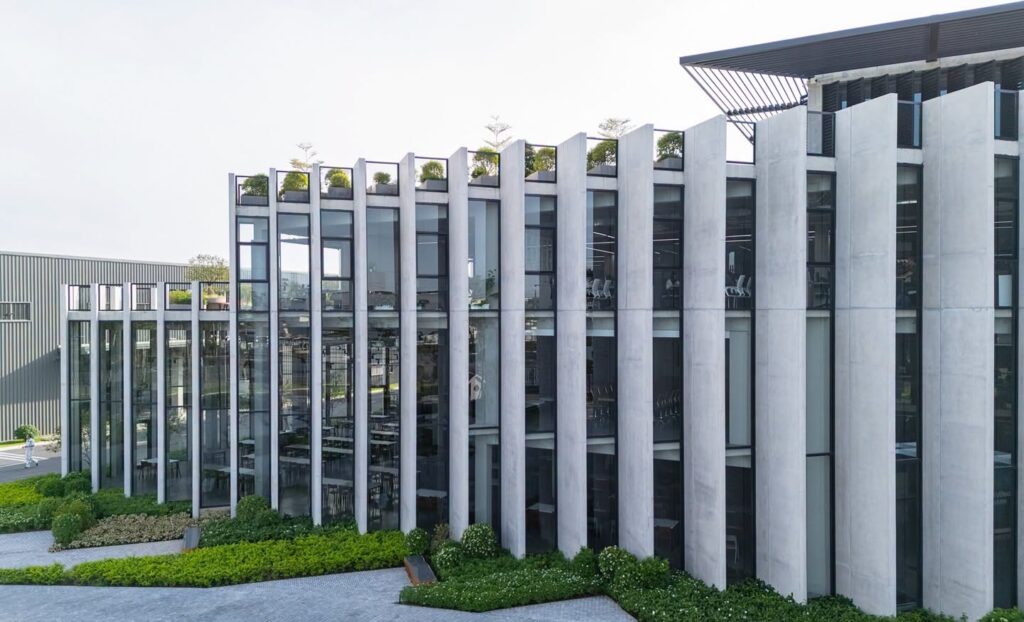
The newest factory was conceived as more than an addition to an industrial complex. It was intended to become a visible expression of Huy Hoang‘s four decades of development, a building capable of representing innovation while remaining grounded in the company’s long-term commitment to stability.
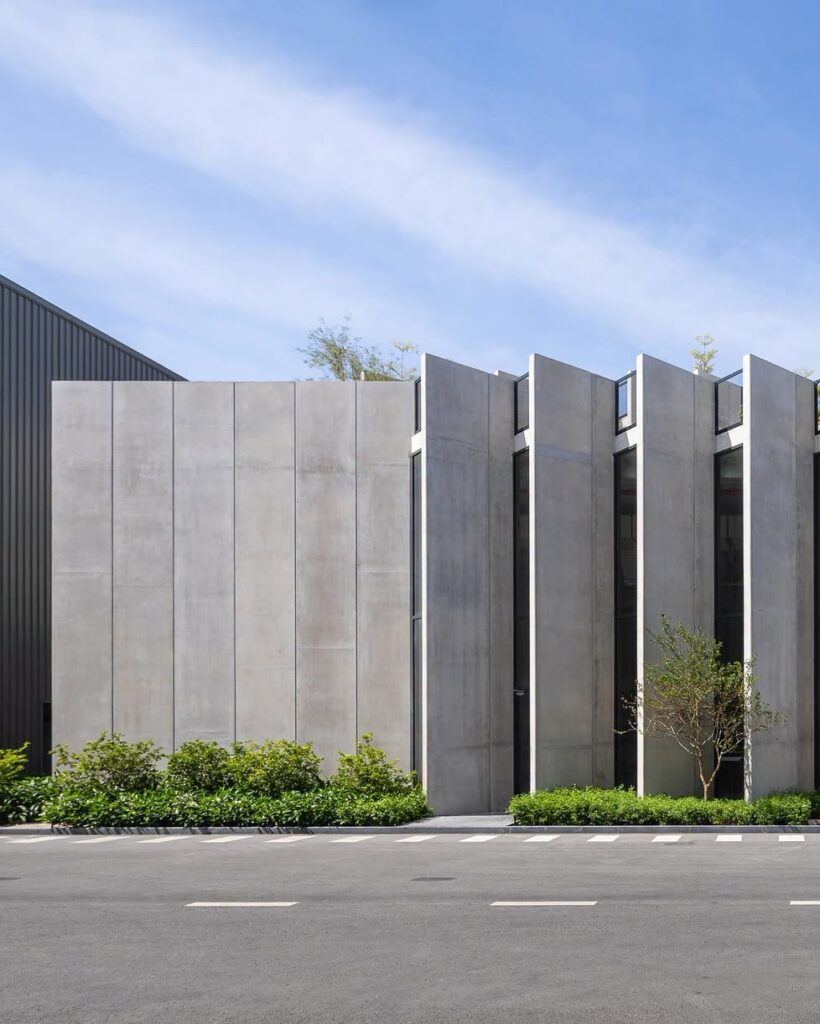
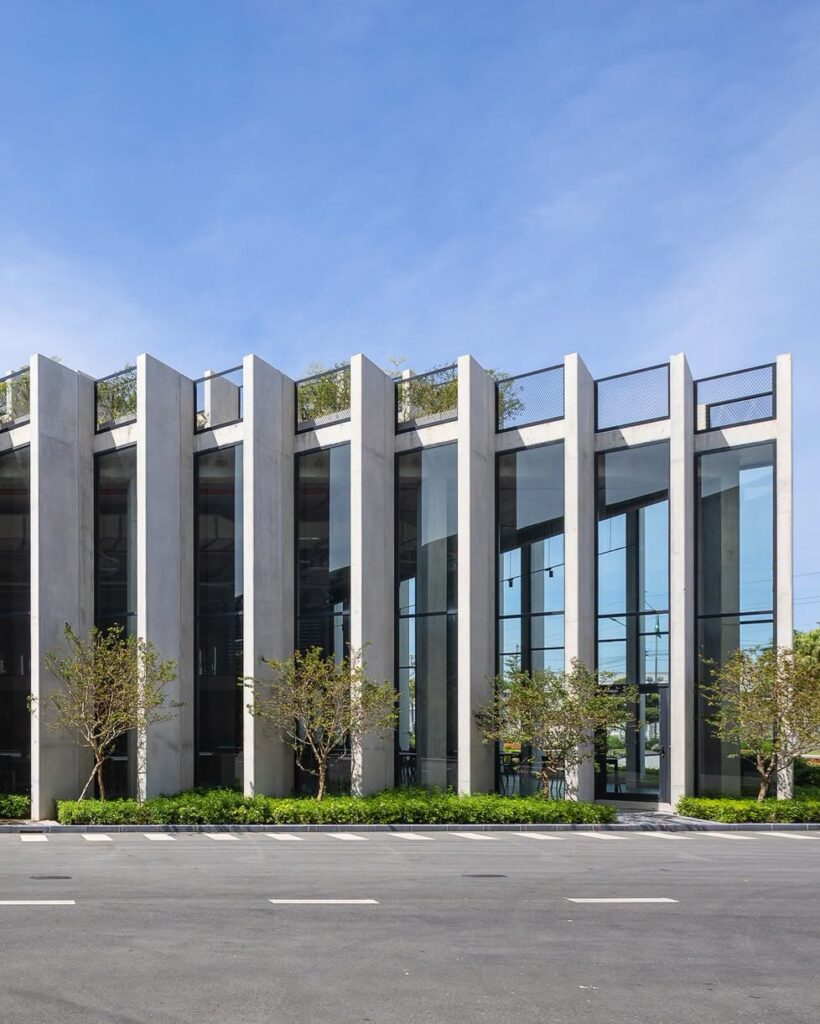
That ambition is reflected in the project’s environmental standards. The factory achieved Gold LEED certification both in its construction and in its manufacturing operations, while its core-and-shell structure creates a flexible interior capable of adapting to changing production requirements.
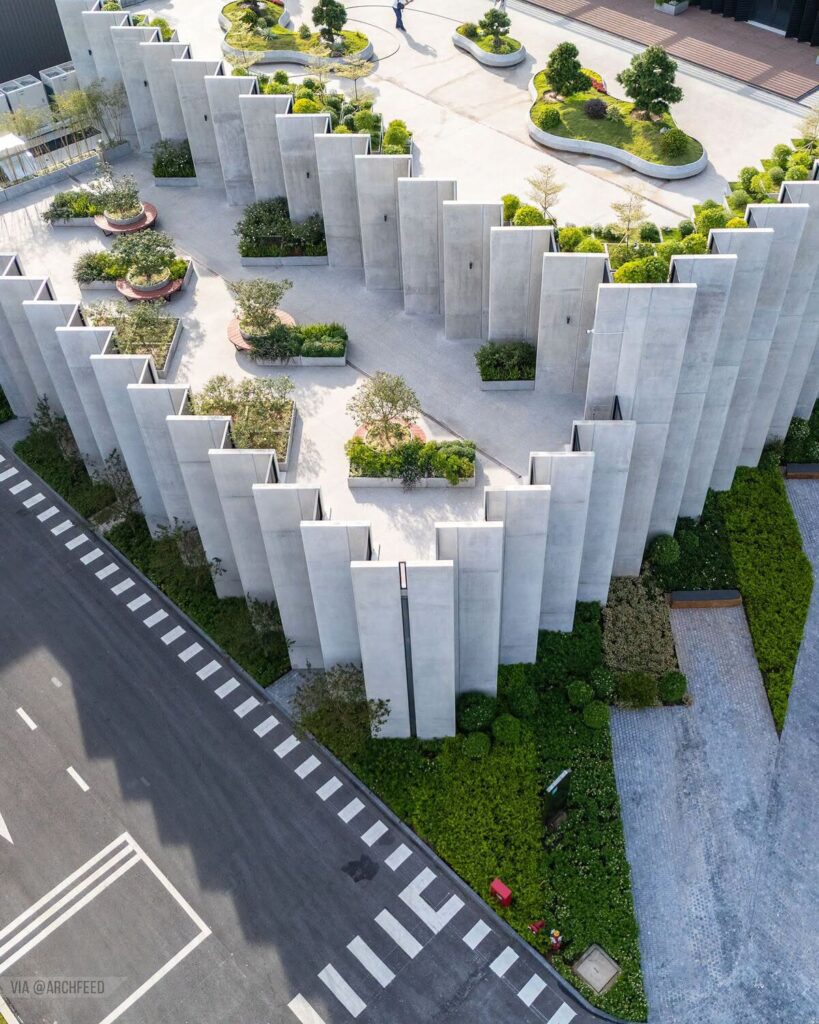
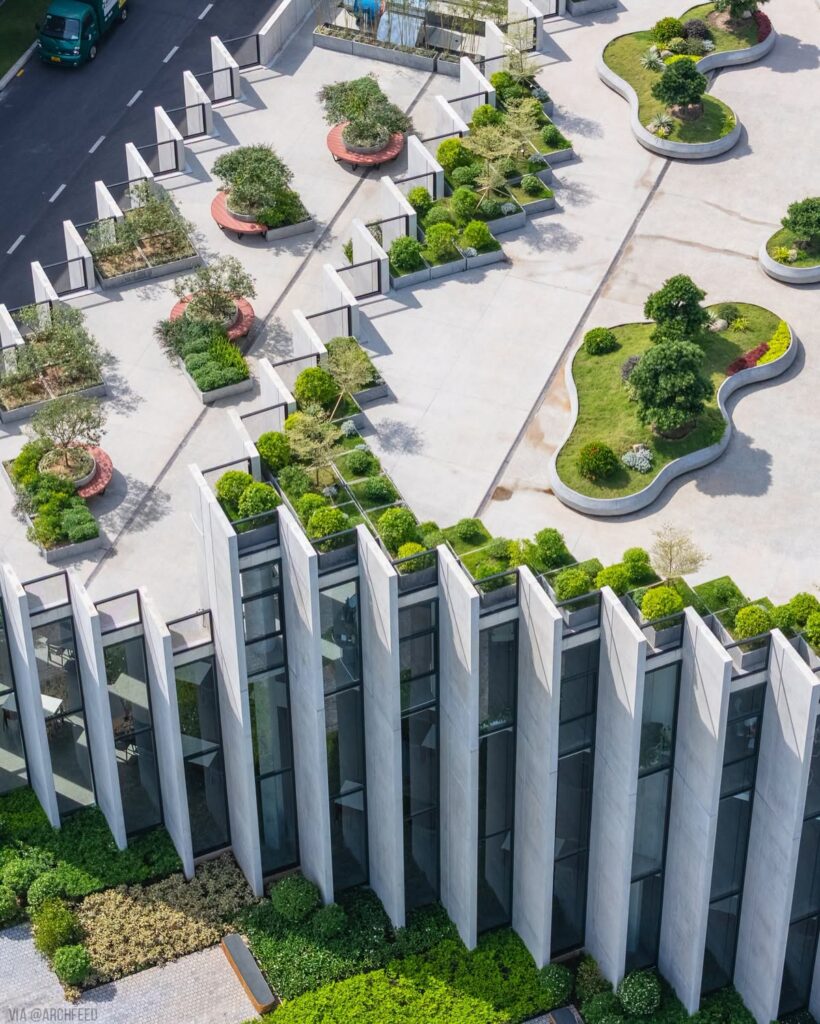
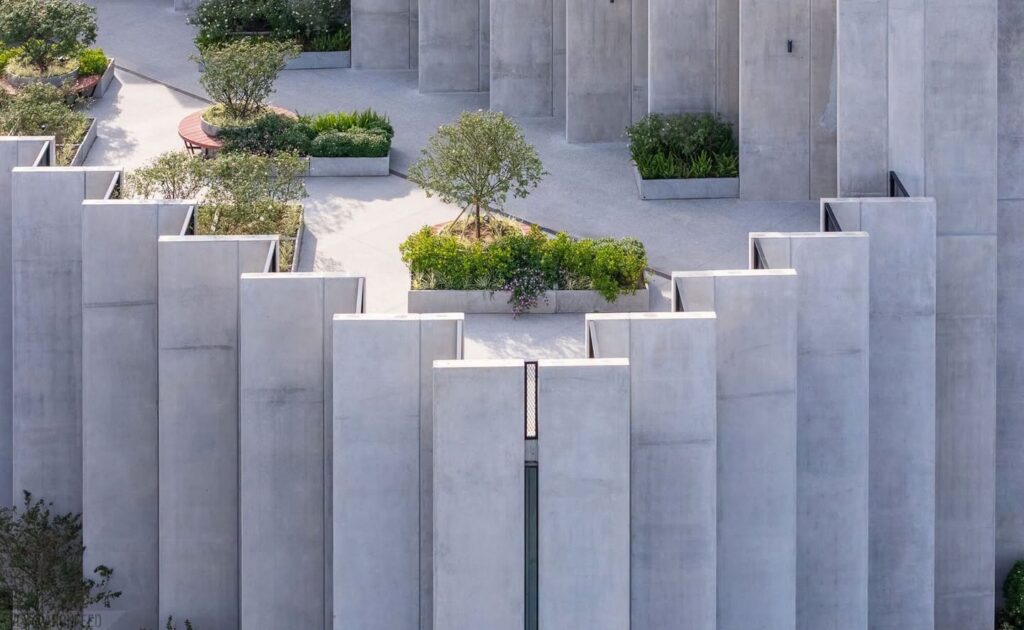
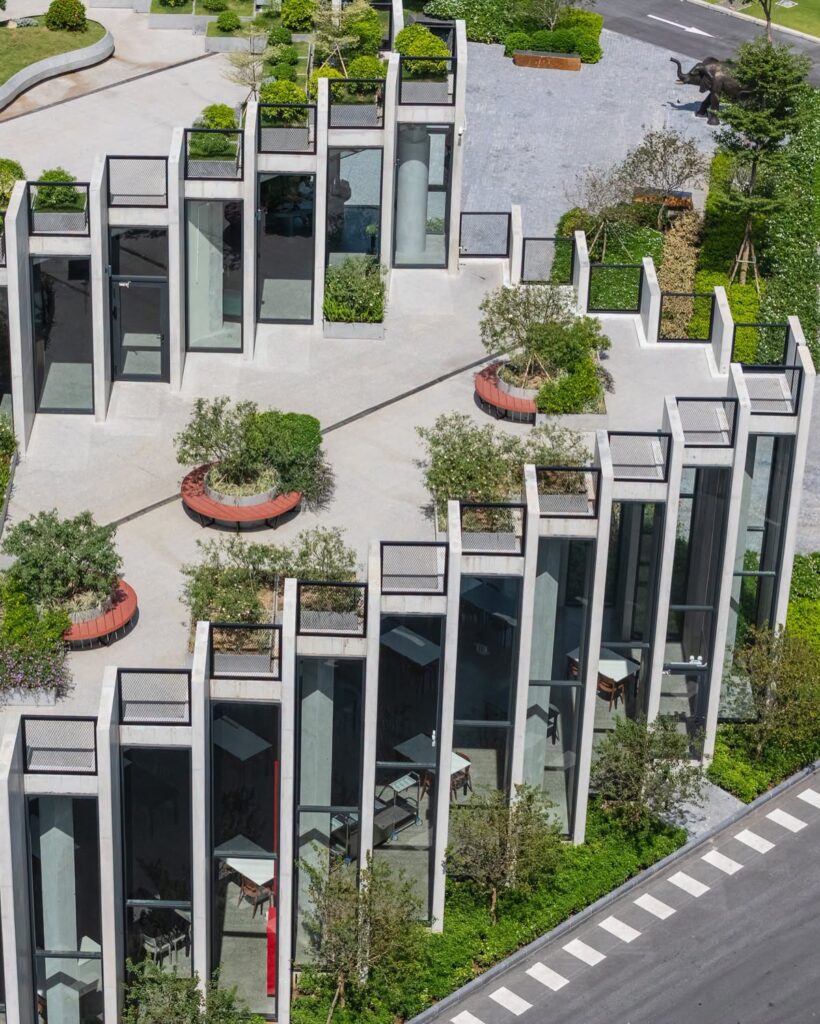
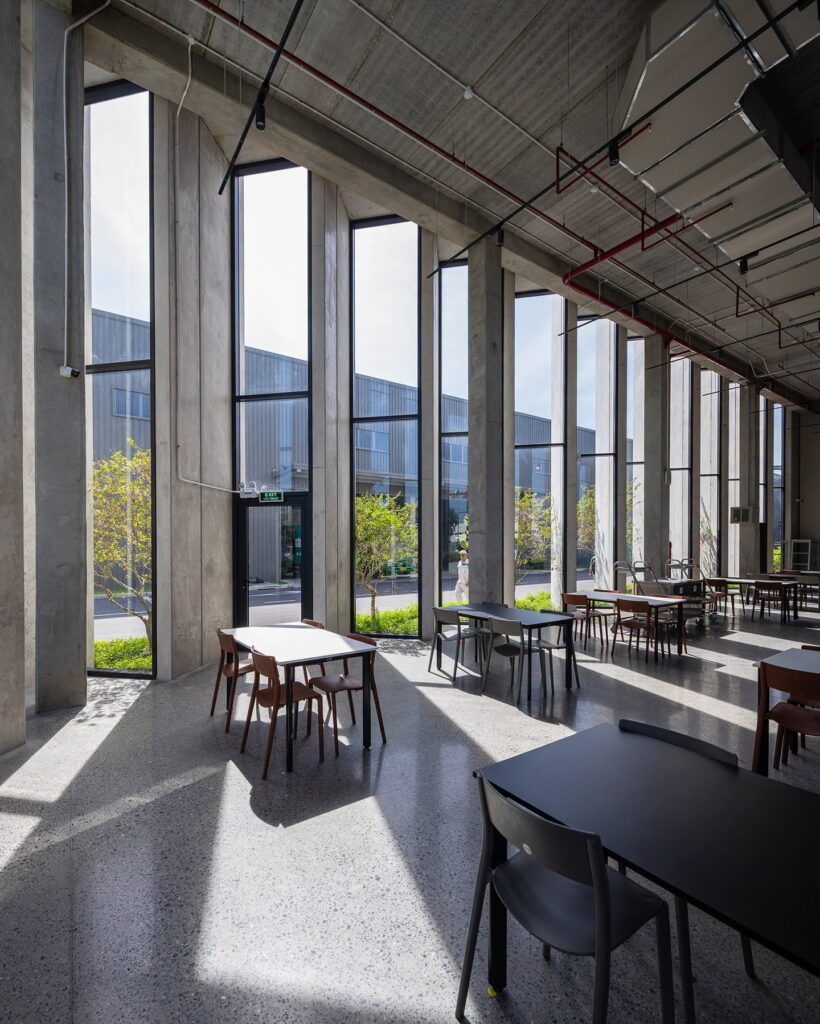
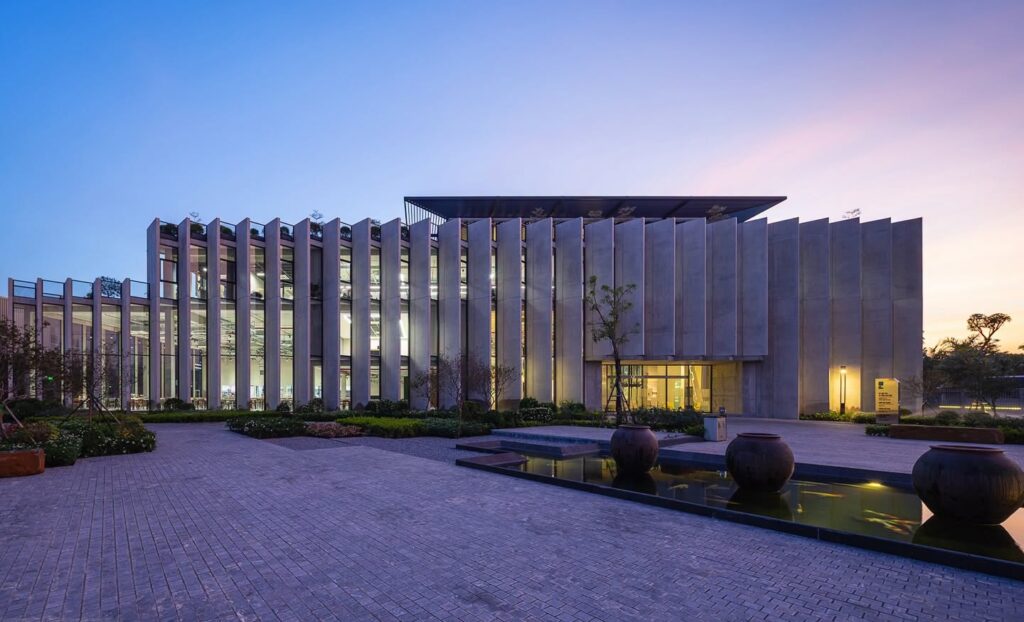
The architecture also responds directly to Hanoi’s climate. Characterised by hot, humid summers, intense rainfall and cooler winters, the city receives substantial solar exposure throughout the year. The building’s façade is therefore not simply a protective skin, but an active environmental system.
Concrete lamellae are arranged according to changing densities and angles, modulating the relationship between the interior and the intense tropical climate outside. Along the southern and southeastern elevations, the slats open by as much as 90 degrees, allowing the building to capture air and daylight while reducing the impact of direct solar radiation.
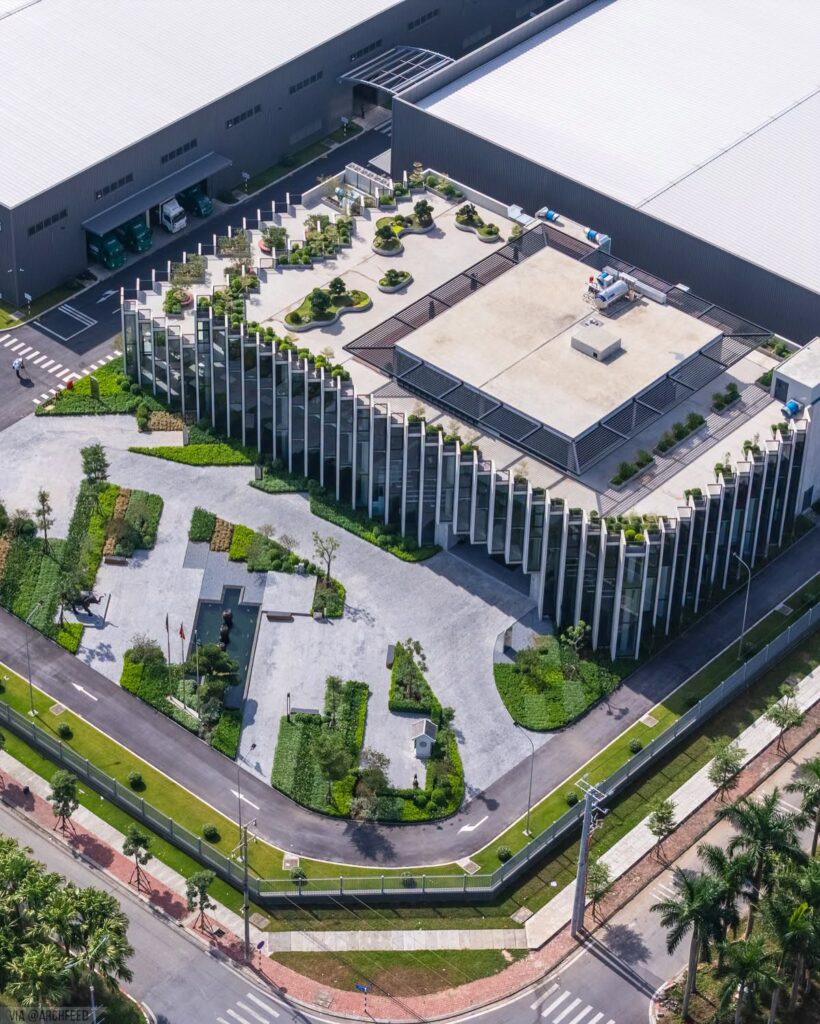
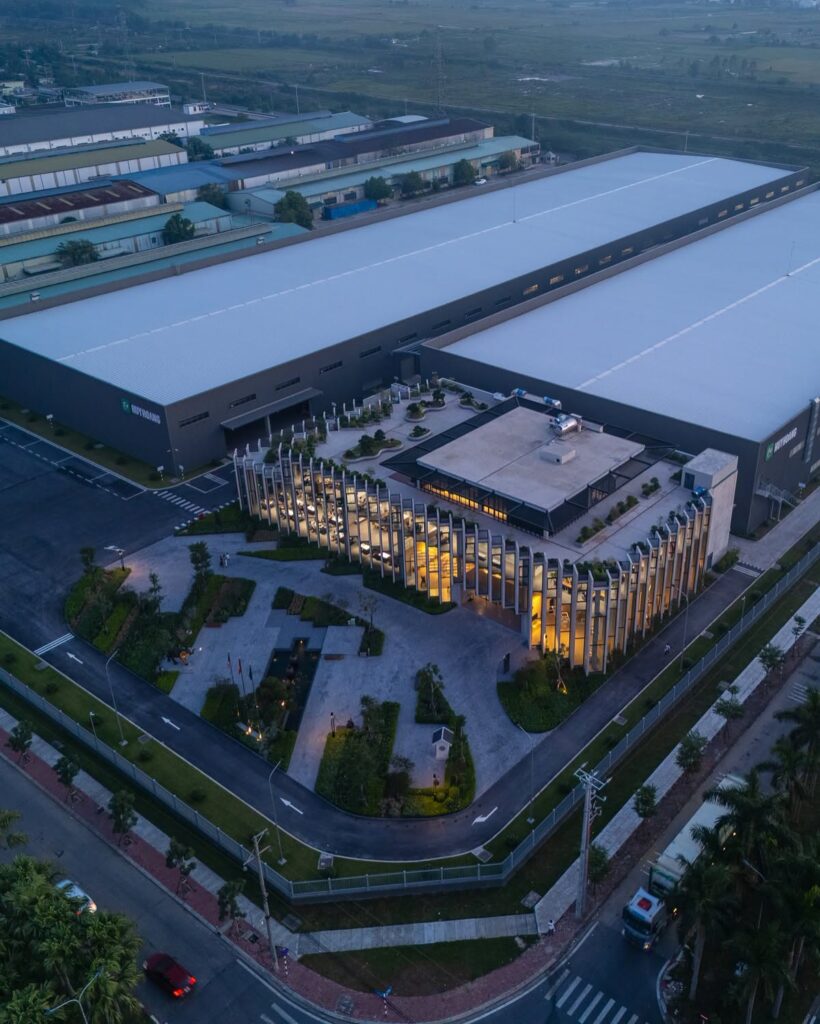
The result is an industrial architecture that refuses to separate efficiency from identity. Behind its carefully calibrated façade, the factory remains open, adaptable and technically precise, a structure shaped by the demands of production, but also by the belief that a place of work can become a statement about the future it is designed to support.
Baumschlager Eberle Architekten online:
Website
Facebook
Instagram
Photo: (c) Triệu Chiến