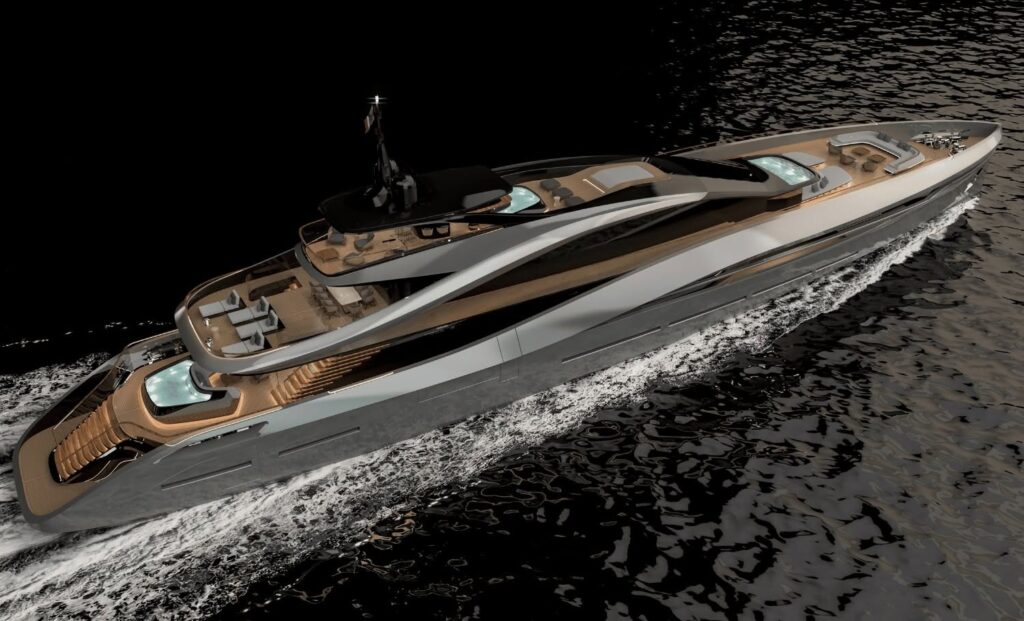
For Pininfarina, the sea has never represented a departure from its design heritage. It has become another scale at which the studio’s long-standing preoccupation with movement, proportion, efficiency and form can be examined.
The Italian studio entered the nautical sector during the 1970s and 1980s, when shipowners began commissioning it to design boats. Nearly five decades later, its portfolio extends from small tenders and three-metre vessels to 90-metre motor and sailing yachts, encompassing serial production, custom commissions, semi-custom projects and refits.
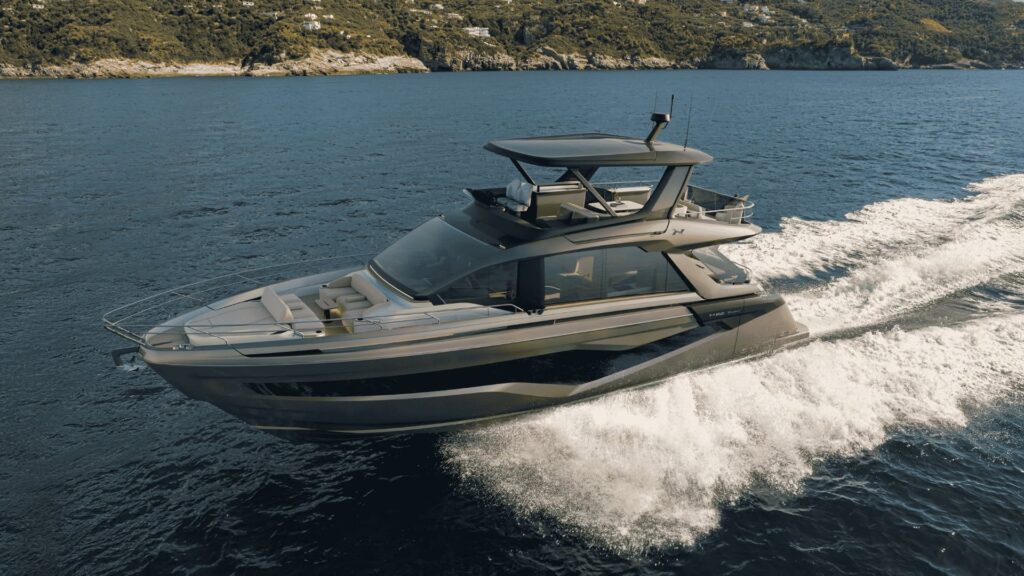
The transition from automotive design to yacht design has been shaped by the exchange of knowledge between disciplines. Pininfarina brings together yacht designers, architects, interior designers and automotive specialists, allowing different forms of expertise to remain active throughout the same project.
This method was already visible in one of the studio’s landmark nautical projects, Destriero. Built by Fincantieri in 1991, the motor yacht set the record for the fastest Atlantic crossing by a motor-powered vessel, a record that remains unbeaten.
The design process begins with the General Arrangement, developed alongside naval architects to establish the functional structure of the yacht. The distribution of spaces determines the volumes, deck heights and proportions that will eventually define the exterior. Interior and exterior development progress in parallel, each continuously influencing the other.
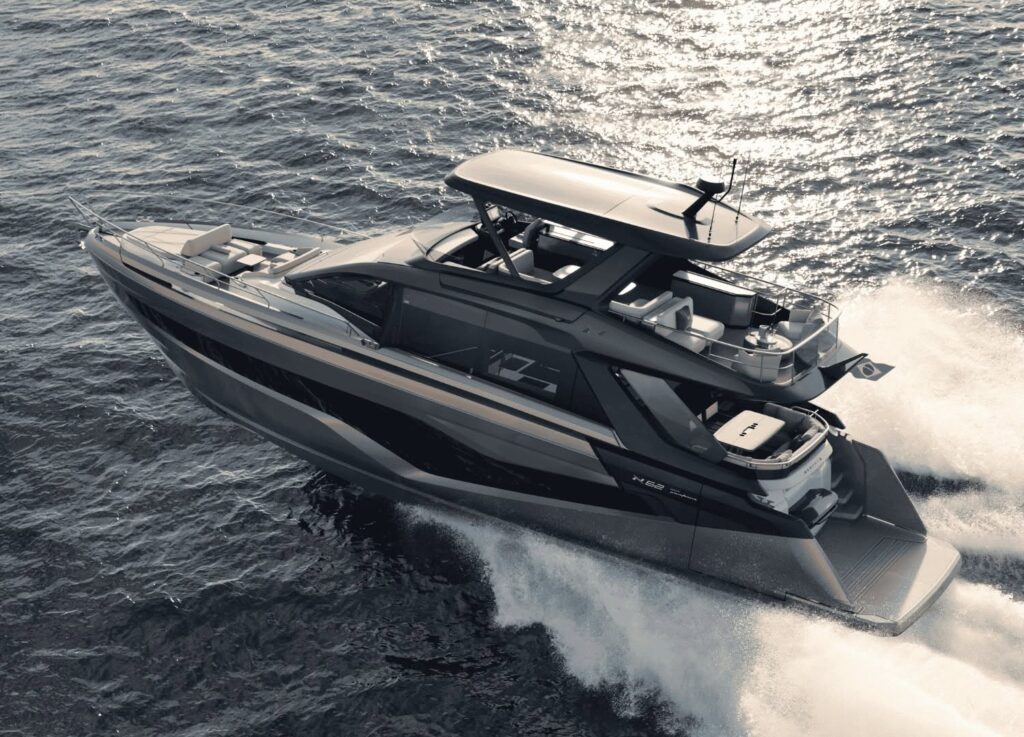
A change to the outer shell can alter the interior. A revised interior layout can reshape the external volume. The yacht emerges through this constant exchange, with each decision affecting the next.
Whenever the commission allows it, Pininfarina develops the entire vessel as a unified design system. In other cases, the studio focuses on specific areas of a project, according to the requirements of the shipyard or owner. The same principle extends to refitting, where existing yachts are given new spatial identities rather than being designed from the beginning.
The influence of automotive design becomes particularly visible in the treatment of surfaces. On a yacht, a line developed on a digital model can extend across tens of metres in reality. The smallest change in curvature can affect the way light moves across the hull, the way the vessel is perceived at a distance and the relationship between its individual surfaces.
Pininfarina‘s attention therefore extends beyond the isolated detail. The objective is to ensure that every surface retains its precision at close range while contributing to the overall character of the yacht when seen at sea.
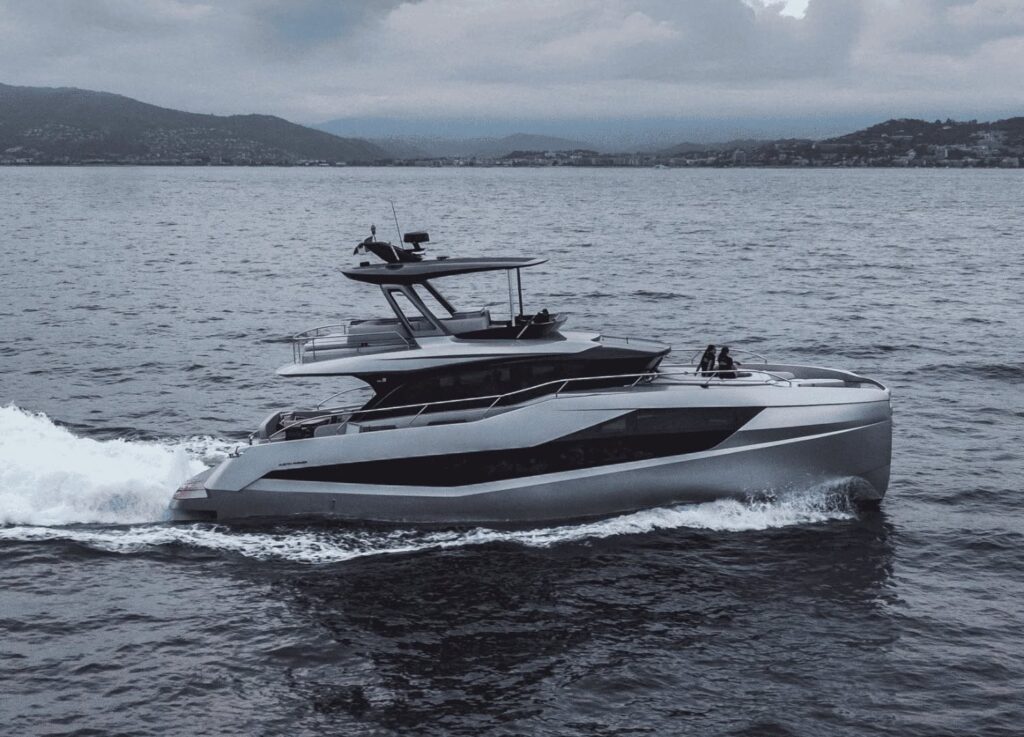
The semi-custom Kairos 80, developed for Oceanco, reflects this approach. The project combines generous, open interiors with an exterior designed around a sense of calm and spatial continuity. The yacht’s character emerges through the relationship between its volumes rather than through a single gesture.
Innovation is also increasingly tied to the practical realities of life on board. New technologies and artificial intelligence are being used to improve automation, monitoring and the relationship between passengers and the vessel. At the same time, the industry is exploring hydrogen-based propulsion systems, waste recycling and other methods aimed at reducing environmental impact.
Material research has become equally important. Pininfarina works with European manufacturers to identify solutions that are not only more sustainable, but also tested and traceable. Cork panels, for example, can replace teak in certain interior applications, reducing reliance on traditional materials without abandoning the tactile qualities expected from a yacht interior.
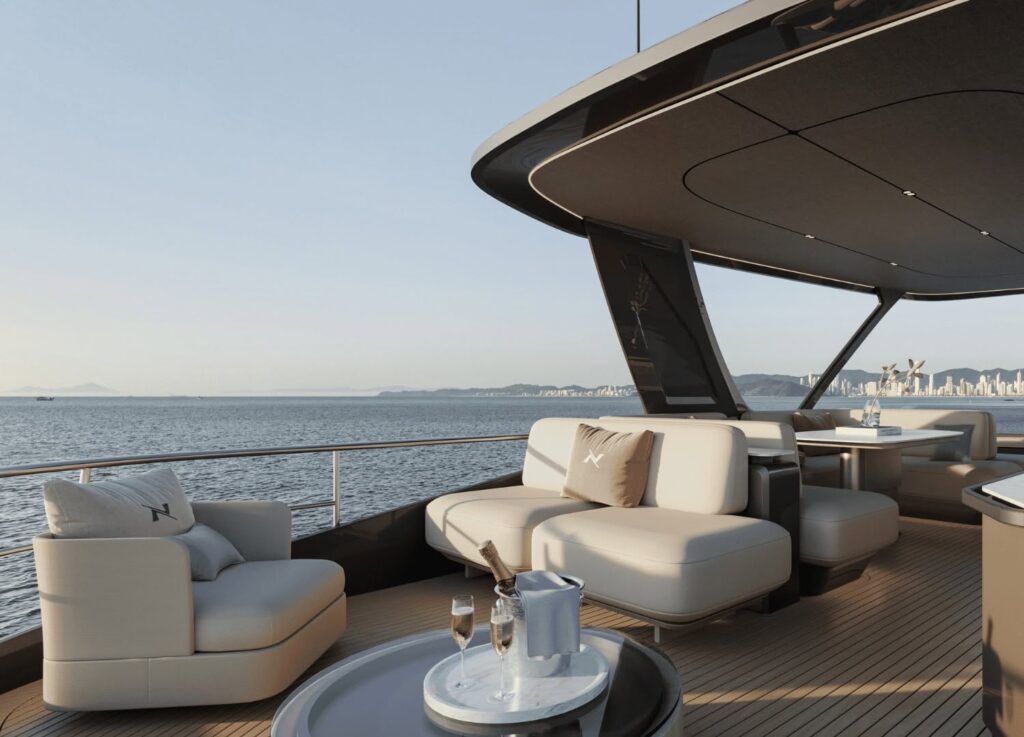
Weight remains another central concern. A yacht’s energy consumption is closely connected to its mass, making the search for lighter construction methods an essential part of contemporary design. Carbon fibre composites, lightweight sandwich panels and aluminium alloys allow Pininfarina to reduce weight while maintaining structural performance and stability.
The relationship between design and production becomes particularly evident in the Super Sport 50, 60 and 65 models developed with Rossinavi. Fibreglass allows complex forms to be produced through moulds, while metal construction demands that the feasibility of each shape be considered from the earliest stages of the design process. The material does not merely receive the design. It actively determines what the design can become.
The yacht itself also changes according to the culture in which it is used.
In Europe, the vessel is often conceived around privacy, relaxation and the landscape of the Mediterranean. In the United States, yachts tend to accommodate larger social groups, with expansive outdoor areas, swimming pools, entertainment spaces and outdoor cooking becoming central to the layout.
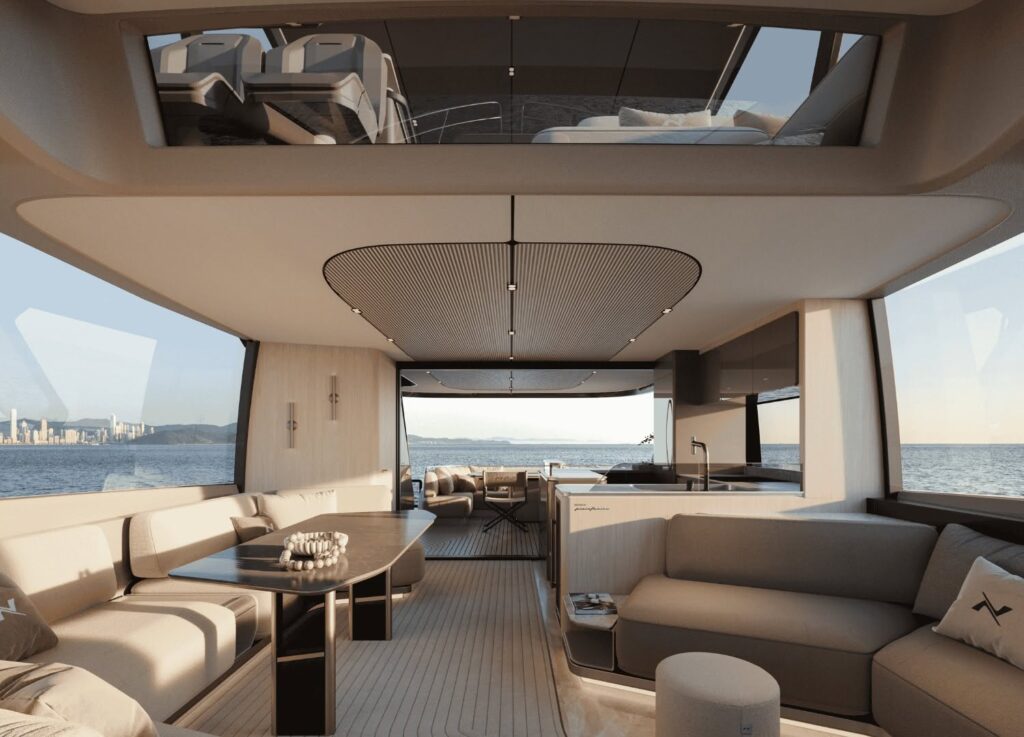
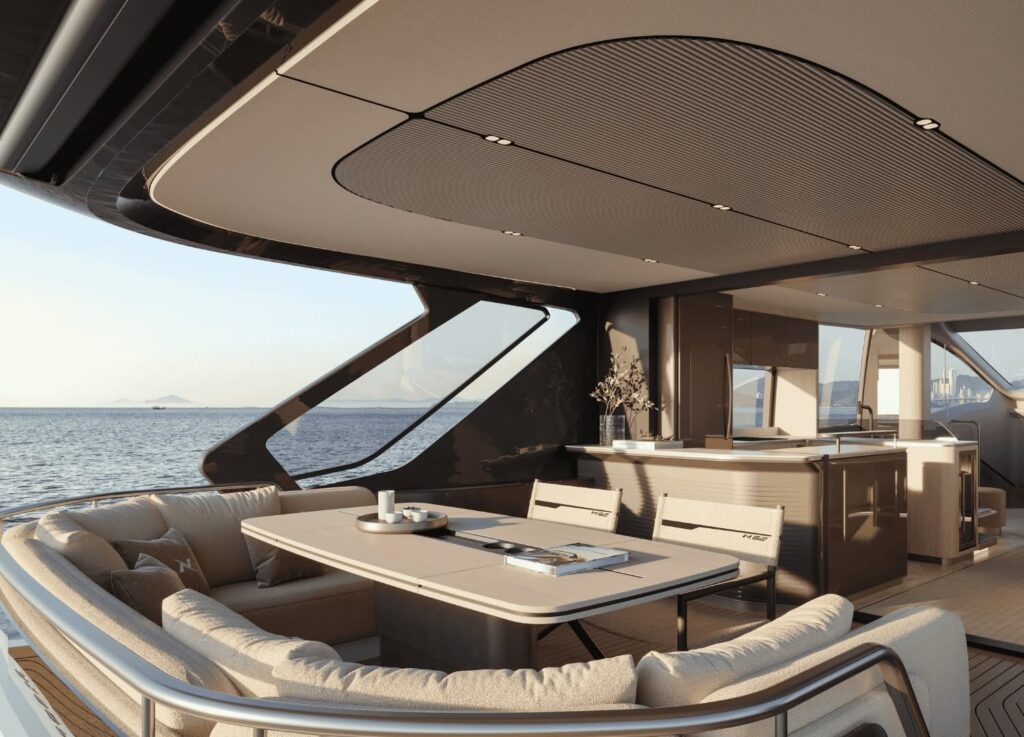
These differences influence the organisation of the entire vessel. The NX62 Flybridge, designed for Brazilian shipyard NX Boats, was shaped around the way its stern would be used in daily life. The design includes a crew cabin, fold-down side platforms, a twelve-seat sofa area and a main saloon that occupies the full width of the yacht.
The result is determined by use before it is determined by appearance.
This is where Pininfarina’s broader design practice becomes particularly relevant to the future of yachting. Ideas developed in automotive design, architecture, product design, interiors and emerging technologies can move between disciplines, changing shape as they enter new contexts.
The studio’s contribution to nautical design lies in this continuous movement of knowledge. A surface developed for one industry can inform a hull. A spatial solution from architecture can reshape life on board. A material developed for another application can alter the way a yacht is built.
For Pininfarina, the future of yacht design is therefore not defined by a single aesthetic direction. It is shaped by the ability to keep different fields in conversation, and to allow the next idea to arrive from somewhere unexpected.