What if a sports car were designed not only around movement, but around everything that happens once the engine is switched off?
That question sits at the centre of John Jungtaek Cho’s Chery QQ E Spresso, one of the Top 50 projects selected for the 2026 Chery Automobile Design Award. Rather than pursuing another layer of autonomous technology, digital interfaces or battery experimentation, the concept looks at a simpler aspect of automotive culture: the pleasure of being around cars and the people who share that fascination.
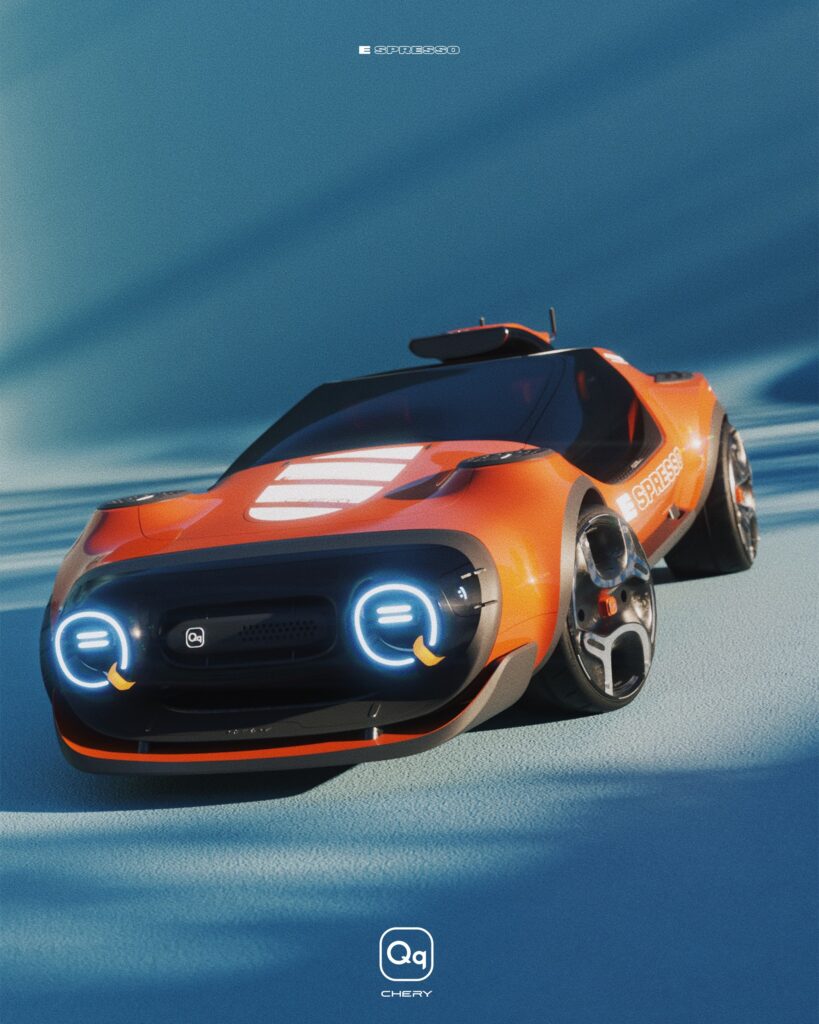
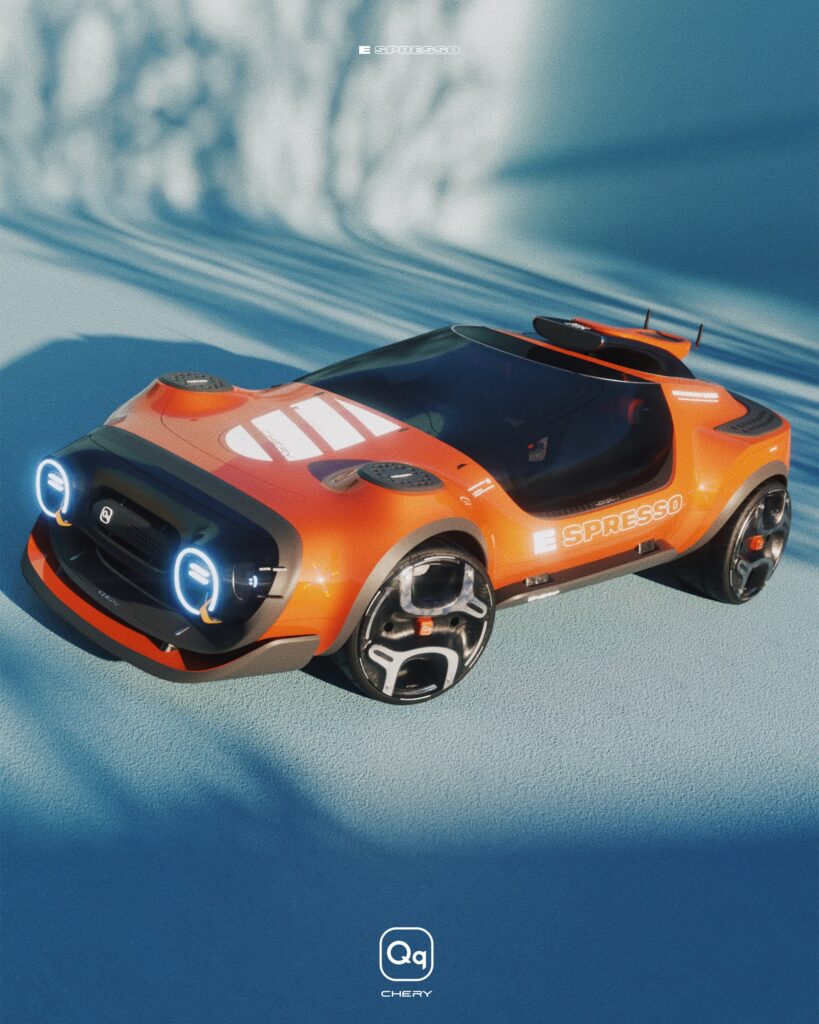
The QQ E Spresso proposes a vehicle with three identities at once; sports car, coffee stop and social setting. Its purpose extends beyond getting somewhere. Parked by the coast, on a mountain road or among other enthusiasts, it becomes a compact setting for conversation, coffee and the rituals that have always surrounded automotive culture.
Designed for the Cars & Coffee Generation
Anyone familiar with Cars & Coffee gatherings knows that driving is only part of the ritual. Owners arrive early, line up their cars and spend hours discussing design, engineering, modifications, journeys and the details that rarely make it into a specification sheet. The meeting itself becomes the destination.
Cho describes the QQ E Spresso as an “infinite canvas for community-based lifestyle,” drawing on the culture surrounding café racers, coffee gatherings and informal automotive meetings. The concept takes that familiar social landscape and builds it directly into the vehicle.
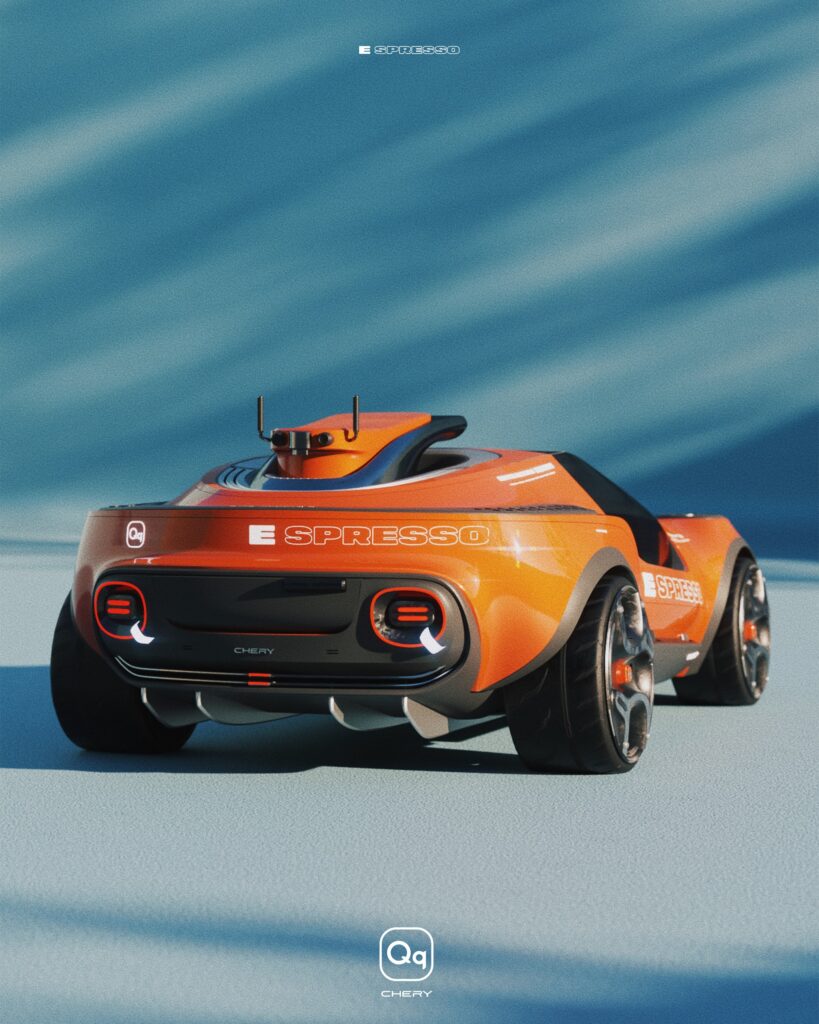
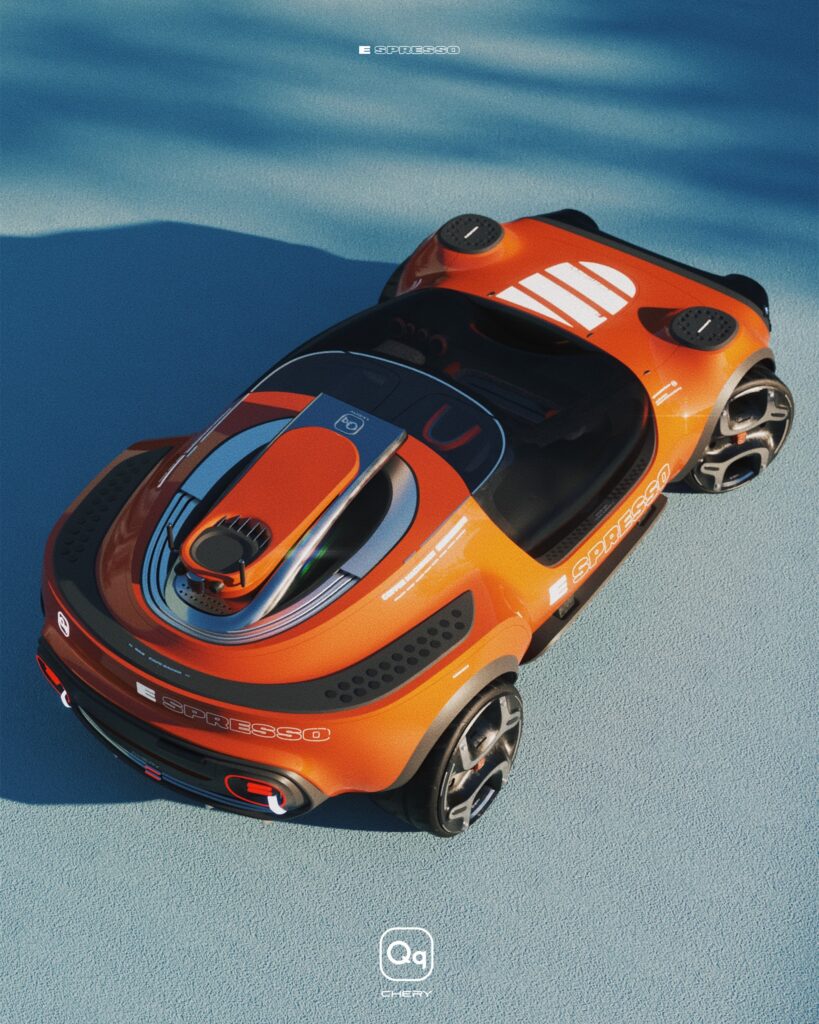
Its most distinctive gesture is found at the rear.
Instead of treating the back of the car exclusively as storage, Cho transforms it into a compact hospitality station inspired by an espresso bar. Once the vehicle is parked, the rear section becomes a functional surface for preparing coffee, arranging equipment or simply gathering around with friends.
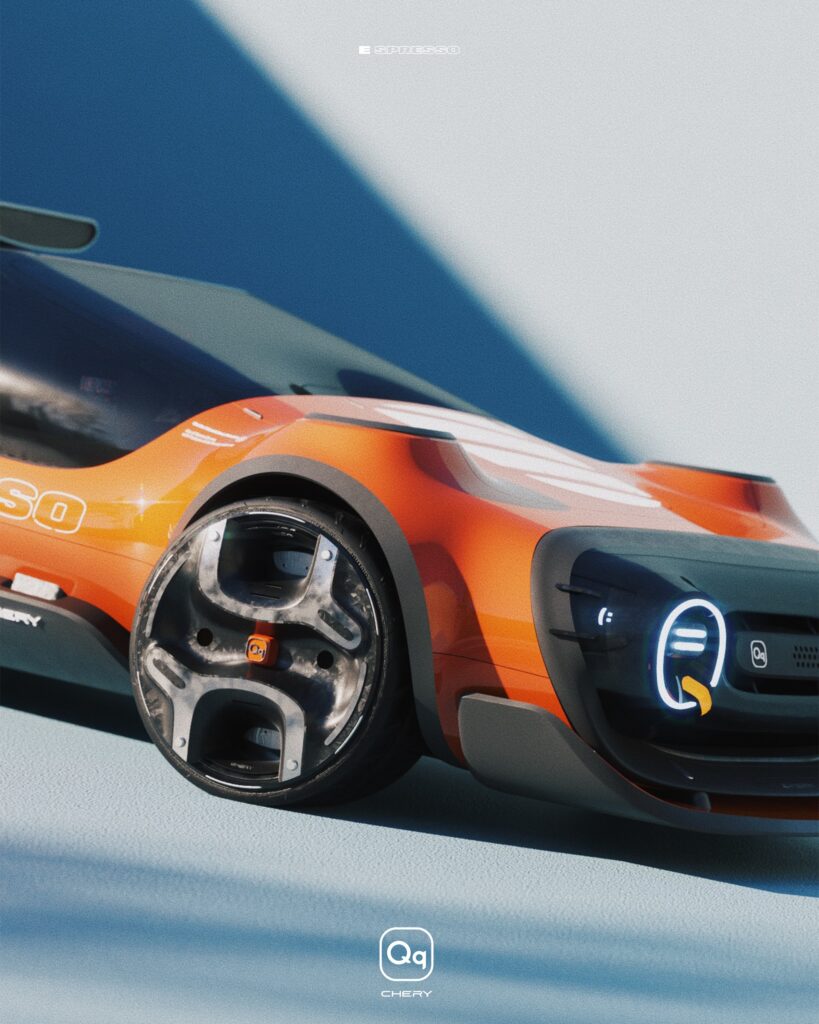
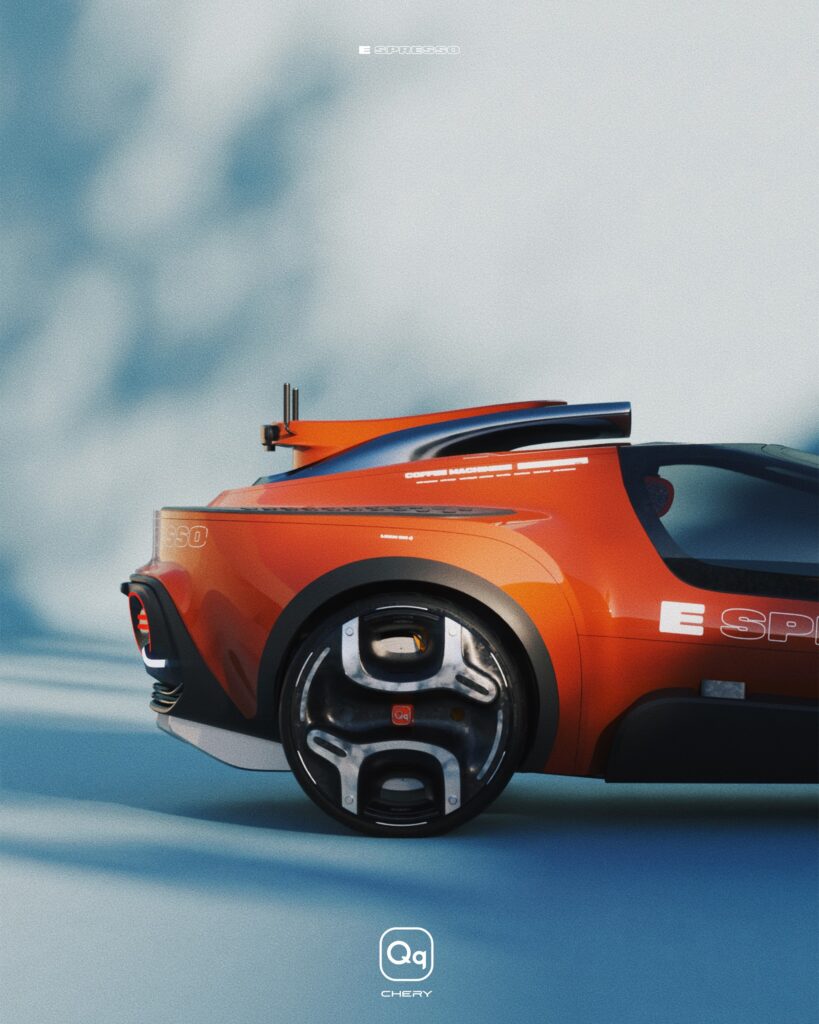
There is something unusually direct about the idea. The concept does not require a technical manifesto to explain itself. Its intention is immediately legible: the car is designed for what happens after arrival.
This changes the relationship between the vehicle and its surroundings. At a scenic viewpoint, the QQ E Spresso becomes part of the landscape. At an automotive gathering, it becomes a meeting point. The vehicle is no longer merely something to look at or drive; it becomes an environment occupied by people.
A Third Space on Four Wheels
Urban design has long used the term “third space” to describe places such as cafés, parks and libraries; settings that exist beyond home and work and allow people to meet without a formal purpose. Cho transfers that idea into automotive design.
The car remains private transportation, but its rear architecture introduces a more public function. It creates a small social territory wherever it is parked.
The proposition feels particularly relevant as urban environments become denser and younger consumers increasingly place value on experiences, flexibility and shared moments rather than conventional ideas of ownership. The QQ E Spresso addresses these shifts without relying on an overloaded digital ecosystem.
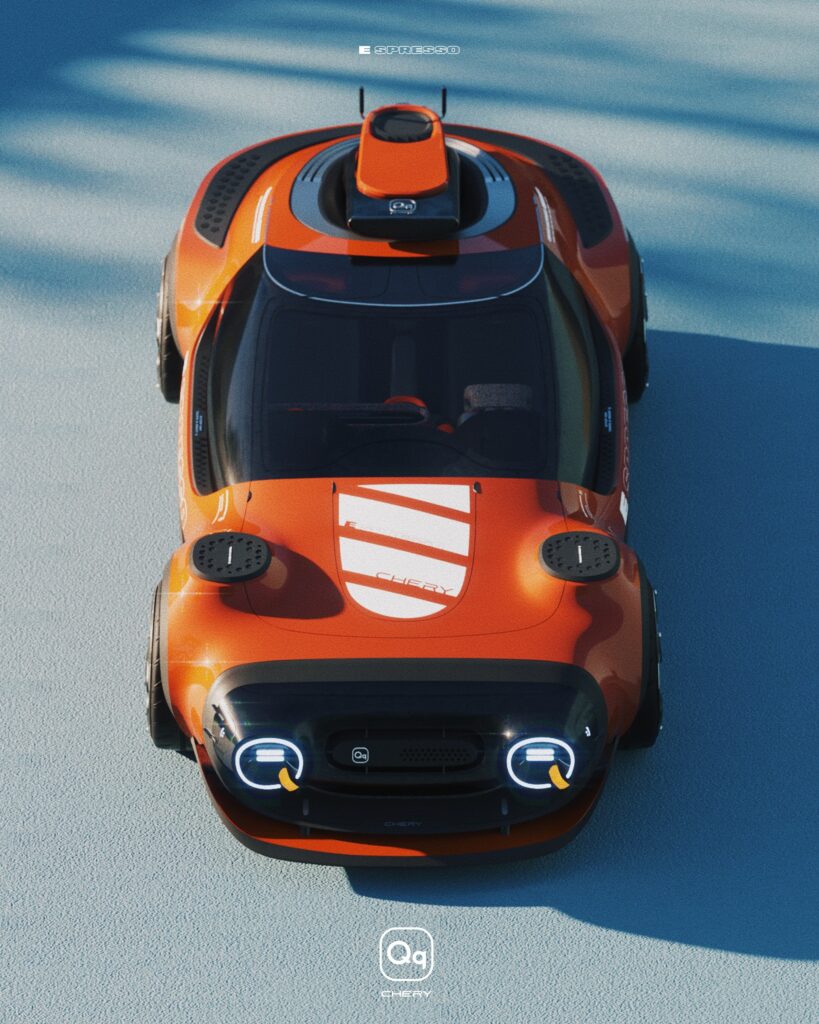
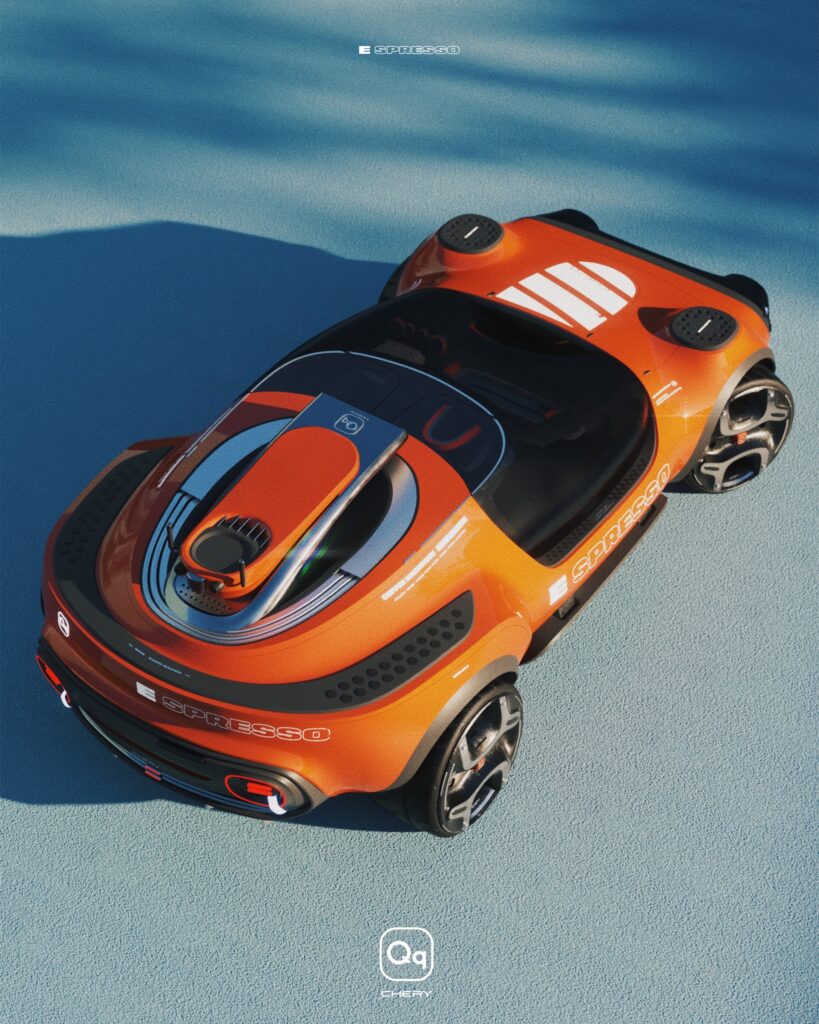
Its compact dimensions are central to the concept. Rather than designing another oversized lifestyle vehicle, Cho demonstrates how a smaller footprint can accommodate an unexpectedly rich set of functions. The objective is not maximum cargo capacity but intelligent use of limited space.
That distinction matters in the context of electric urban mobility. Smaller EVs are becoming increasingly relevant as congestion, parking restrictions and changing ownership patterns reshape the way cities are navigated. The QQ E Spresso treats those limitations as parameters for creativity rather than problems to overcome.
What Happens After the Drive
Most concept cars are ultimately judged by how convincingly they imagine the future. The QQ E Spresso takes a different route. Its most interesting proposition begins when the journey ends.
Whether its modular coffee station ever reaches production is almost secondary. The larger idea concerns what automotive design can contribute to the social rituals that form around vehicles.
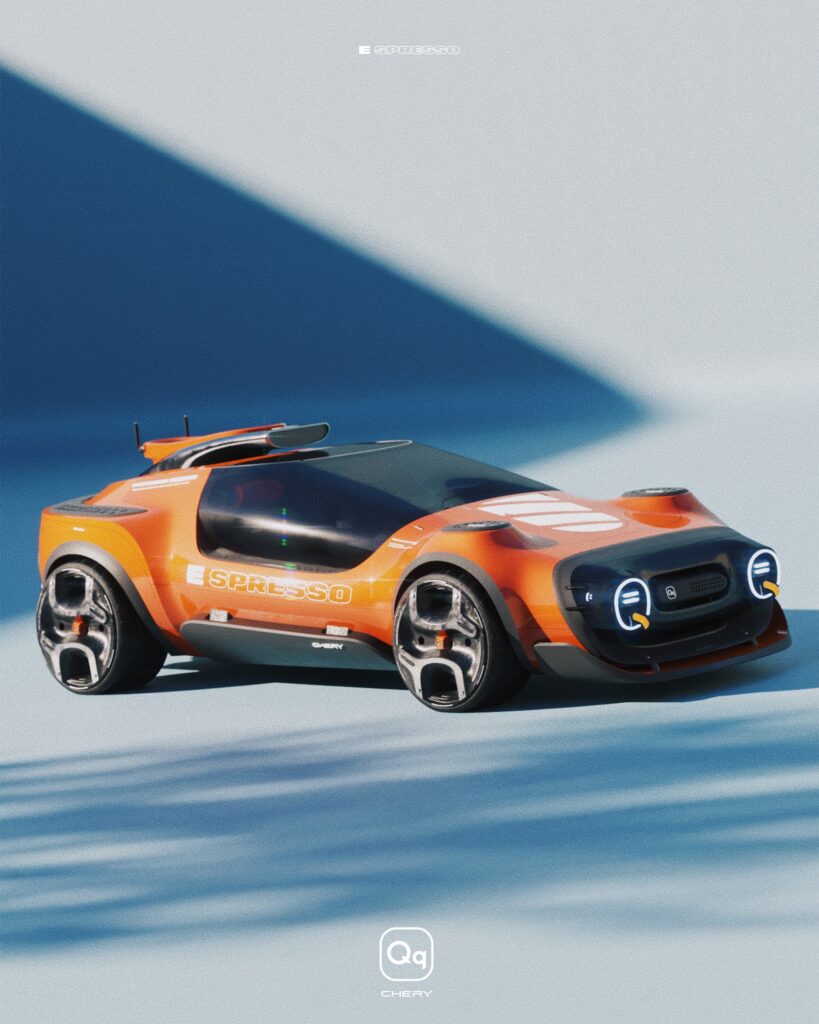
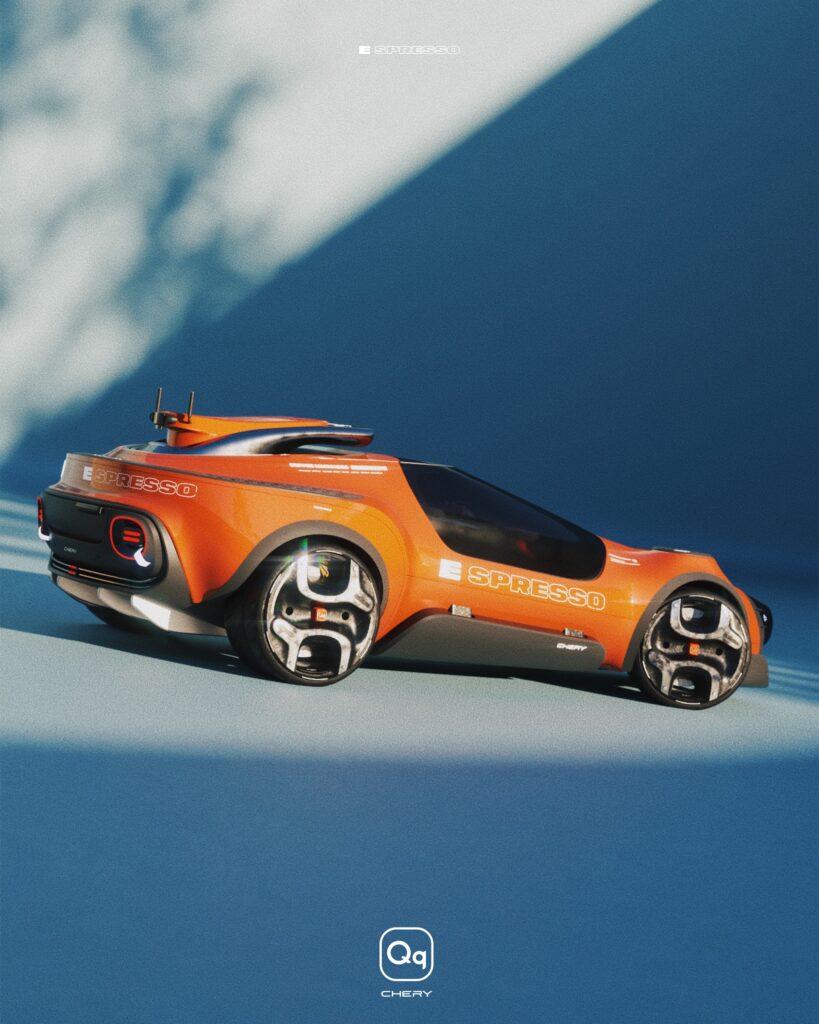
As electric cars become increasingly similar in their underlying technologies, designers are being asked to search for new forms of identity. That identity may not necessarily come from larger screens, greater automation or another technological novelty. It can also emerge from the way a vehicle encourages people to use it.
The history of automotive culture has always contained this social dimension: garages, workshops, roadside cafés, mountain roads and Sunday gatherings have provided spaces where enthusiasm becomes collective. The internet changed the scale of that community, but not its basic impulse.
Cho’s QQ E Spresso gives that old ritual a new physical setting.
Among the Top 50 submissions to the 2026 Chery Automobile Design Award, the project stands out precisely because its ambition is modest in the best sense. It does not attempt to predict every technological development ahead. Instead, it asks what remains after all the engineering has done its job.
Perhaps the next generation of sports cars will be judged not only by acceleration, handling or power, but by what they make possible when they stop.
And sometimes, the most interesting automotive ideas begin with something as simple as parking the car and staying awhile.
John Jungtaek Cho online:
Instagram
Photo: (c) John Jungtaek Cho