Creating a new Jaguar sports car comes with an unusual problem: the brand already has one of the most recognisable shapes in automotive history. The question is less where to look for inspiration than how far back to look before the past starts dictating the present.
Gabriel Naretto’s Jaguar Type T Concept takes that tension seriously. The design borrows the proportions that have long defined Jaguar’s grand touring cars, an extended bonnet, a cabin pushed towards the rear and substantial rear haunches, while deliberately leaving behind the visual signatures that would make it an obvious E-Type revival.
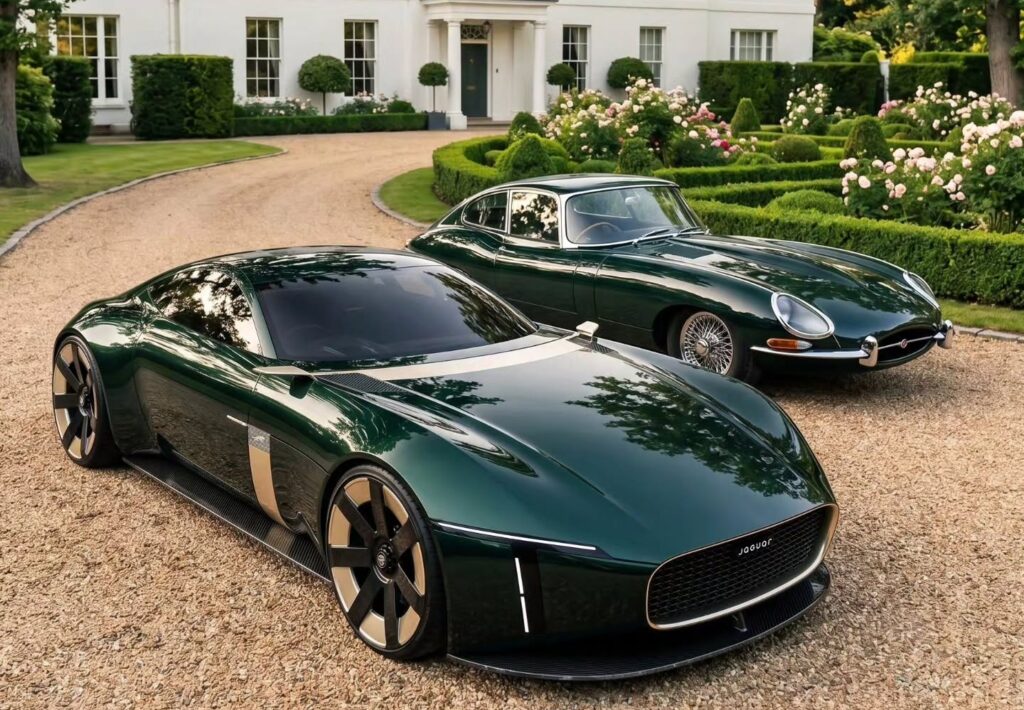
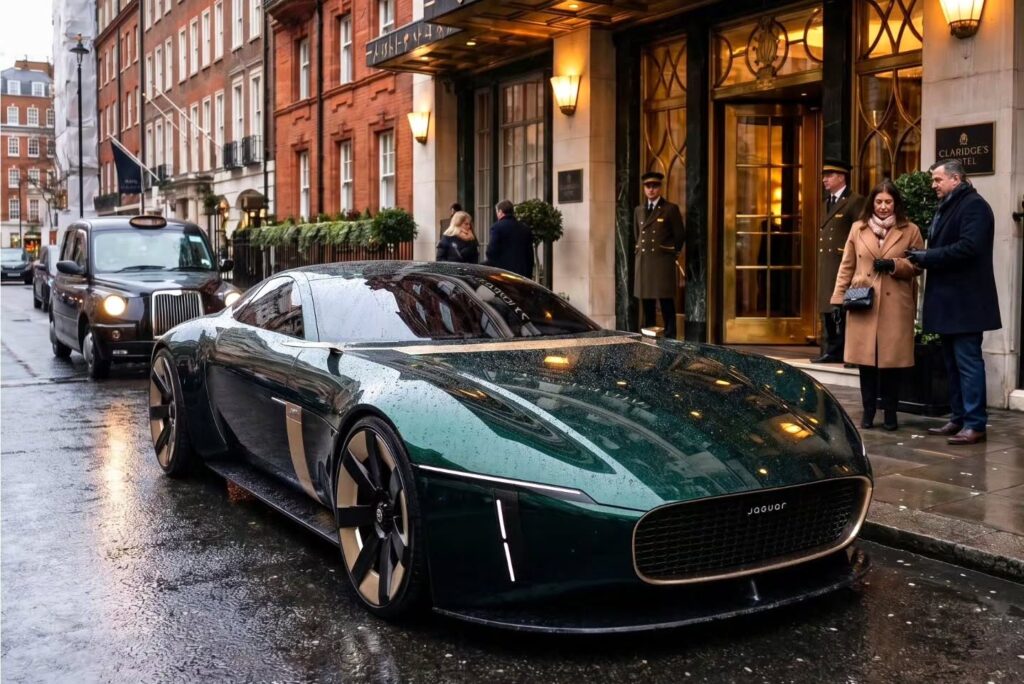
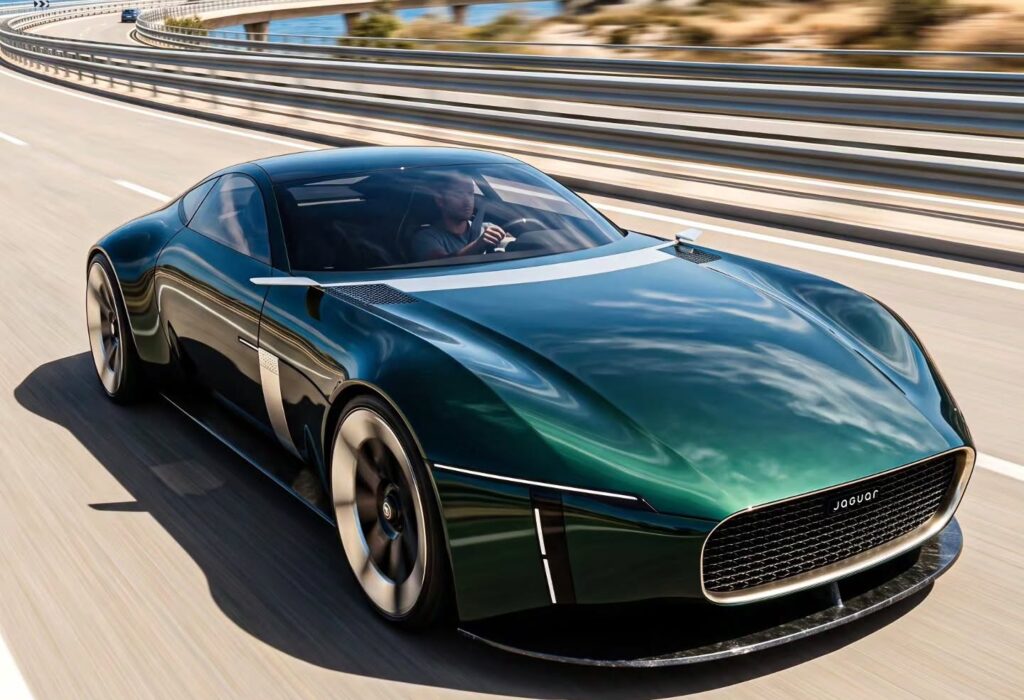
Seen from the side, the connection becomes immediate. The front axle sits well ahead of the compact cabin, leaving a long stretch of body between the wheels and the windscreen. The roof remains low, the glasshouse tightens around the occupants, and the body swells again over the rear wheels before narrowing towards the tail.
It is a familiar Jaguar composition, but Naretto allows the proportions to carry the reference rather than decorating the car with historical details.
There are no covered headlights, chrome bumpers or other easy gestures towards the past. Instead, the Type T works through silhouette, volume and tension. The upper body remains remarkably clean, with a dark element running along the lower side and very few unnecessary creases competing for attention.
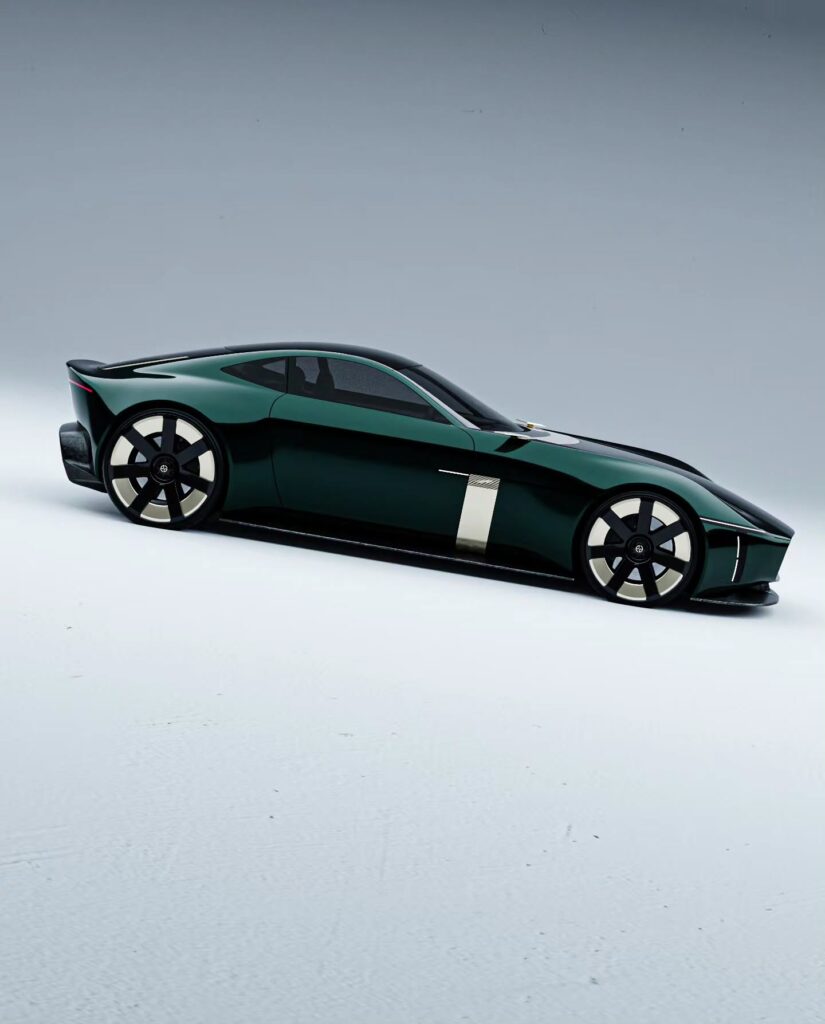
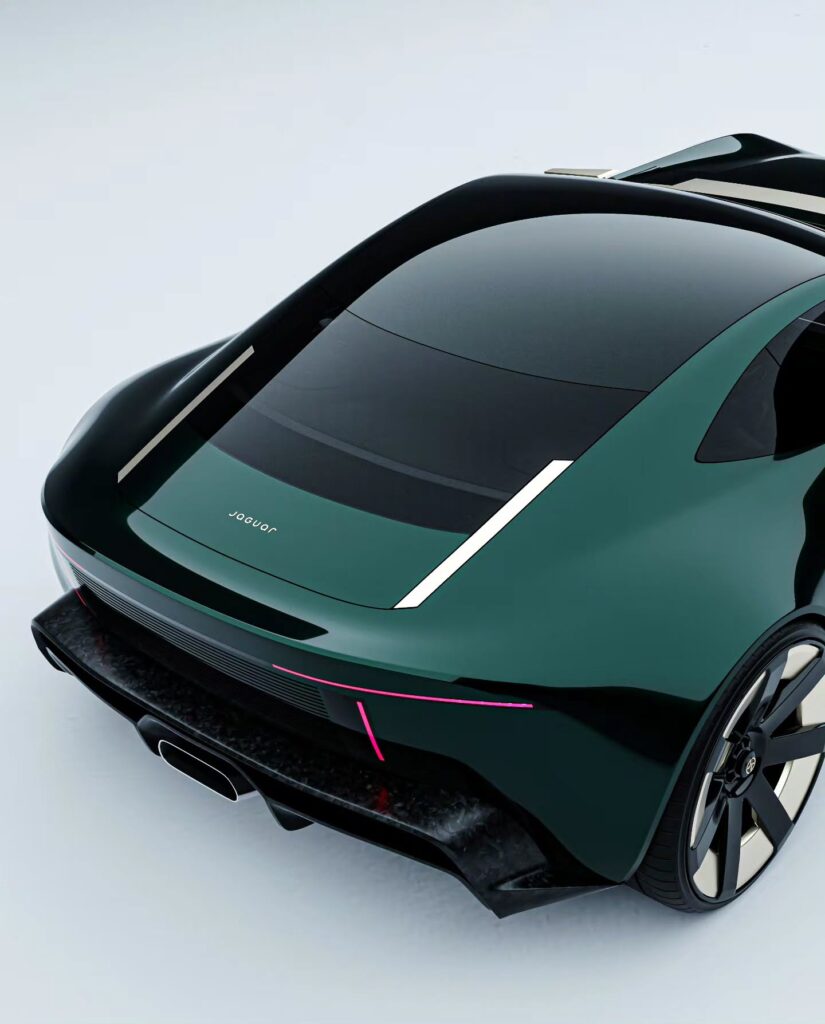
That restraint becomes particularly effective towards the rear. The body gathers around the cabin before expanding over the rear wheels, creating a substantial but controlled form. From above, the narrow glasshouse sits within a considerably wider body, reinforcing the sense of compression between the roof and the rear haunches.
This was central to the character of the original E-Type. Designed by Malcolm Sayer, an aeronautical engineer who approached automotive form through geometry and aerodynamic logic, the car achieved its distinctive appearance through elongated lines, carefully controlled surfaces and a pronounced rear section. Later Jaguar designer Ian Callum would also point to the purity of those surfaces as a crucial part of its appeal.
Naretto appears to have taken those principles rather than simply borrowing the resulting shape.
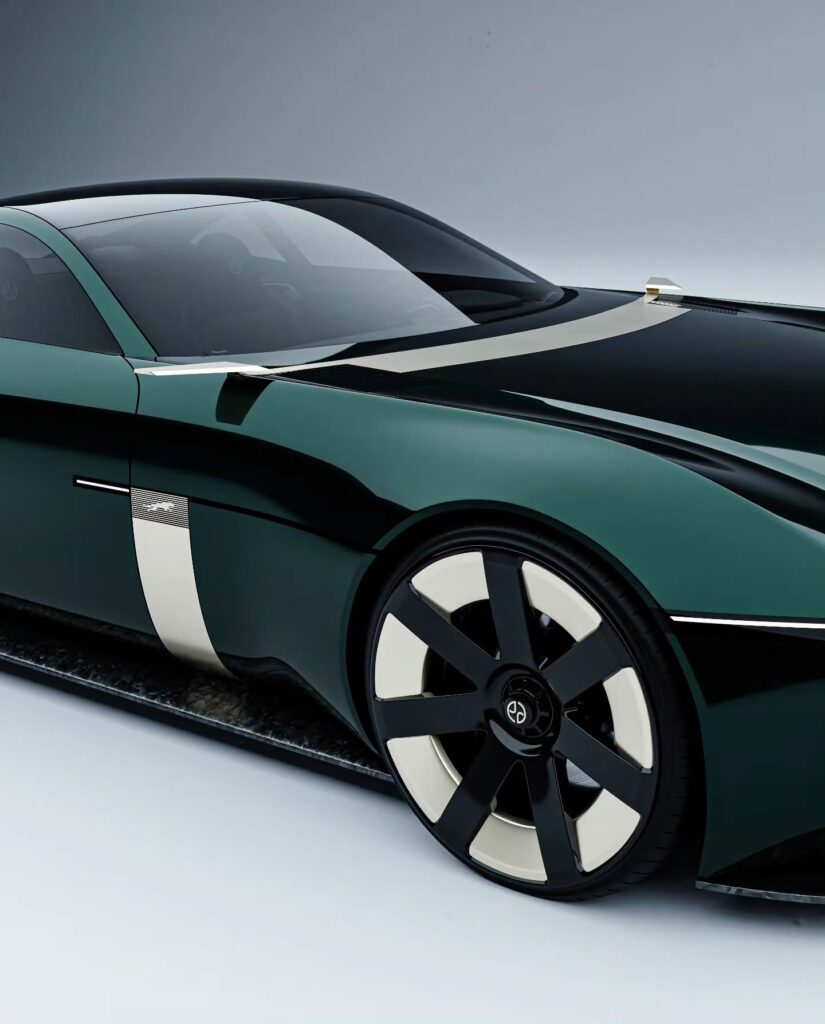
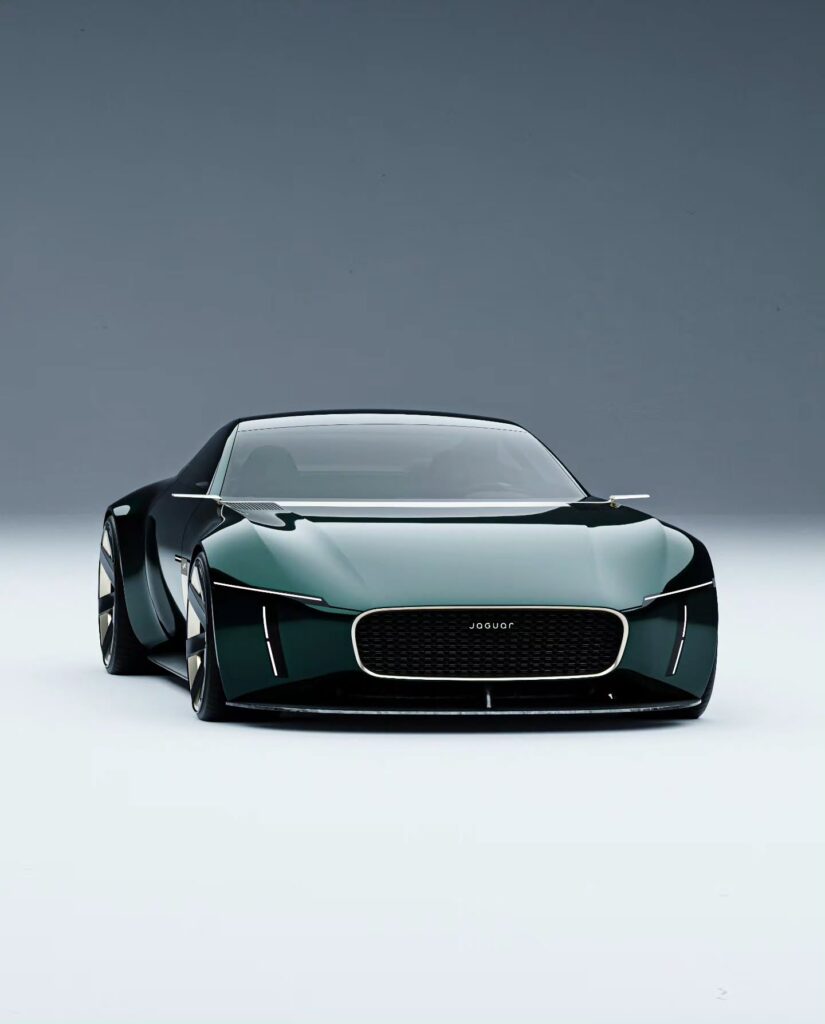
The distinction is important. The Type T does not need an old Jaguar grille or a pair of circular lamps to establish its lineage. Its identity is already present in the proportions. The low front grille carries a contemporary interpretation of the Jaguar face, while thin horizontal and vertical elements form the distinctive T graphic across the front. The lighting follows the same logic, becoming part of the graphic language rather than an explicit retro reference.
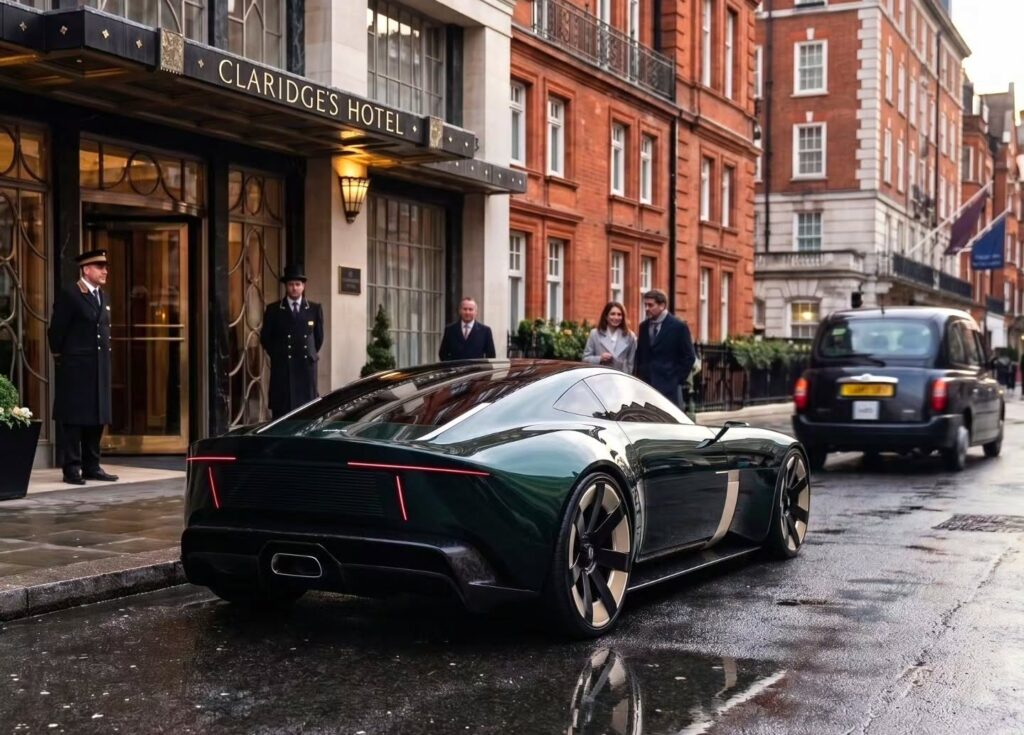
The rear repeats the idea with slender red elements forming another interpretation of the T. It gives the concept a visual signature of its own while keeping the connection with Jaguar’s past deliberately understated.
The Type T Against Jaguar’s New Direction
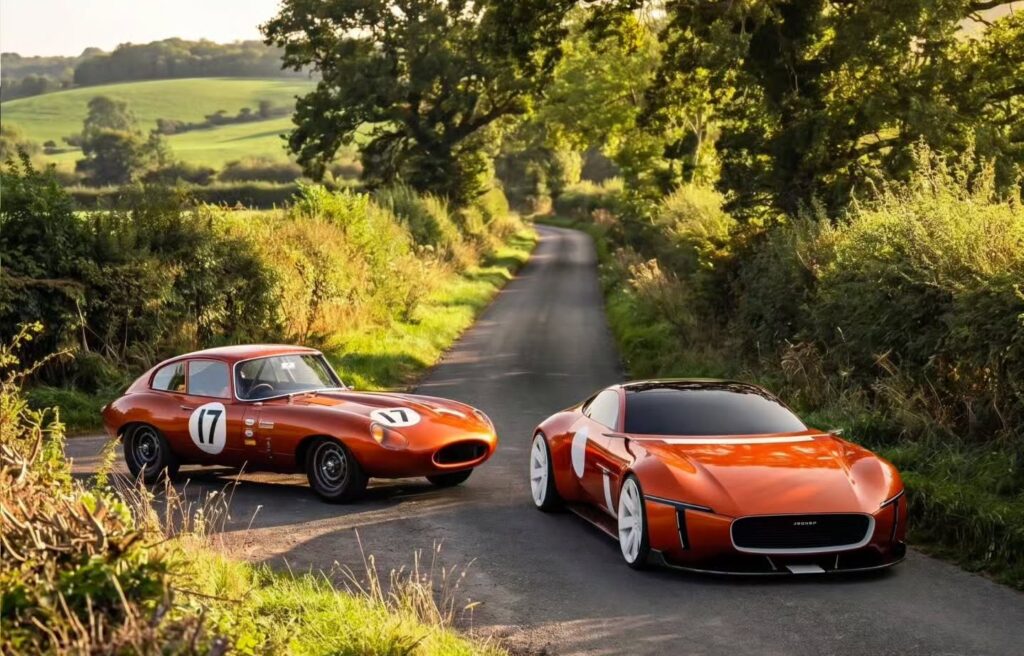
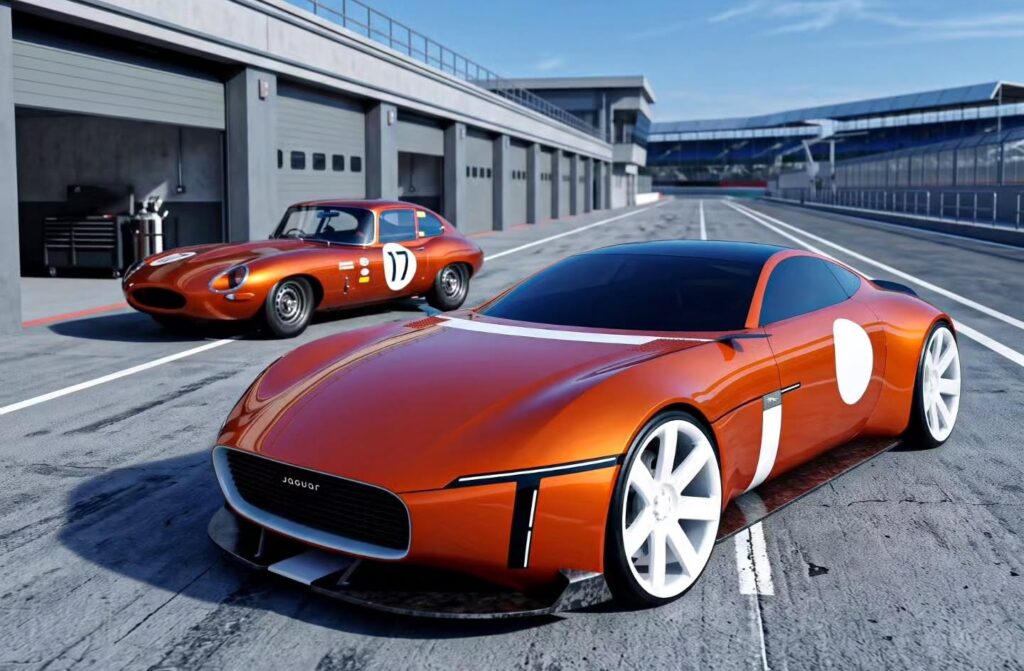
The concept becomes even more interesting when placed alongside Jaguar’s Type 00, which represents the brand’s current design reset and its new “Exuberant Modernism” philosophy.
The two cars occupy very different visual territories. Type 00 uses larger architectural volumes, cleaner surfaces, a more upright front and strong horizontal gestures at the rear. Its design deliberately strips away many of Jaguar’s familiar cues in favour of a new visual vocabulary.
The Type T takes another route.
Its body is lower and more organic, with a bonnet that flows gradually towards the front axle and pronounced rear fenders rising around the wheels. Type 00 feels constructed from large, deliberate planes; Type T relies more heavily on the movement of its silhouette.
Yet the difference is not simply a matter of old Jaguar versus new Jaguar. Both concepts retain the proportions associated with a classic grand tourer: long front sections, rear-set cabins and wheels pushed towards the extremities of the body.


That makes their relationship particularly revealing. Jaguar has chosen to retain some of the proportions of its heritage while radically changing the surfaces that define them. Naretto does almost the reverse: he keeps the visual tension of historic Jaguar sports cars while stripping away the obvious retro vocabulary.
Jaguar Heritage Was Never Just About the Grille
The most compelling aspect of the Type T may be precisely what it refuses to reproduce.
There is no attempt to recreate the E-Type’s famous headlights or turn the concept into a period piece. The relationship exists primarily in the structure of the car: the long bonnet, the compact cabin, the flowing roofline and the weight gathered around the rear axle.
That approach reaches back to the original logic of the E-Type itself. Sayer’s design was shaped by mathematics, aerodynamics and geometry before it became an icon. Its beauty emerged from the relationship between those elements rather than from a collection of decorative motifs.
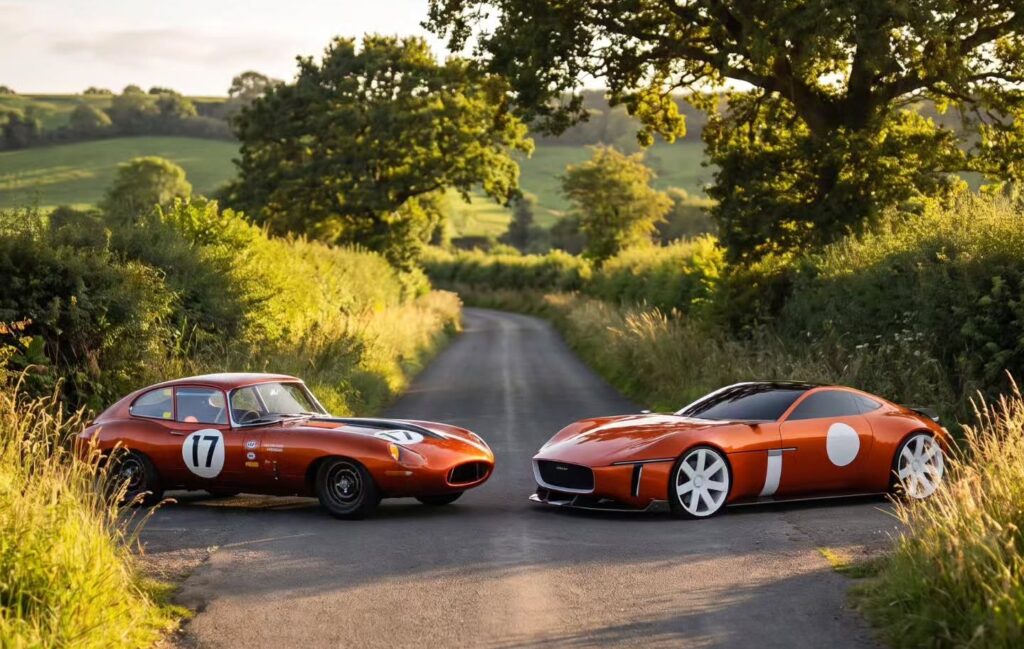
The Type T applies a similar principle to the present. It asks what happens when the underlying proportions are retained while the familiar details are removed.
The answer is especially visible from the rear three-quarter angle. The body wraps tightly around the cabin, then expands dramatically around the rear wheels. A strong horizontal line defines the tail, while the vertical lighting element interrupts it with the T graphic. Above, the dark glasshouse separates itself visually from the bodywork below.
Nothing here attempts to reproduce an E-Type. Yet the connection remains unmistakable.
That may be the concept’s strongest achievement. Instead of treating heritage as a catalogue of shapes to be repeated, Naretto treats it as a set of proportions and relationships worth reconsidering.
For Jaguar, which is currently attempting to redefine its visual identity, the Type T offers a different argument about where the future might begin: not necessarily by abandoning the past, and certainly not by reproducing it, but by understanding what made those earlier forms work in the first place.
And there is one conclusion the Type T makes difficult to dispute: a Jaguar still knows what to do with a very long bonnet.
Jaguar online:
Website
Instagram
Facebook
Gabriel Naretto online:
Instagram
Photo: (c) Gabriel Naretto