Apple has finally folded the iPhone.
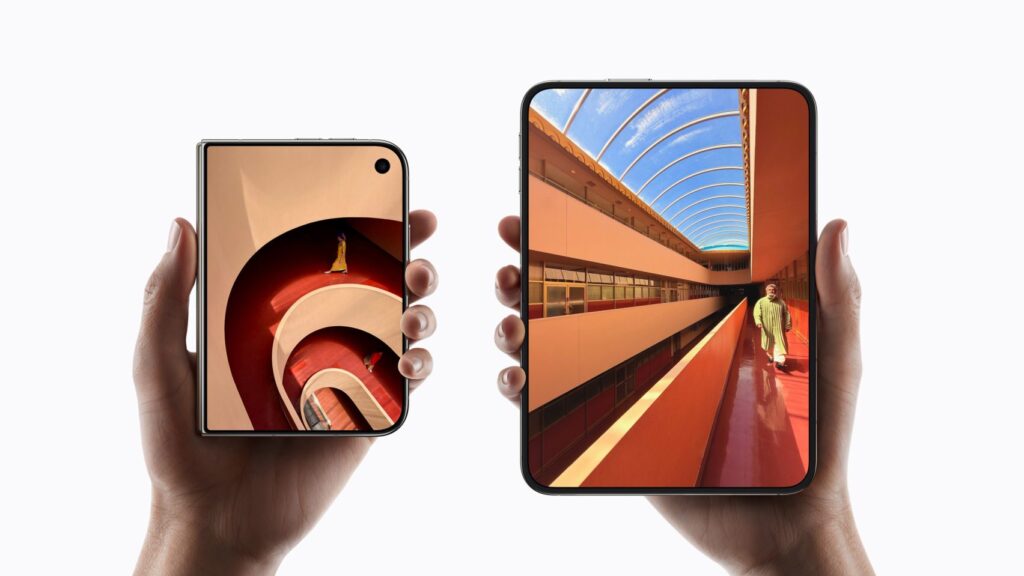
The company has introduced the iPhone Duo, its first foldable smartphone and the first major change to the physical form of the iPhone since the original touchscreen model appeared in 2007. Closed, it has roughly the footprint of a passport; opened, it becomes the largest display Apple has put inside an iPhone.
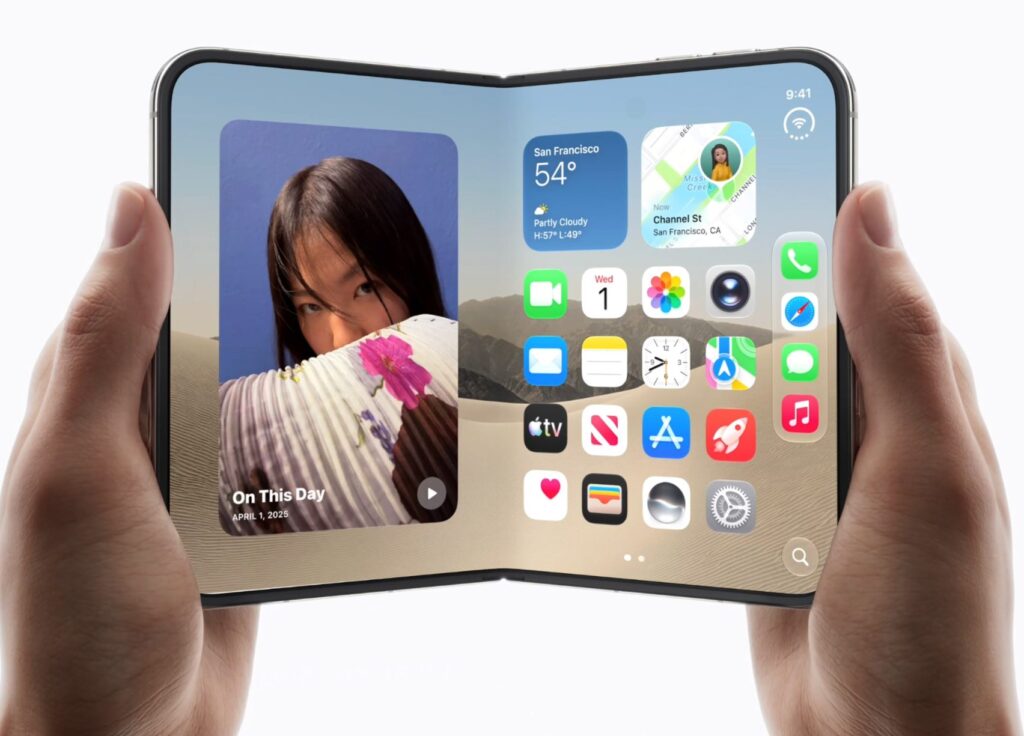
The device measures 5.4 inches in its folded form and opens to a 7.6-inch display. The external screen remains available when the phone is closed, while a central hinge allows the two halves to open into a larger continuous surface.
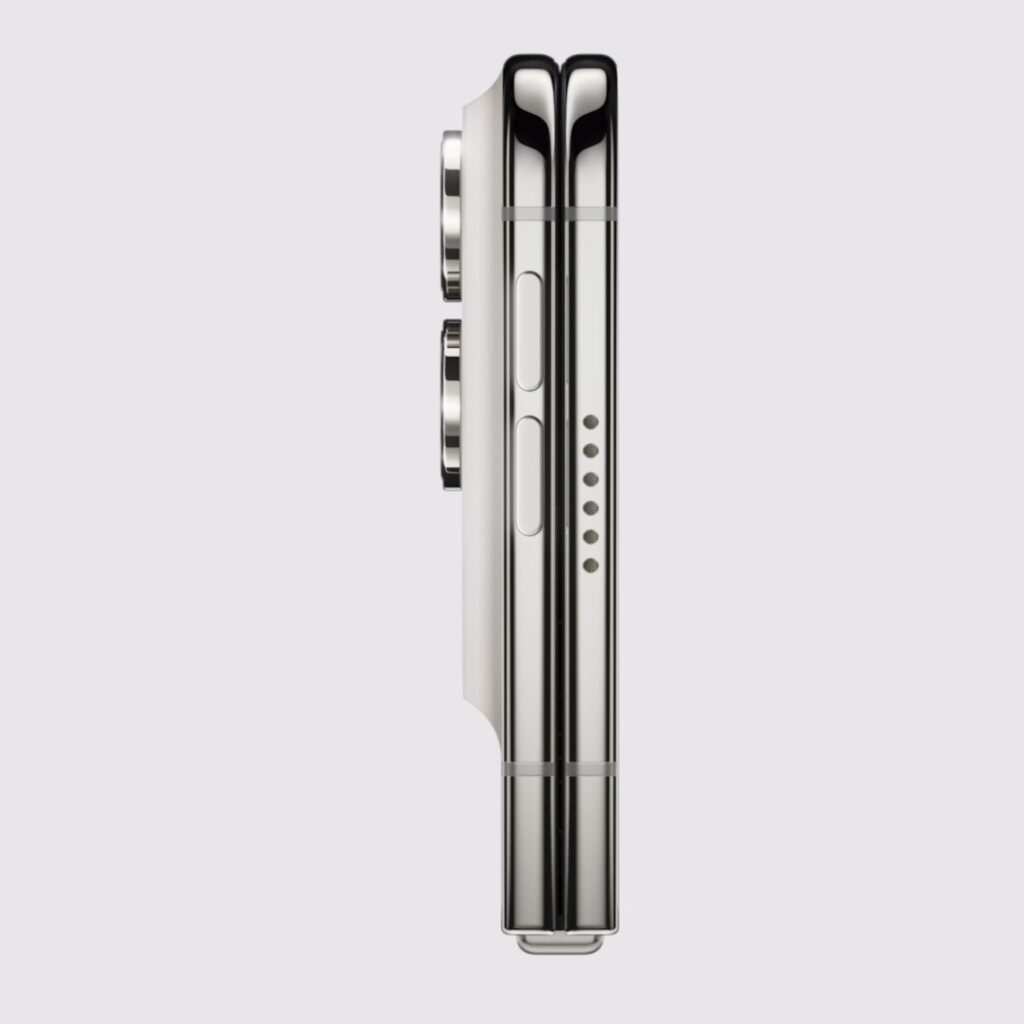
Apple’s industrial design team has treated the hinge as a central part of the object rather than something to hide. Its variable-torque mechanism contains more than 100 components and allows the phone to stay at different angles, giving the device several ways of being used. It can remain partially open, sit flat on a surface or be held like a small book, introducing a physical flexibility that has never been part of the standard iPhone format.

The enclosure is made from titanium, with ceramic protection across the front and back. The folding display uses a multilayer construction topped with scratch-resistant glass, while the internal and external screens retain the same aspect ratio.
One of the more interesting consequences of the folding structure is the treatment of the front-facing camera. The display can cover it when the device is unfolded, leaving the screen to occupy the full surface without requiring a visible camera cutout in the same way as conventional iPhones.
The audio system has also been adapted to the new geometry, with speakers positioned on both sides of the device. Two external cameras sit alongside Apple‘s latest aperture technology, while custom cases extend the phone’s functionality further. One of them includes a built-in kickstand, allowing the Duo to stand on its own when placed on a surface.

Apple CEO John Ternus described the iPhone Duo as a new approach to the foldable phone and positioned the format as a way of turning the iPhone into what he called an “intelligent personal hub”. The company’s presentation placed particular emphasis on how the larger display changes the relationship between the device and the space around it.

The launch also comes with updates beneath the surface. Apple has revised its vapour-chamber cooling system, incorporating recycled steel and a copper plate to manage heat inside the thinner folding construction.
The iPhone Duo arrives alongside the new iPhone 18 and an updated Apple Watch, placing Apple‘s most experimental phone design within a broader product refresh.
Its significance, however, sits in the hinge.
For almost two decades, the iPhone has remained recognisable because its basic geometry stayed remarkably consistent. Screens became larger, bezels became smaller, cameras multiplied and materials changed, yet the object remained a rectangle designed to be held in one hand.
The Duo breaks that continuity.
Nearly twenty years after Apple introduced the first iPhone under then-design chief Jony Ive, the company has changed the basic gesture of using one. The phone now opens, closes, stands, folds into itself and expands again, turning a familiar slab into an object with more than one physical state.