At the 2026 Paris Motor Show, Citroën is bringing one of its most recognisable creations into a new era. The 2 CV Concept revisits the philosophy of the original through a compact electric car designed around affordability, everyday usefulness and a certain lightness of spirit. At 3.76 metres long, with a target weight of around one tonne and a projected starting price of approximately €15,000, the concept proposes a different set of priorities for electric mobility. A production model is planned to join the Citroën range by 2028.
The original 2 CV made its debut at the Paris Motor Show in 1948. Its brief was straightforward: build a practical, inexpensive car capable of serving people across a broad range of everyday situations. Its cultural significance grew from that purpose. It gave people greater freedom to work, travel and move between city streets and rural roads without requiring a substantial investment in a car. Its reputation followed from the life it enabled, rather than from any initial ambition to become an icon.
Citroën CEO Xavier Chardon describes the new project as an attempt to recover that founding principle. The task, he explains, is to rethink the simplicity, accessibility and freedom associated with the original, making electric mobility easier to live with and more appealing. The concept therefore begins with a question about what a small car needs to be in 2026, rather than how closely a new model can reproduce the details of a vehicle from 1948.
A smaller proposition for a market that keeps growing
The 2 CV Concept is intended to sit between the Ami and the C3, addressing a category of compact cars that has gradually lost ground as vehicles have become larger, heavier, more technologically elaborate and increasingly expensive. Citroën sees an opportunity for a different kind of electric car: one built around essential requirements, with a manageable footprint and running costs suited to everyday use.
European manufacturing and a target entry price of around €15,000 form part of that ambition. The concept also anticipates the emerging European E-Car regulatory framework, which is intended to support a new generation of smaller, more accessible vehicles. Its eventual production specifications remain to be confirmed, but the direction is clear: reduce the financial and practical barriers that can make electric ownership difficult to justify.
At 3.76 metres, the concept is shorter than the original 2 CV, an unusual decision for a contemporary passenger car. The reduced dimensions are intended to make urban driving, tight turns and parking less demanding, while preserving the versatility expected of a vehicle used beyond city limits. Citroën presents the car as equally suited to the daily commute and a journey into the countryside, with manoeuvrability and ease of use taking priority over sheer size.
Weight is another central consideration. A target of approximately one tonne would help limit the amount of battery capacity required, potentially reducing both vehicle cost and energy consumption. Rather than pursuing maximum range at any price, the concept is directed towards journeys people make regularly, with a battery and operating costs calibrated to ordinary needs. Technical details such as battery capacity, charging times and final range have yet to be announced.
The same principle informs the car’s construction. Flat body surfaces, air intakes beneath the windscreen and bumpers separated from the main bodywork are among the details intended to simplify production and repair. Individual bumper components could be replaced without requiring the surrounding body panels to be changed, helping make ownership more manageable over time.
Citroën is also working with Michelin on a digital tyre technology described as a universal digital twin of the tyre. The system is intended to monitor tyre condition continuously and help the vehicle adapt its behaviour to changing surroundings. It introduces a layer of technical sophistication while remaining connected to the concept’s practical concerns: safety, maintenance and the relationship between a car and the roads it travels.
A familiar silhouette with a new vocabulary
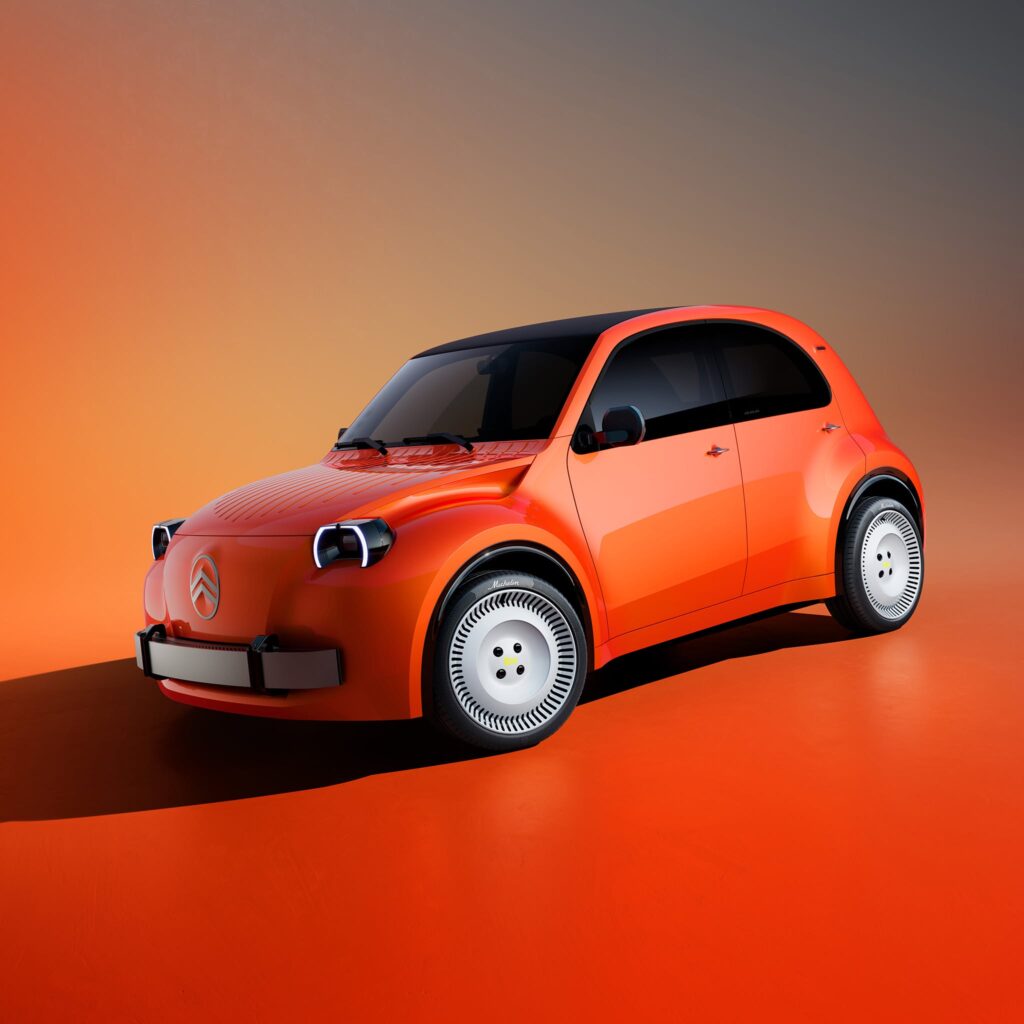
The exterior design works with the proportions that have kept the 2 CV recognisable across generations of drivers. Rounded forms, a compact body and a curved roof establish the connection, while sharper transitions and more sculpted surfaces bring the concept into contemporary design language. The result retains the original’s visual character without treating historical accuracy as an end in itself.
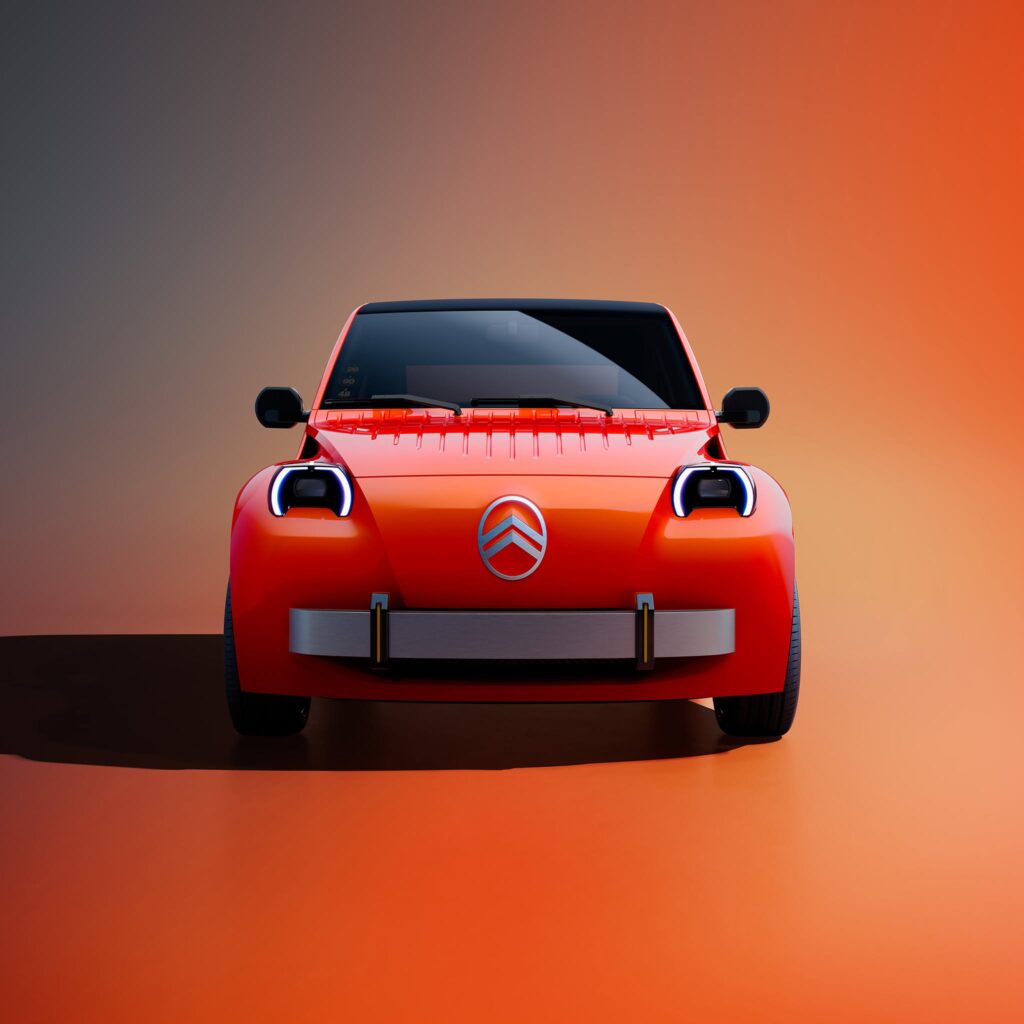
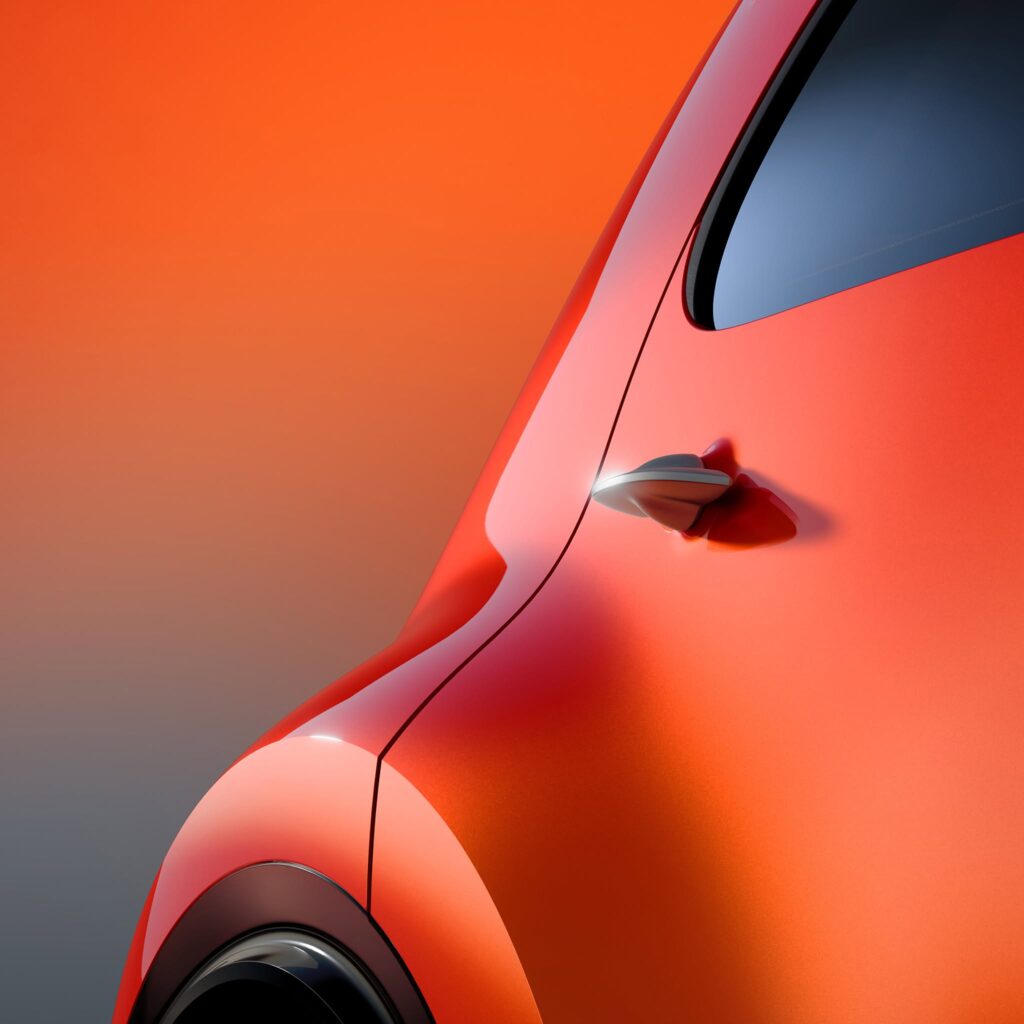
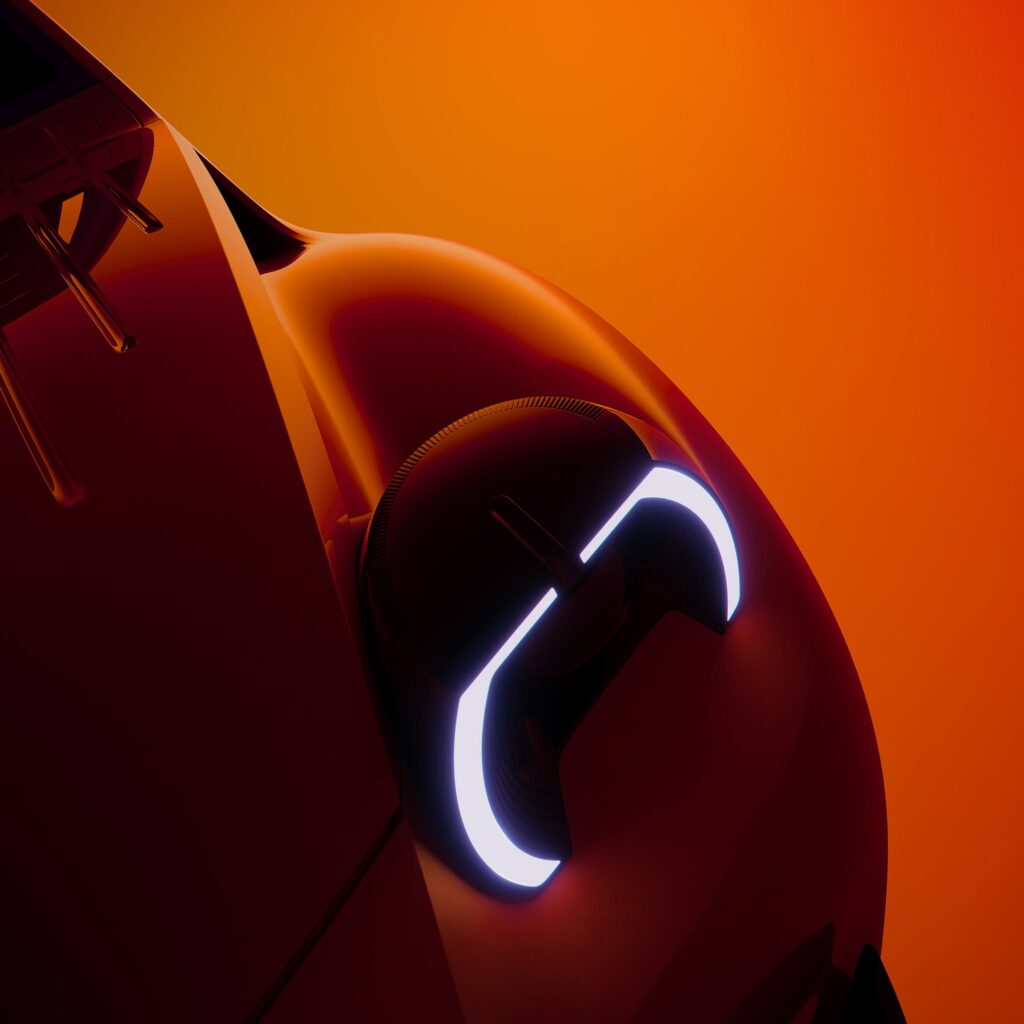
At the front, round headlamps sit apart from the bodywork, accompanied by an expressive LED light signature and a long, sculpted bonnet. Creases inspired by the original car’s thermoplastic bodywork, integrated air intakes and exposed windscreen wipers introduce additional references. The upright windscreen and flowing roofline preserve the familiar outline, while rounded wheel arches and taut side panels give the body a more defined presence.
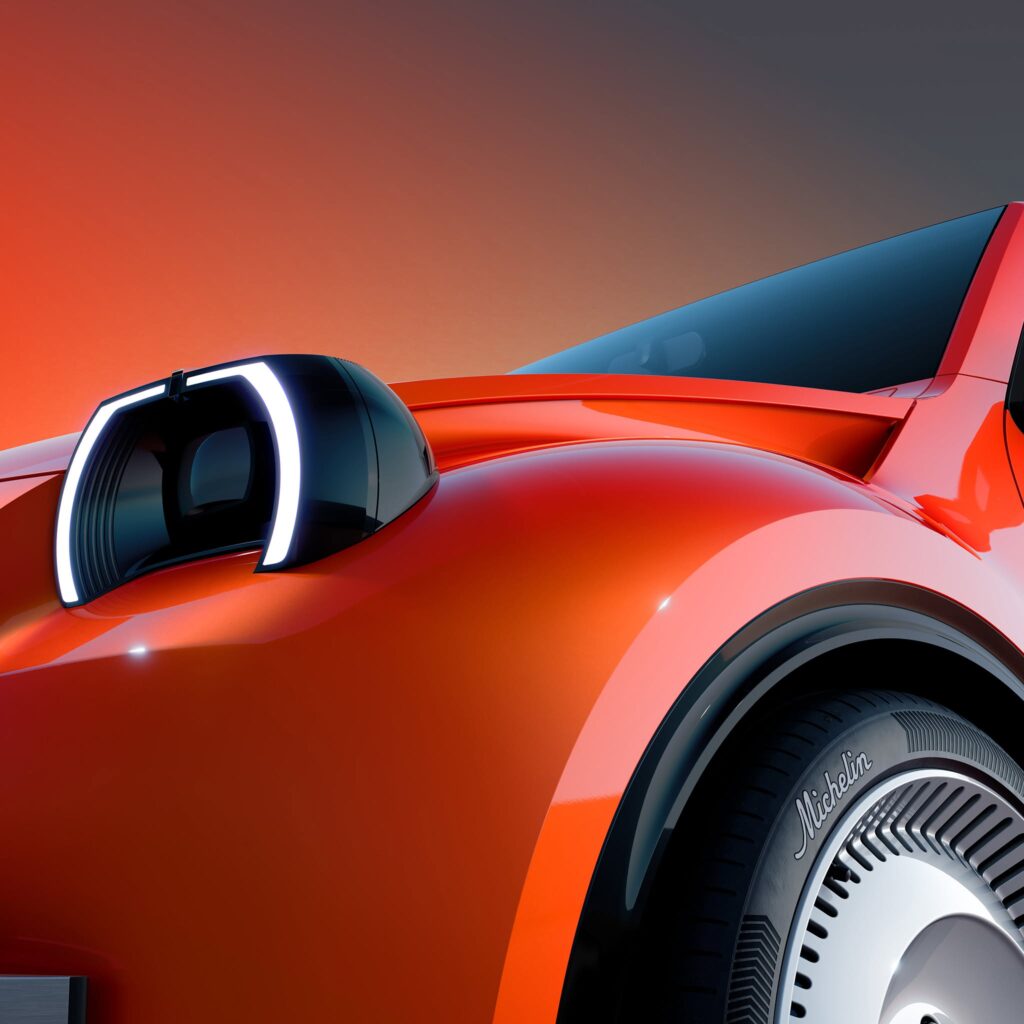
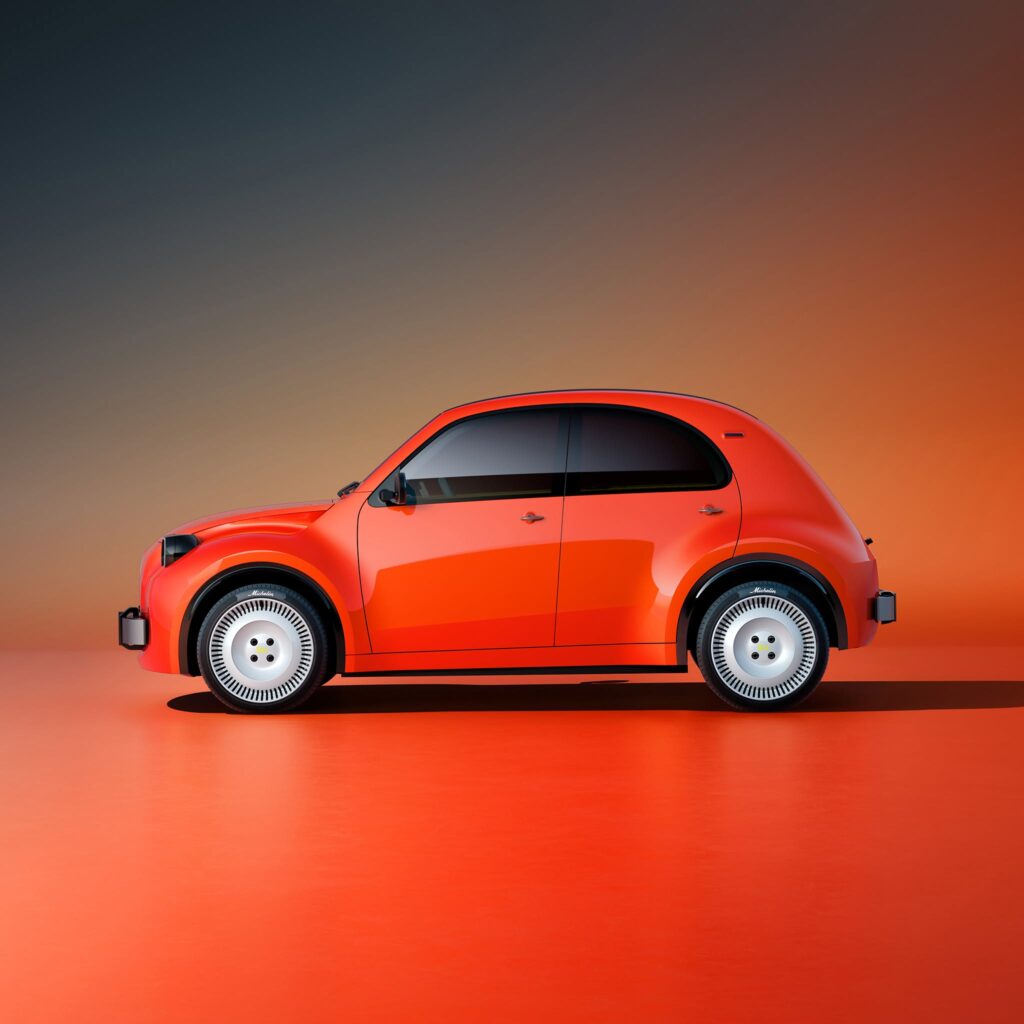
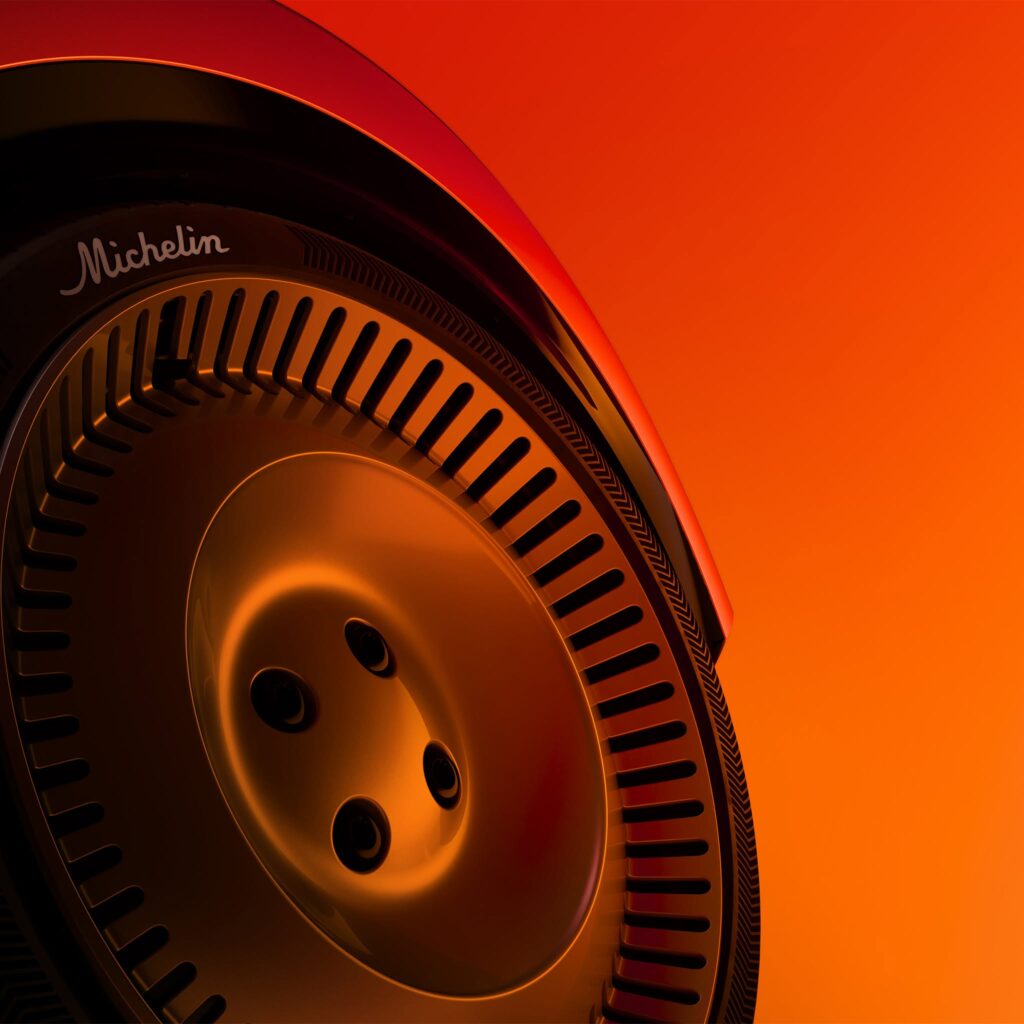
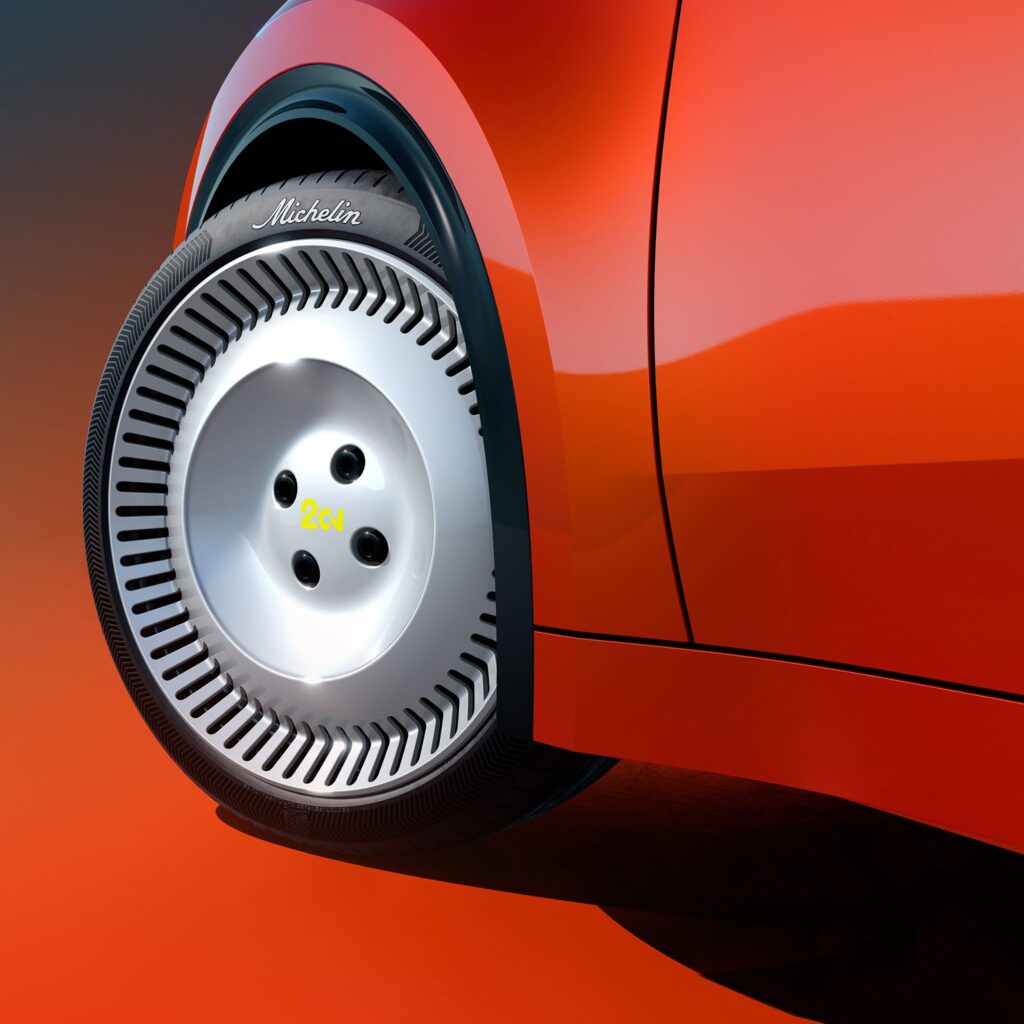
The side profile includes contoured door handles, slim indicators mounted on the C-pillars and 18-inch steel wheels inspired by the original 2 CV. Michelin tyres carry the brand’s Heritage logo and Citroën chevrons, extending the relationship between the concept and the companies involved in its development.
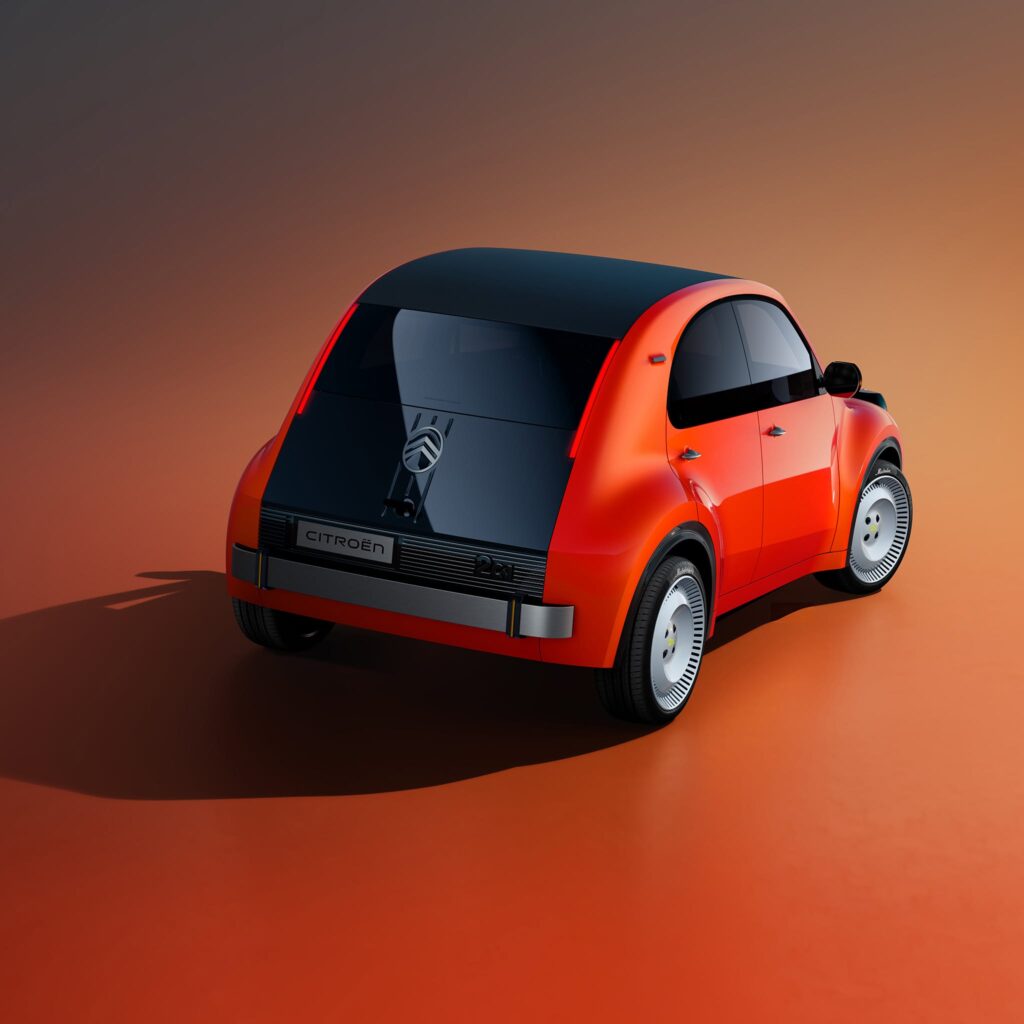
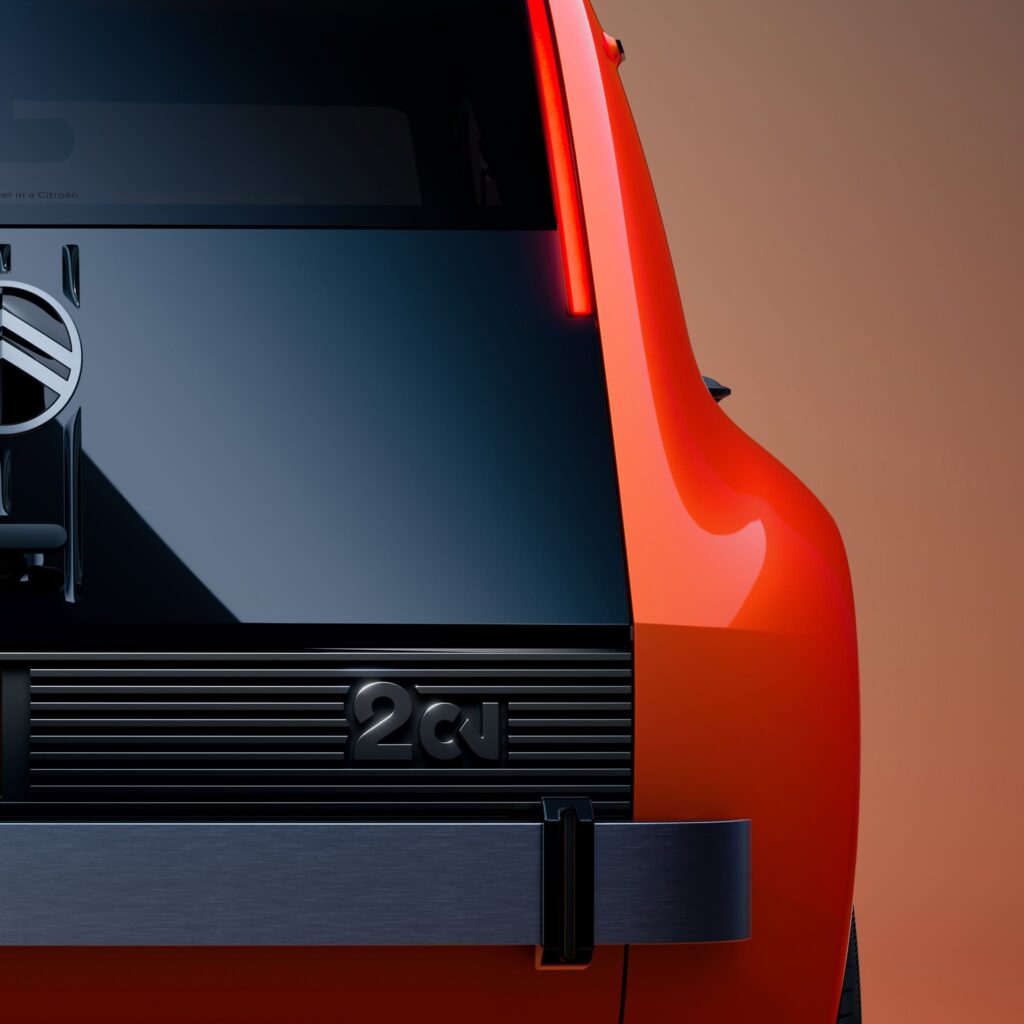
At the rear, a black tailgate panel descends towards the bumper, recalling a feature of the first-generation 2 CV. LED lights flank the tailgate, while three horizontal stripes and a short rear overhang reinforce the car’s compact proportions. A visible tailgate handle and a number plate displaying the 2 CV’s international nicknames complete a design that places its references in the details rather than relying on a literal reconstruction.
An interior organised around everyday life
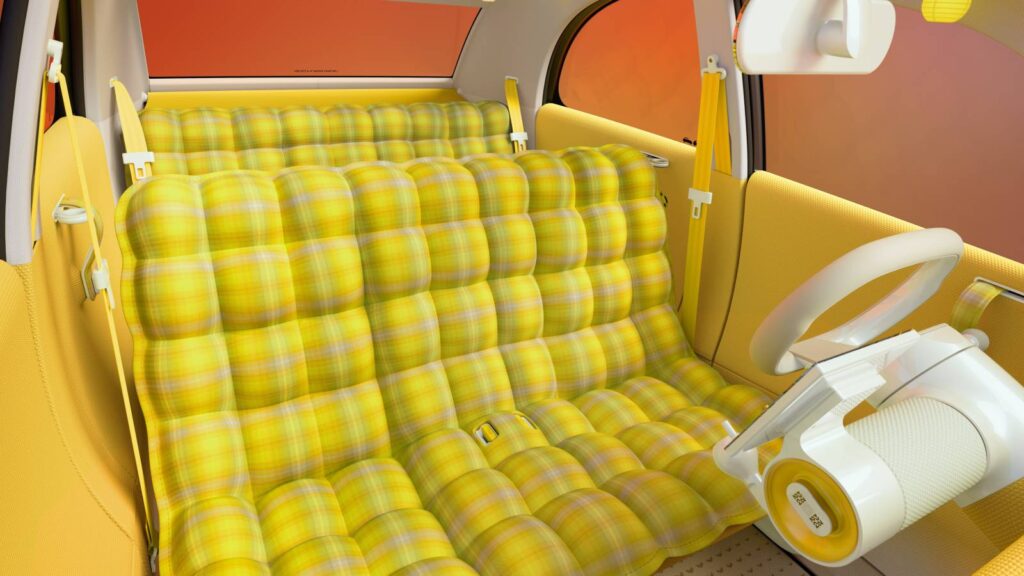
Inside, the concept treats space as something to be used generously. The conventional dashboard has been removed, the door panels are recessed and the front seats are broad, with Citroën Advanced Comfort technology intended to support relaxed travel. One of the front seats can slide outwards, creating a place to sit and rest during a stop.
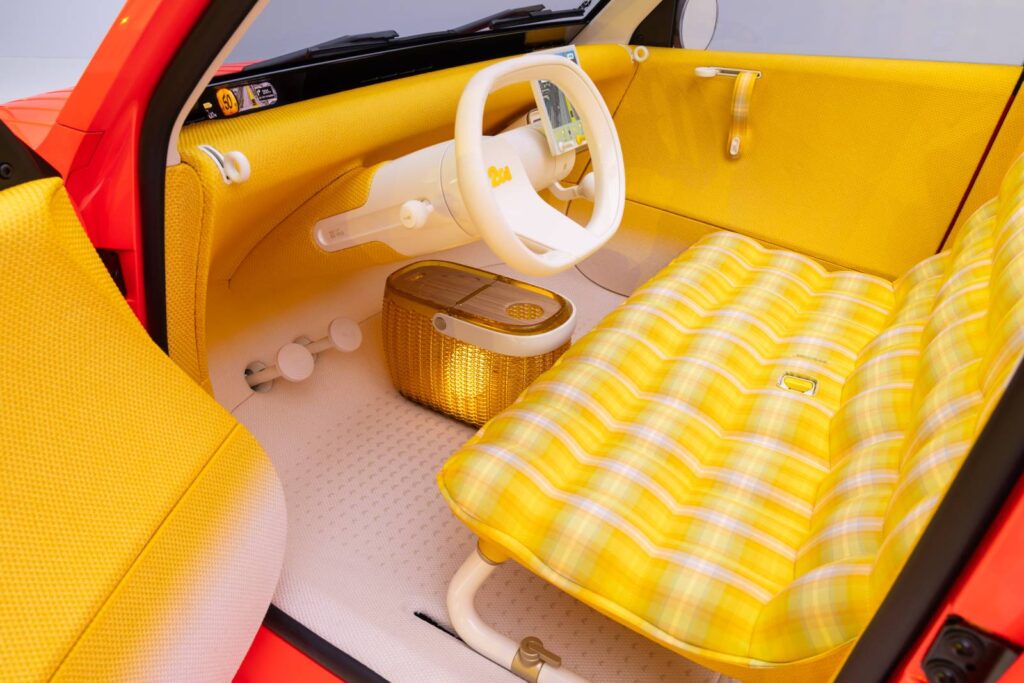
Storage follows the same practical logic. A removable basket takes the place of a traditional centre console, while soft fabric straps serve as door handles. The compartments built into the doors are designed to accommodate eggs, reviving an original 2 CV requirement that called for the car to transport them without breakage across rough roads. The detail captures the thinking behind the historic model: a small design decision made in response to a real, everyday problem.
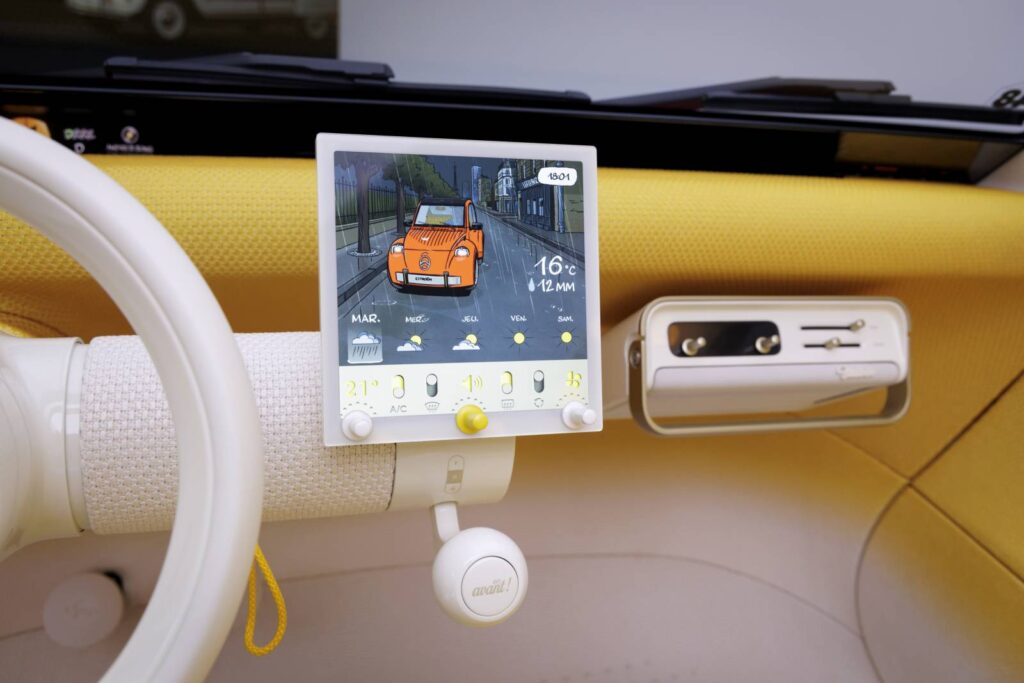
The driving controls are arranged around a cylindrical structure in place of the dashboard. It supports a single-spoke steering wheel, a central control lever, paddle-operated gear selection and a Citroën Smart Vision display positioned within the driver’s field of vision. An eight-inch square touchscreen adds digital functionality, with graphics inspired by comic books. The intention is to keep information accessible without allowing the interface to dominate the cabin.
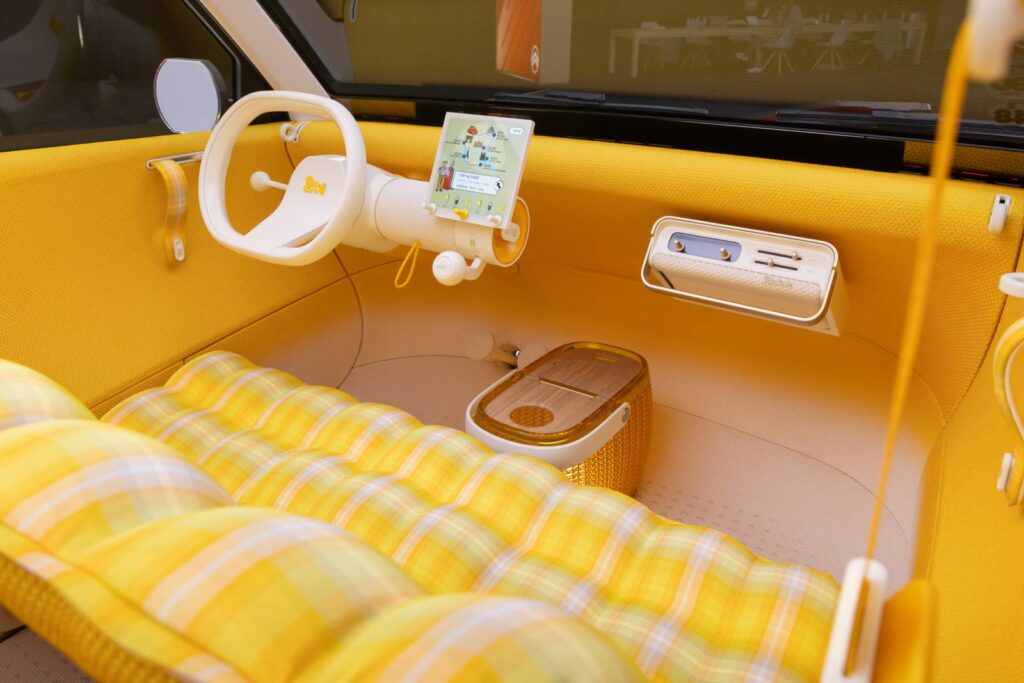
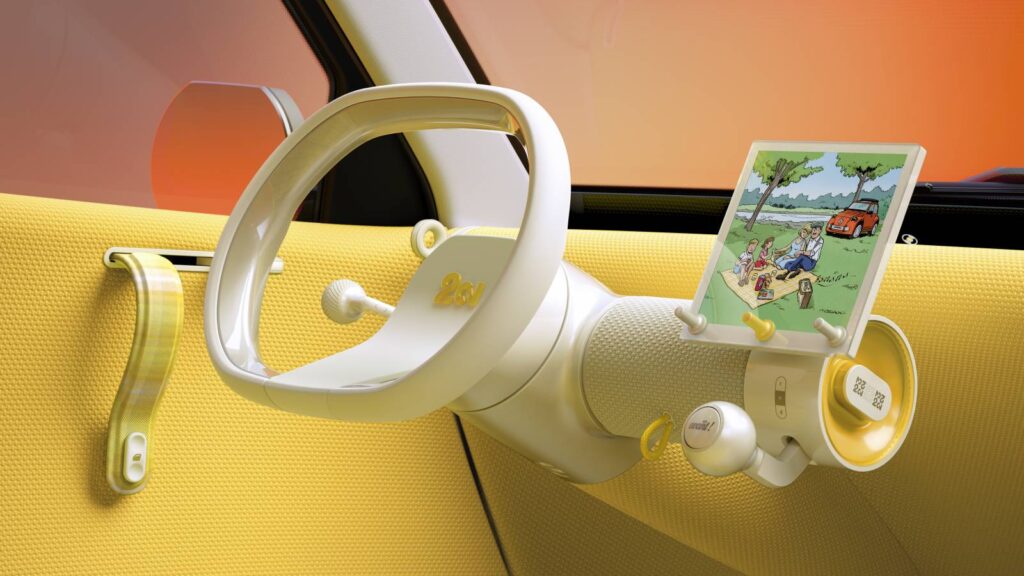
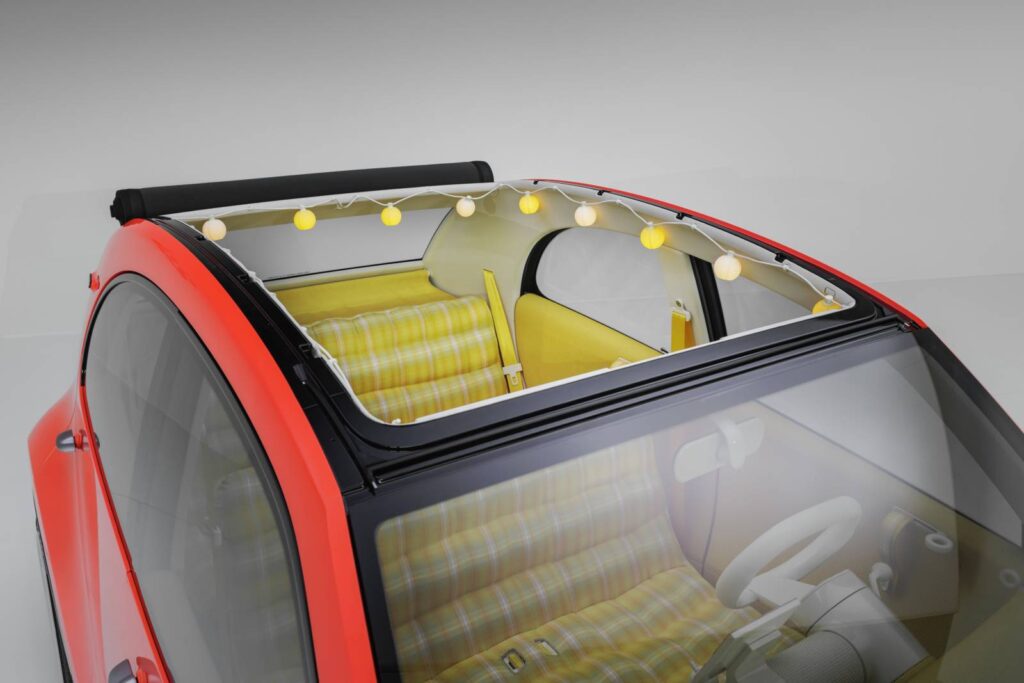
There is also Radioën, a detachable radio that doubles as a portable speaker. It can accompany occupants outside the vehicle, extending its use beyond the journey itself. Above, a fabric sunroof brings daylight into the cabin and opens up the view, reinforcing the sense of airiness created by the simplified interior architecture.
Every component is expected to justify its place. Controls are designed for intuitive use, storage is integrated into the layout and technology serves the practical experience of travelling. Comfort is treated as a matter of space, visibility and ease, as much as equipment.
Colour, texture and the pleasure of detail
The concept’s visual identity continues through a palette built around warmth and energy. Its exterior colour, Infra Red, begins with an orange base and carries yellow and red undertones, giving the body a saturated finish that suits the car’s cheerful character.
Inside, tartan upholstery revisits one of the original 2 CV’s familiar motifs in bright yellow tones. Beige accents inspired by Bakelite appear on the steering wheel, controls, instrument panel and seat piping. Textured materials recalling woven cane and basketry cover selected areas of the floor, dashboard and door panels, adding tactile variation to the otherwise pared-back cabin.
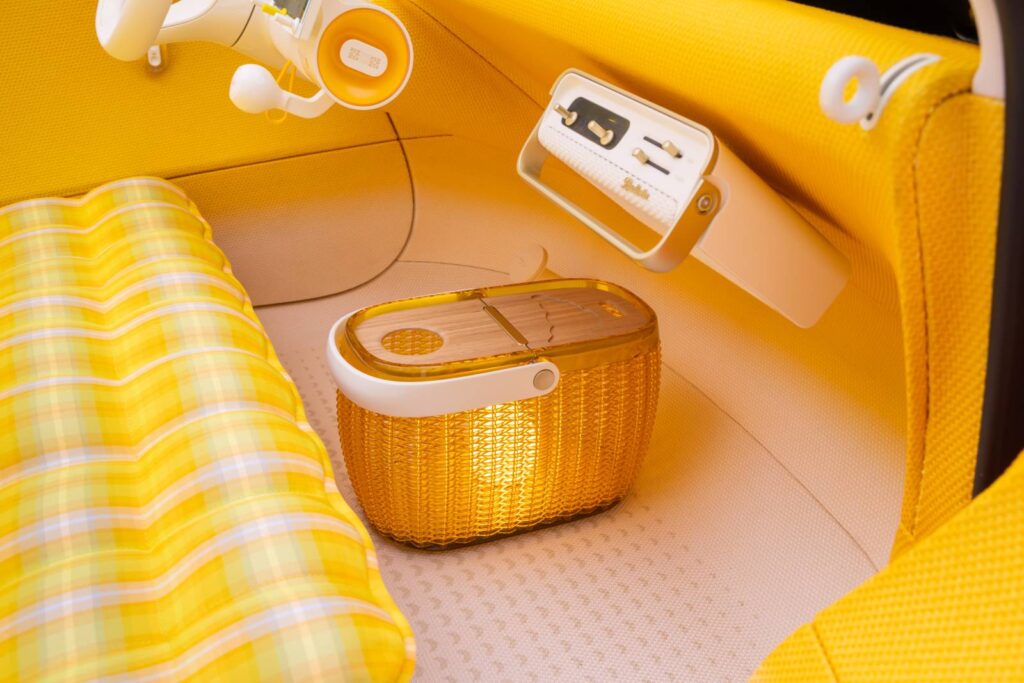
A removable storage basket combines wood with bio-based plastic and is produced using 3D printing. Wood also appears around the Radioën unit, bringing a natural material into the car’s technical elements. The light-grey steel wheels are finished with yellow colour clips bearing the 2 CV name, giving the wheels a small point of contrast without abandoning their utilitarian origins.
The concept’s smaller references carry much of its personality. A familiar horn sound and an electric-motor start-up sequence echo the original car’s acoustic character. Heart-shaped stickers recall the affection the 2 CV accumulated over decades of use. Three numbers — 48, 90 and 26 — appear on the windscreen, marking the model’s original launch in 1948, the end of production in 1990 and the concept’s unveiling in 2026.
The Michelin tyres feature an exclusive chevron pattern, while the number plate lists the names by which the 2 CV became known in different countries. Even the pedals carry a joke: a tortoise marks the brake and a rabbit the accelerator, a playful reference to the driver’s ability to slow down or move ahead. These touches give the concept a sense of continuity without turning the car into a museum piece.
The case for a more accessible electric car
The 2 CV Concept arrives at a moment when the cost, weight and complexity of electric vehicles remain central questions for the industry. Citroën‘s response begins with scale and restraint: a smaller body, a target weight of around one tonne, a projected price near €15,000 and a design intended to accommodate the routines of daily life. The concept also places repairability, practical storage and straightforward controls within the same brief as electrification.
Whether the final production car can deliver on these targets will depend on the specifications and pricing of the model planned for 2028. For now, the concept establishes a clear direction for Citroën’s approach to the small electric car, drawing on a name with a long history of making mobility available to a wider public.
The original 2 CV became part of everyday life because it answered a straightforward need with ingenuity and character. Citroën‘s new concept asks what that same ambition might look like under today’s conditions, with electric power, contemporary materials and a compact footprint. Its central idea remains grounded in the experience of getting somewhere: a car should make movement easier, ownership more attainable and the journey itself worth enjoying.
Citroën online:
Website
Instagram
Photo: (c) Stellantis