Rachel Rose expands her practice into painting with “The Rest,” a new body of work presented at Gladstone Gallery in New York through April 25, 2026. Comprising fourteen oil paintings on wood, the exhibition marks a significant development for the artist, who is primarily known for immersive video installations exploring memory, perception, history, and emotional consciousness. Rather than representing a departure from her earlier work, the paintings extend those same concerns into a quieter and more tactile visual language.
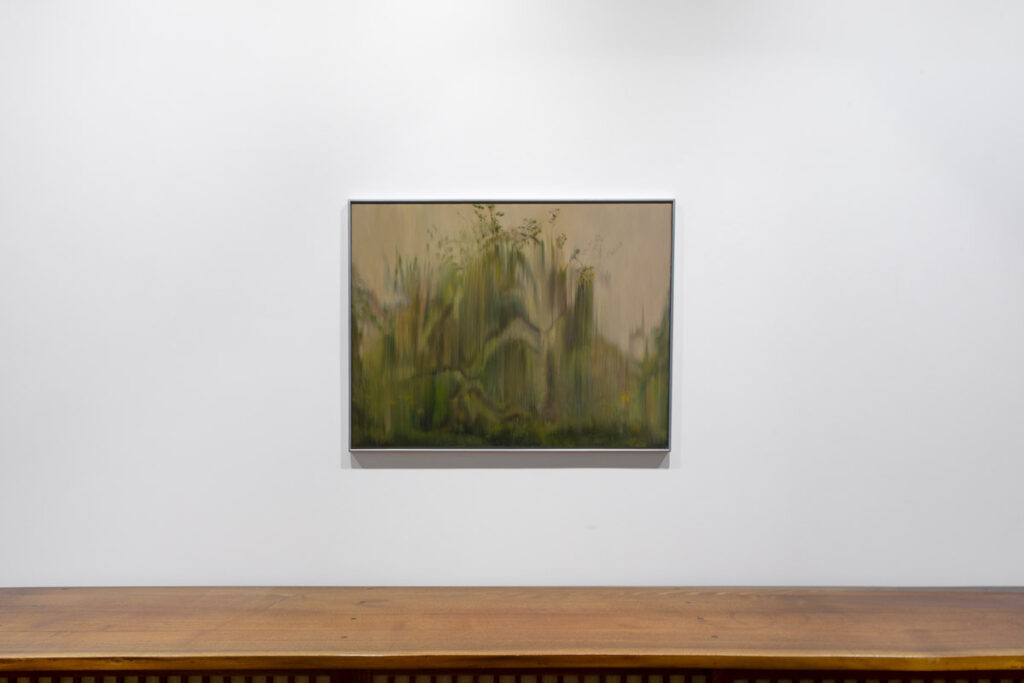
The series draws loosely from the biblical story of the “Flight into Egypt,” yet Rose avoids direct narrative illustration entirely. Mary, Joseph, and the infant Jesus never physically appear within the compositions. Instead, the paintings focus on the psychological atmosphere surrounding moments of pause, vulnerability, and uncertainty during the journey. Landscapes become emotionally charged spaces where absence itself carries narrative weight.
Throughout the exhibition, forests, shifting skies, water, and fragmented natural forms emerge through blurred surfaces and layered textures. Light appears unstable, time feels suspended, and perspective remains fluid. In several works, the viewer seems to occupy an implied maternal point of view, moving through environments shaped by instinct, care, and latent danger rather than explicit storytelling.
Rose’s interest in landscape painting developed gradually during her time as a docent at the Yale Center for British Art, where she became increasingly interested in how pastoral imagery historically shaped ideas of nature, identity, and social order. Those investigations informed earlier projects examining enclosure, environmental transformation, and the psychological dimensions of space, eventually leading toward this more intimate body of paintings.
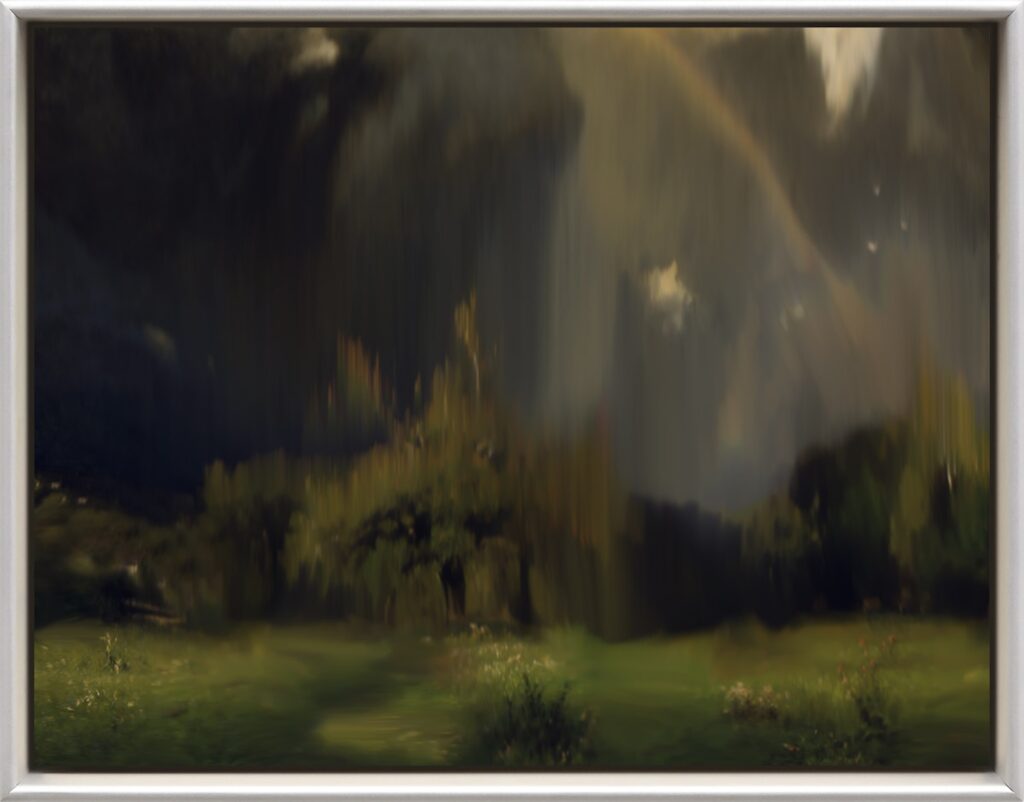
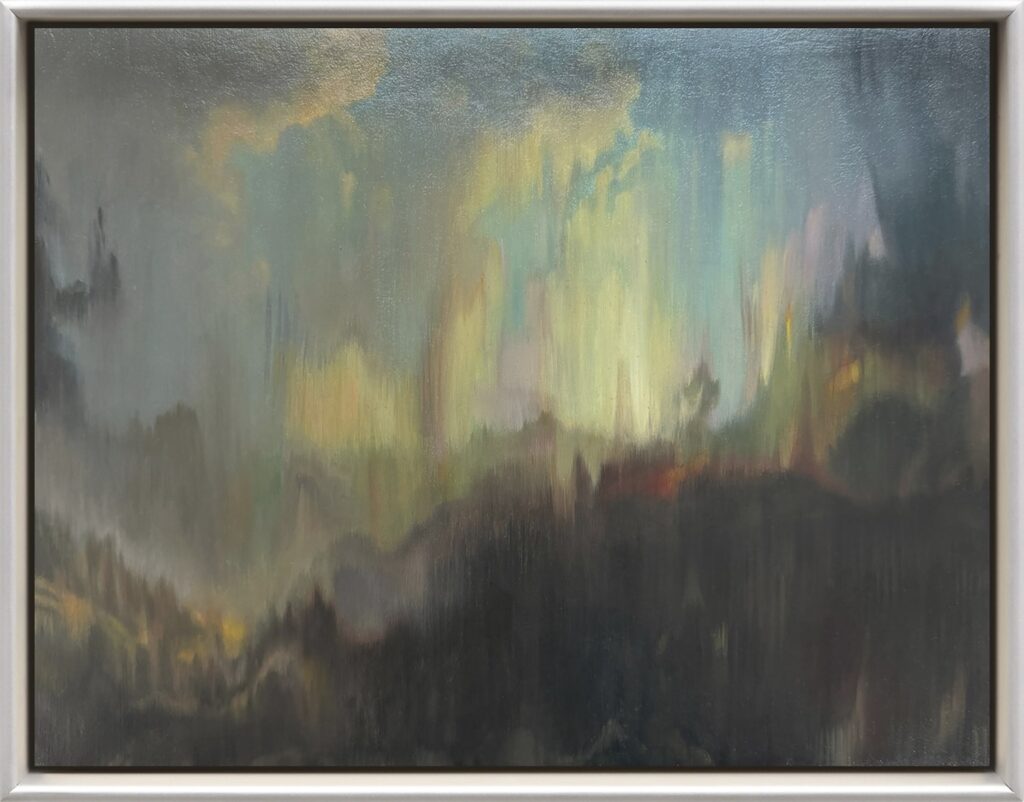
Although rooted in biblical reference, “The Rest” does not approach religious imagery devotionally. Instead, Rose treats the story as a cultural framework through which larger questions about perception, symbolism, and inherited visual narratives can be explored. Natural elements, birds, water, moonlight, branches, shifting atmospheres, function less as literal symbols and more as emotional signals embedded within the landscape itself.
Motherhood also quietly shapes the series. Rather than depicting Mary as a visible figure, Rose centers the emotional intensity associated with maternal awareness and protection. The absence of the body becomes significant in itself: the paintings are structured around a psychological presence rather than direct representation. In doing so, the exhibition subtly repositions a canonical narrative historically filtered through male artistic traditions.
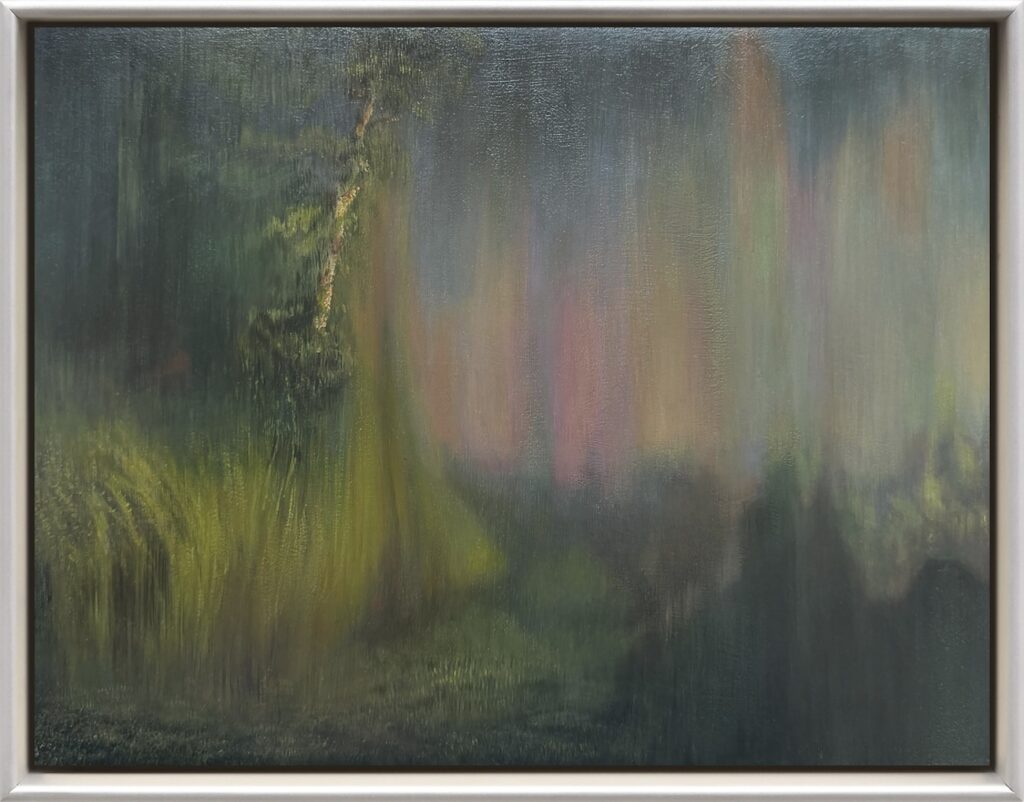
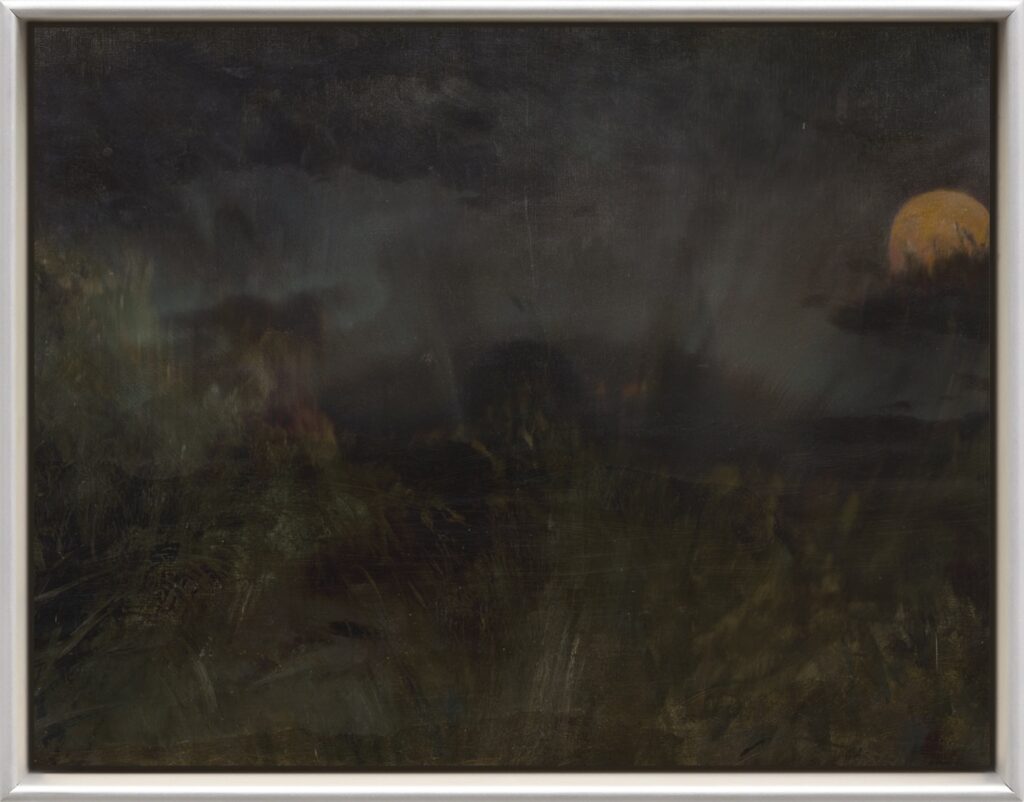
Installed within the restrained architecture of Gladstone Gallery, the paintings unfold slowly through nuanced variations in color, texture, and atmosphere. Deep blues, muted greens, and softened edges create a continuous sense of immersion, while overlapping forms and traces of revision suggest images still in the process of becoming. Rather than offering fixed meanings, the works invite prolonged attention and emotional navigation.
In “The Rest,” Rachel Rose transforms a familiar biblical narrative into something far more open-ended and contemporary, a meditation on vulnerability, perception, motherhood, and the unstable relationship between humanity and the natural world.
Photo: courtesy of Rachel Rose / Gladstone Gallery