Smart glasses have spent years trying to find their place between wearable technology and everyday eyewear. RayNeo’s iO takes a practical route, placing translations, meeting notes, notifications and AI assistance directly within the wearer’s field of view. Introduced at IFA 2026 in Berlin by the Shenzhen-based brand, the device centres on a straightforward premise: access useful information without constantly reaching for a smartphone.
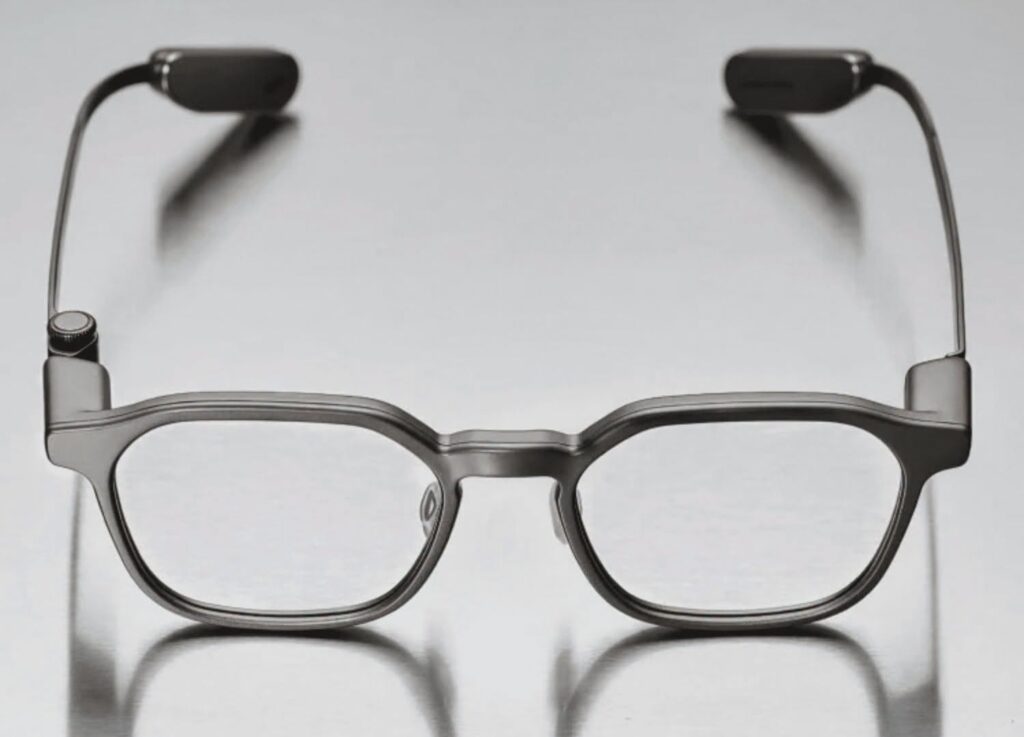
Available since September, RayNeo iO combines a monochrome MicroLED display with diffractive waveguide optics, projecting digital information into the wearer’s line of sight while keeping the surrounding environment visible. The visual area is described by the brand as equivalent to a 33-inch screen viewed from approximately two metres away. With a weight of just 33 grams, the glasses are designed for extended everyday use, placing a compact interface within ordinary visual experience.
The optical system, named Blue Lake, offers 97% optical transparency, with brightness reaching 1,300 nits for visibility in outdoor and brightly lit settings. RayNeo’s Firefly Nano optical engine confines displayed information to a defined portion of the field of view, allowing the wearer to consult data without covering their entire line of sight.
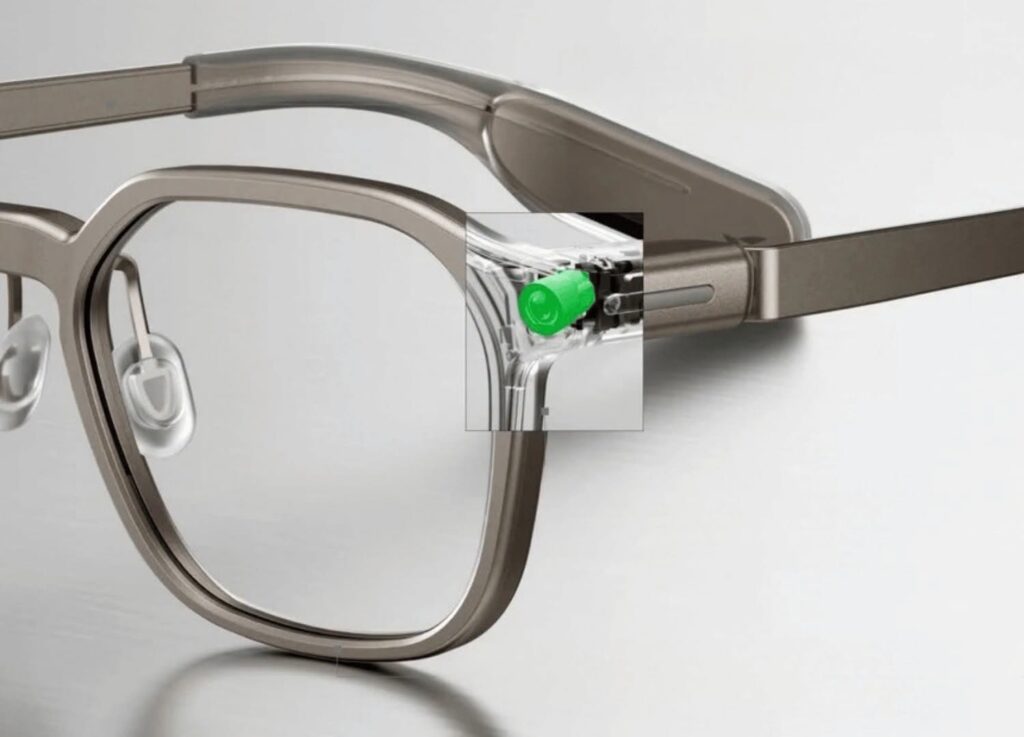
The physical design draws on French eyewear from the 1930s and 1940s, adopting a Crown Panto frame with a distinctly classic profile. The main structure uses AZ91D magnesium-aluminium alloy, while the temples are crafted from aerospace-grade titanium. Two colour options are available: Polar Night, a dark grey, and Dune, a gold finish. Custom prescription lenses can also be fitted, bringing the device closer to conventional eyewear in both appearance and function.
A Screen for the Working Day
RayNeo iO is built around the small pieces of information that tend to interrupt a working day. Its dashboard displays the time, weather, battery status, calendar entries, activities and reminders, alongside stock prices, emails, time zones and smartphone notifications. The wearer can check these details at a glance, reducing the need to switch attention between a conversation, a screen and the task at hand.
Real-time translation is one of the device’s central features. Supporting 55 languages and 109 accents, the system delivers translated speech through on-screen subtitles or audio, with an indicated latency of approximately one second. Text appears directly in the wearer’s view, making it possible to follow conversations across language barriers while maintaining visual contact with the person speaking.

The glasses also include a teleprompter function for presentations, speeches and public appearances. Notes can be displayed in the wearer’s field of view, giving speakers access to their material while keeping their attention directed towards an audience. The feature places RayNeo iO within a growing category of wearable tools designed for professional communication, where discreet access to information can be particularly useful.
From Conversations to Meeting Notes
Voice capture extends the glasses’ role beyond displaying information. Four microphones and a bone-conduction sensor support audio input, while a rotating physical control, the Smart Crown, positioned on the right temple, allows users to initiate recording.
Recorded material can be converted into transcripts, with the system generating meeting summaries, notes and lists of tasks or relevant details identified during a conversation. For people moving between meetings, interviews and presentations, these functions offer a way to capture information without repeatedly opening a separate recording or note-taking application.

An integrated AI assistant adds another layer of interaction. Activated through the voice command “Hey, RayNeo”, it allows users to ask questions, retrieve information and operate supported functions hands-free. RayNeo also provides access to different AI models and services, with availability depending on the model and subscription requirements. The options listed by the brand include RayNeo AI, Gemini, ChatGPT, Claude and DeepSeek.
Privacy Without a Camera
The absence of a camera is one of RayNeo iO’s defining decisions. The glasses use Bluetooth 5.4 for connectivity and focus on displaying information, processing voice input and supporting communication, rather than capturing photographs or video. Removing the camera reduces the potential for covert visual recording, a persistent concern surrounding smart eyewear used in public and professional settings.

RayNeo states that the glasses include an indicator to signal when recording or translation features are active. The company also describes the device as developed according to Privacy by Design principles and in compliance with GDPR standards. These measures form part of the product’s approach to privacy, although users should still consider how voice recordings, transcripts and connected AI services handle their data.
Battery performance depends on how the glasses are used. The 240 mAh battery is rated for up to 48 hours of standard use and up to 250 hours on standby, while translation and other smart functions can run for up to six hours. The device supports both Android and iOS, carries an IP54 rating for dust and water resistance, and comes with a USB-C charging accessory, interchangeable nose pads and silicone temple tips. A charging case is available separately.
RayNeo iO approaches wearable AI through a specific set of everyday tasks: understanding another language, delivering a presentation, keeping track of a busy schedule and retaining the details of a meeting. Its display and voice tools bring those functions into a discreet format, while the camera-free design addresses one of the more contentious aspects of smart eyewear. The proposition is practical in scope, placing less emphasis on spectacle and more on how technology can fit into the flow of work and communication.
RayNeo online:
Website
Facebook
Instagram
Photo: (c) RayNeo