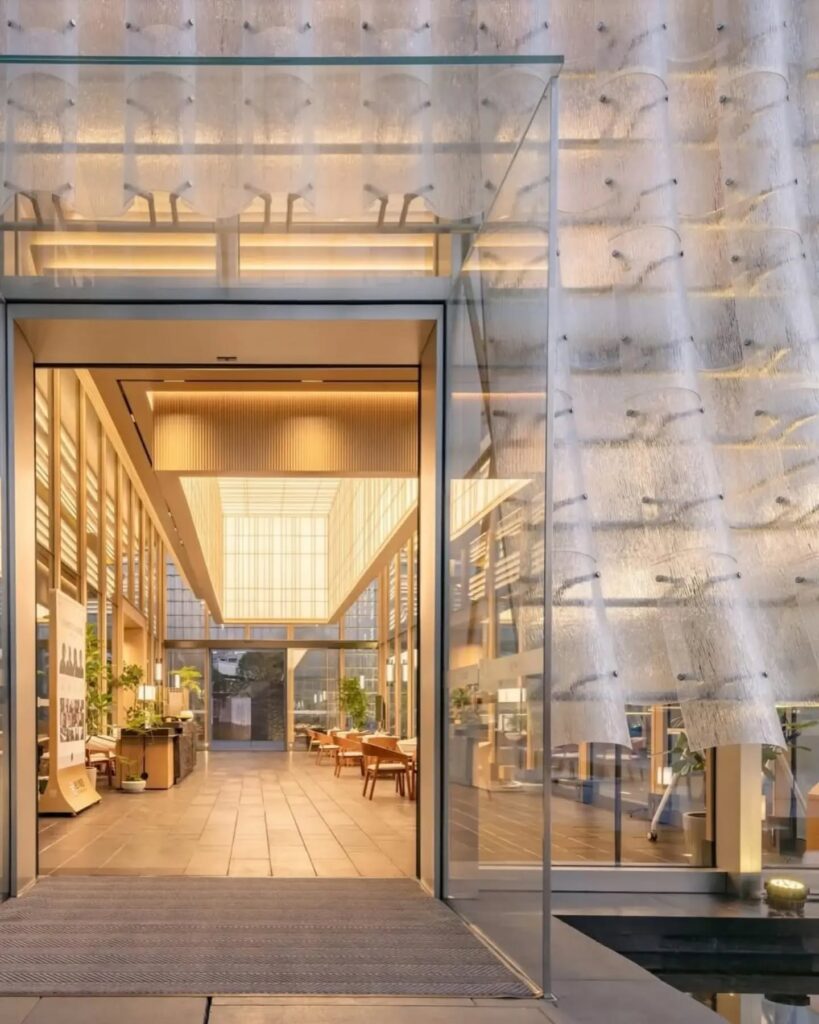
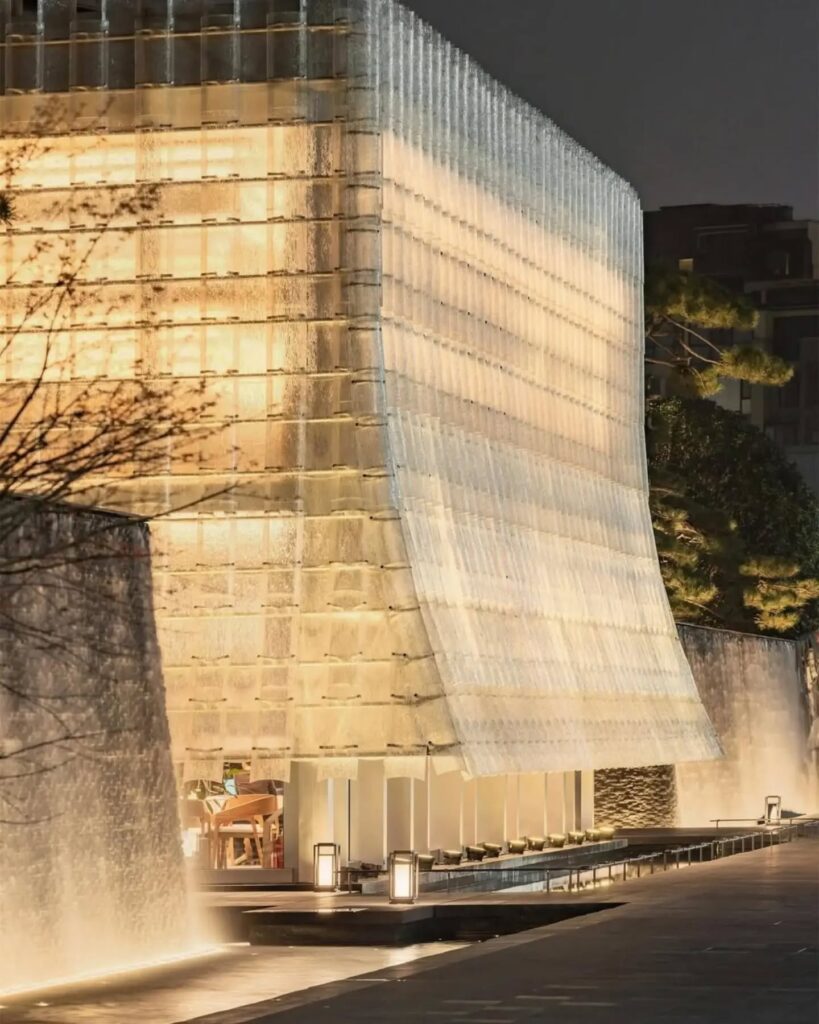
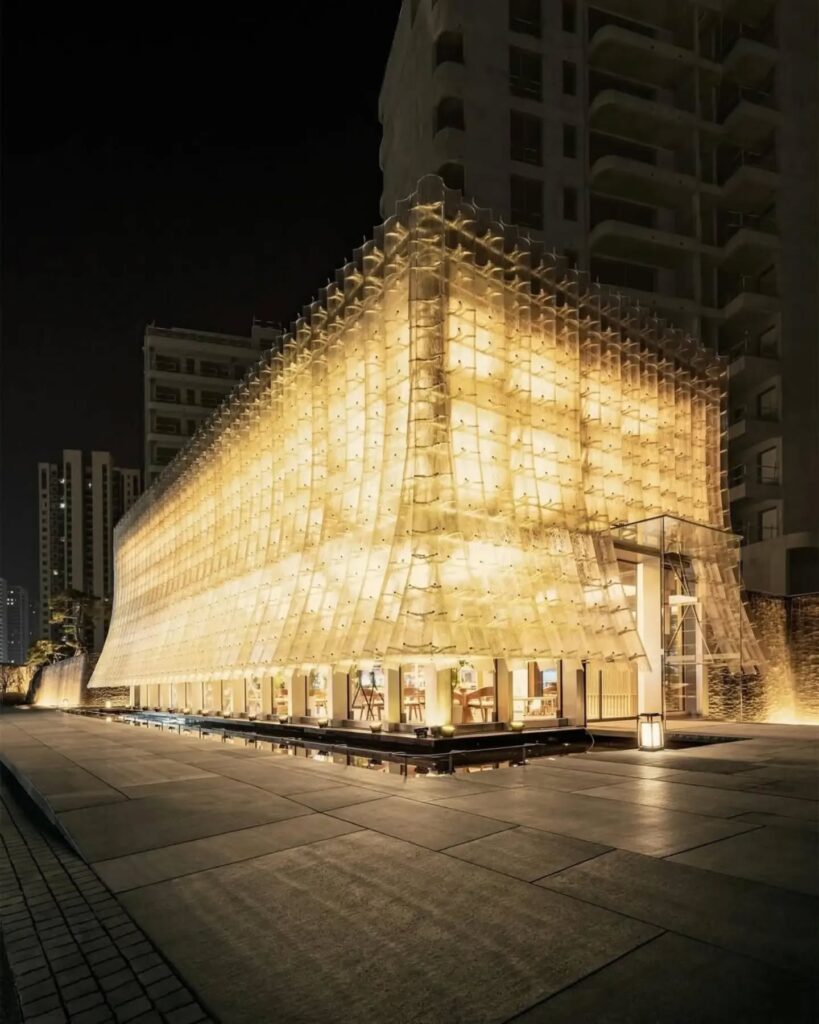
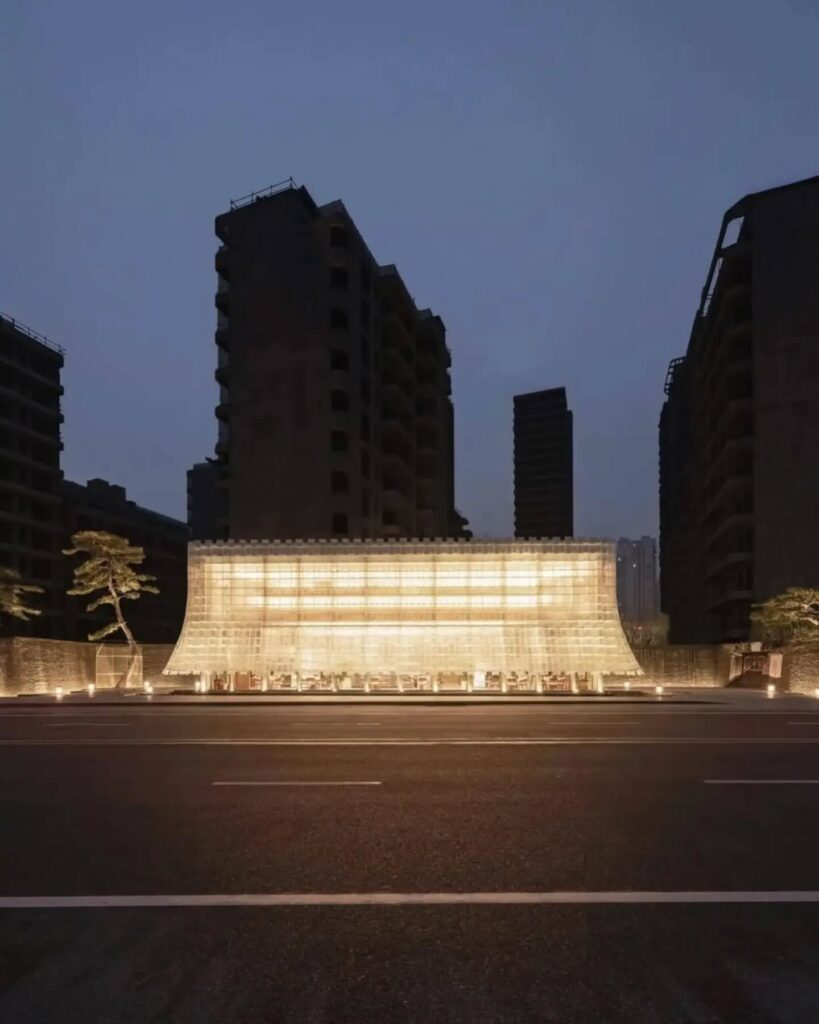
Designed by Guangzhou S.P.I Design Co., Sino Palace establishes its architectural identity through a considered study of Chinese cultural references, contemporary art and material craftsmanship. At its entrance, the familiar geometry of the Louvre’s glass pyramid undergoes a reinterpretation informed by the traditional binding techniques used for Chinese bamboo scrolls. The resulting structure brings two architectural histories into the same frame, using geometry and construction logic to explore how cultural references can acquire new meaning in a contemporary setting.
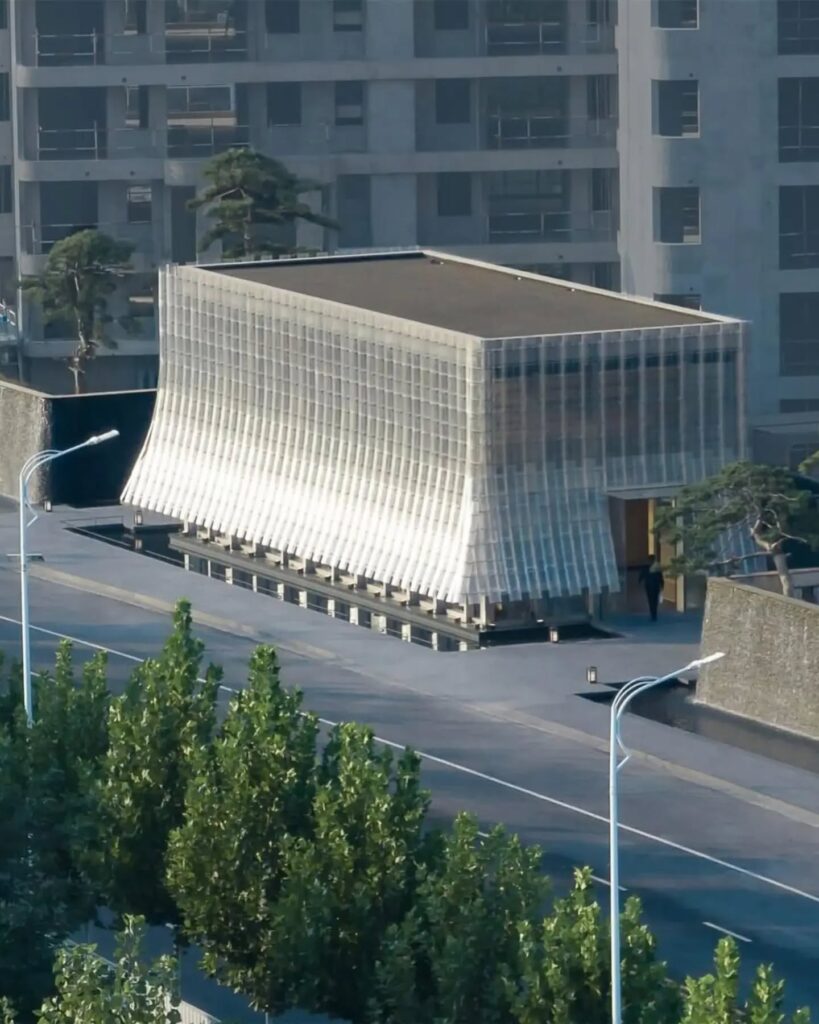
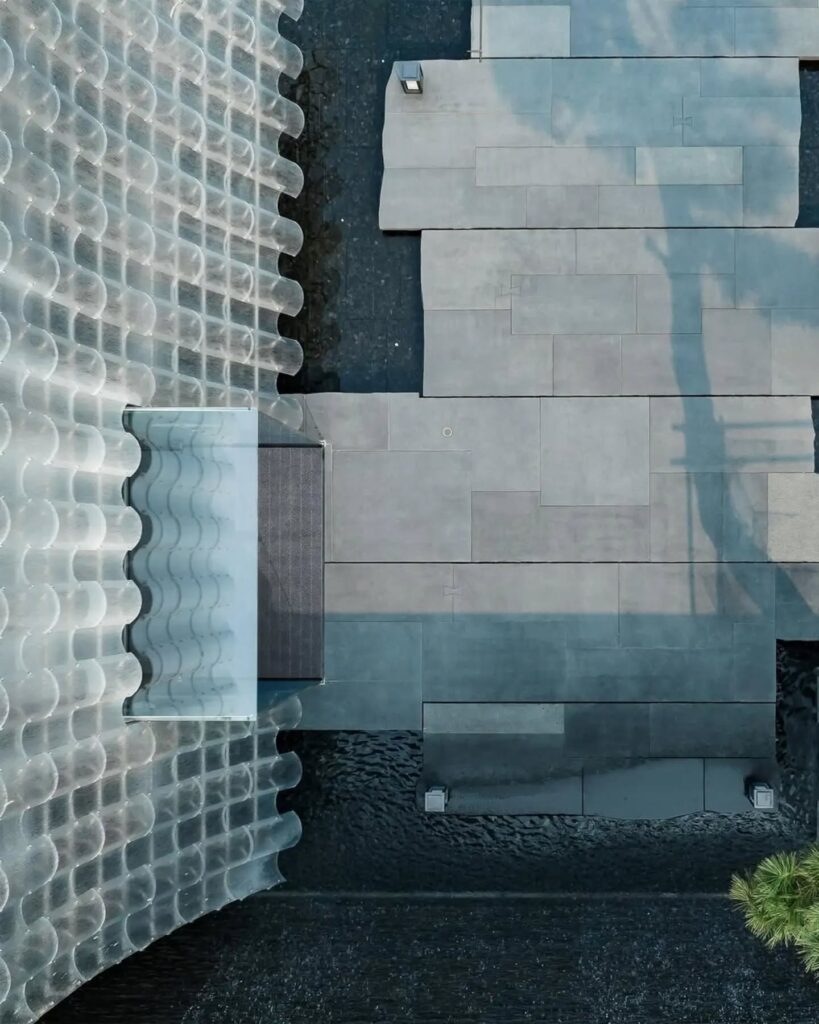
A 100-metre cascading waterfall defines the approach to the development, giving the entrance sequence a strong physical and sensory dimension. As visitors move from the surrounding city towards the interior landscape, the sound and movement of water gradually alter their perception of the space. The transition establishes a measured rhythm between the urban environment and the community, while drawing on the contemplative qualities associated with traditional Chinese gardens.
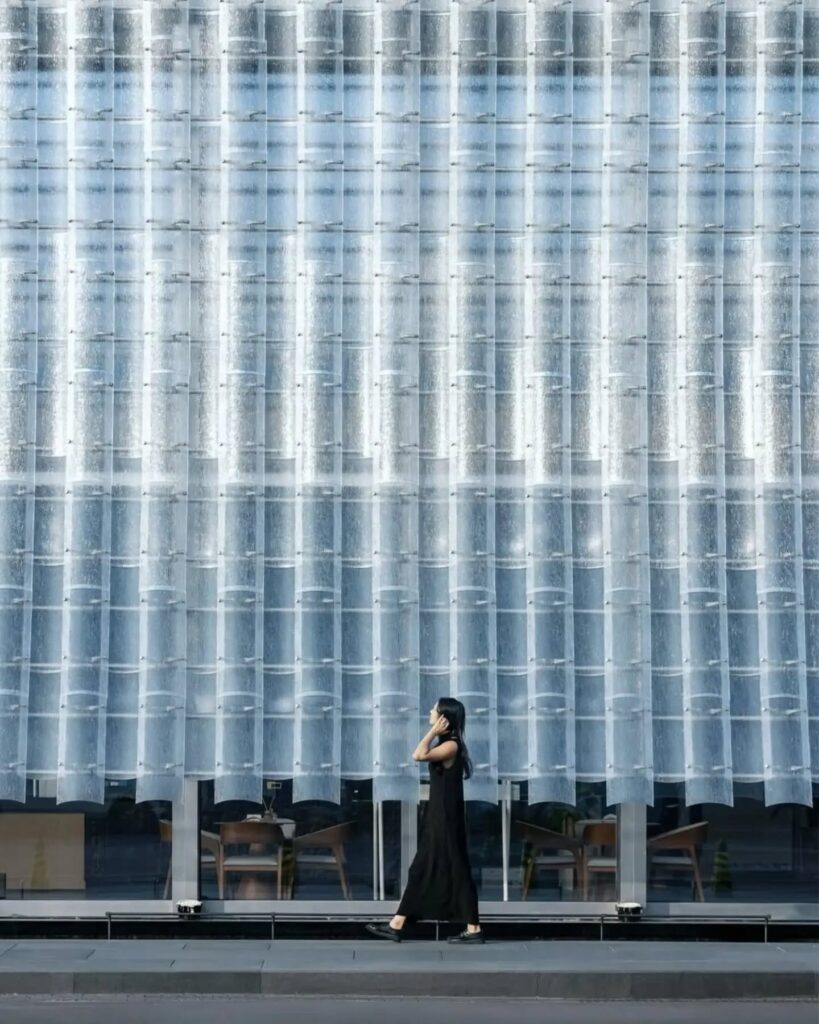
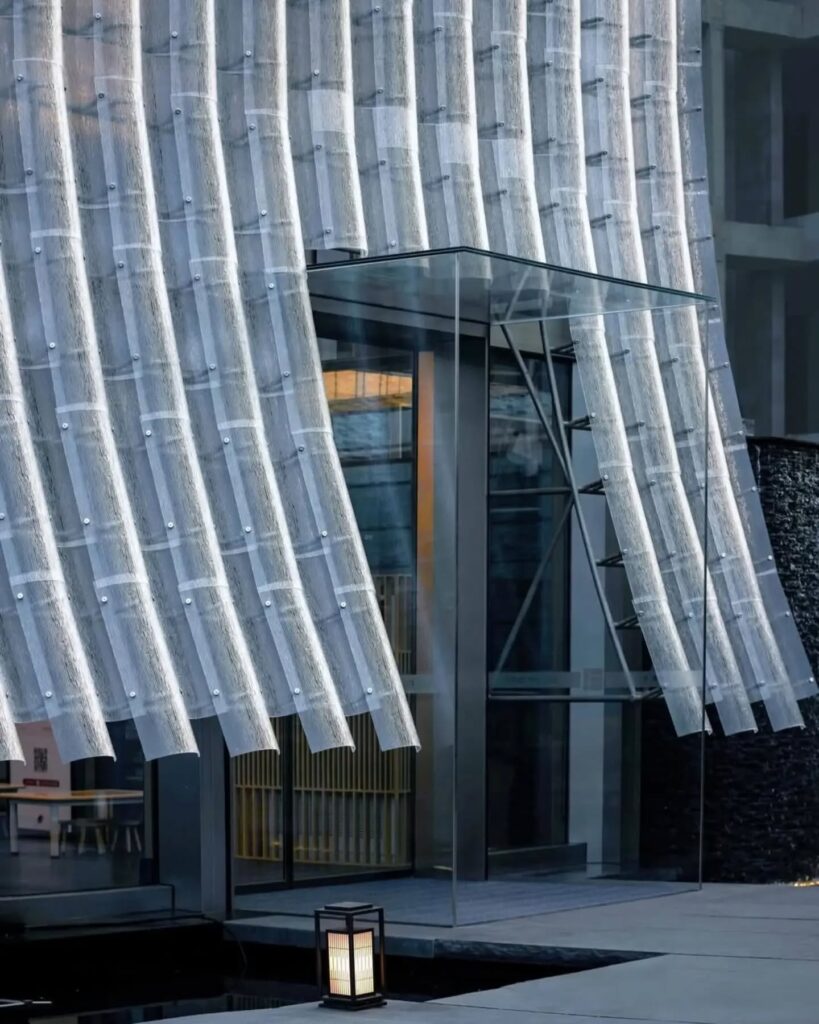
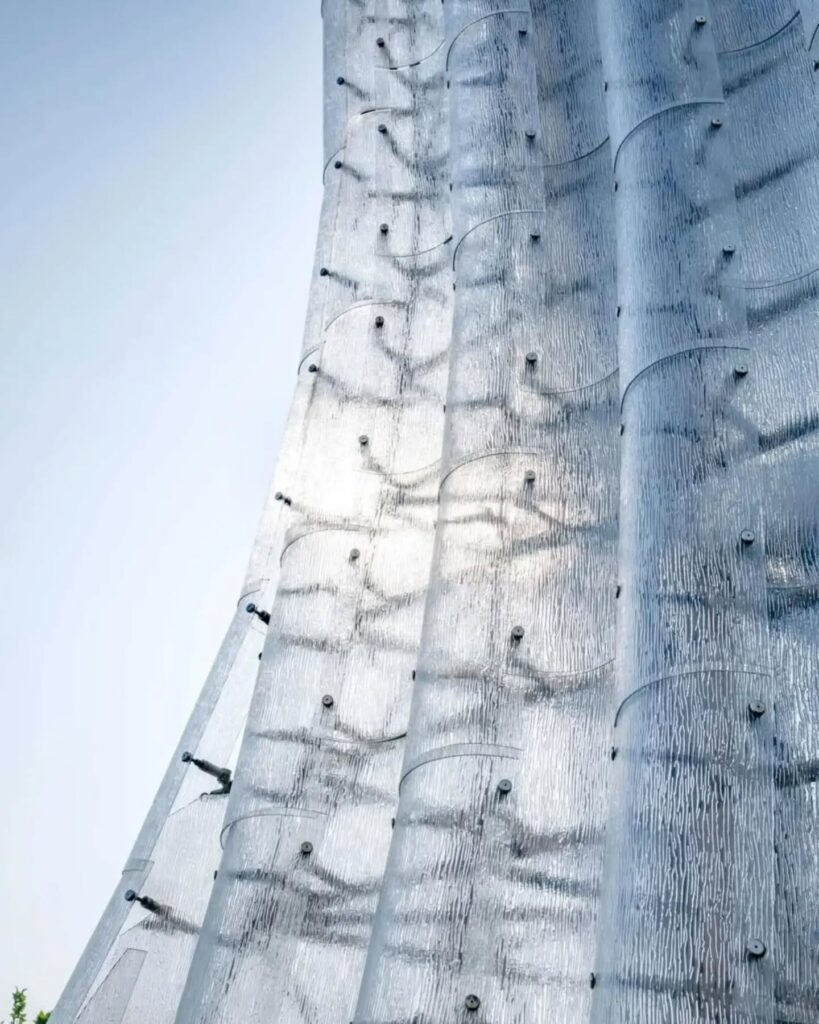
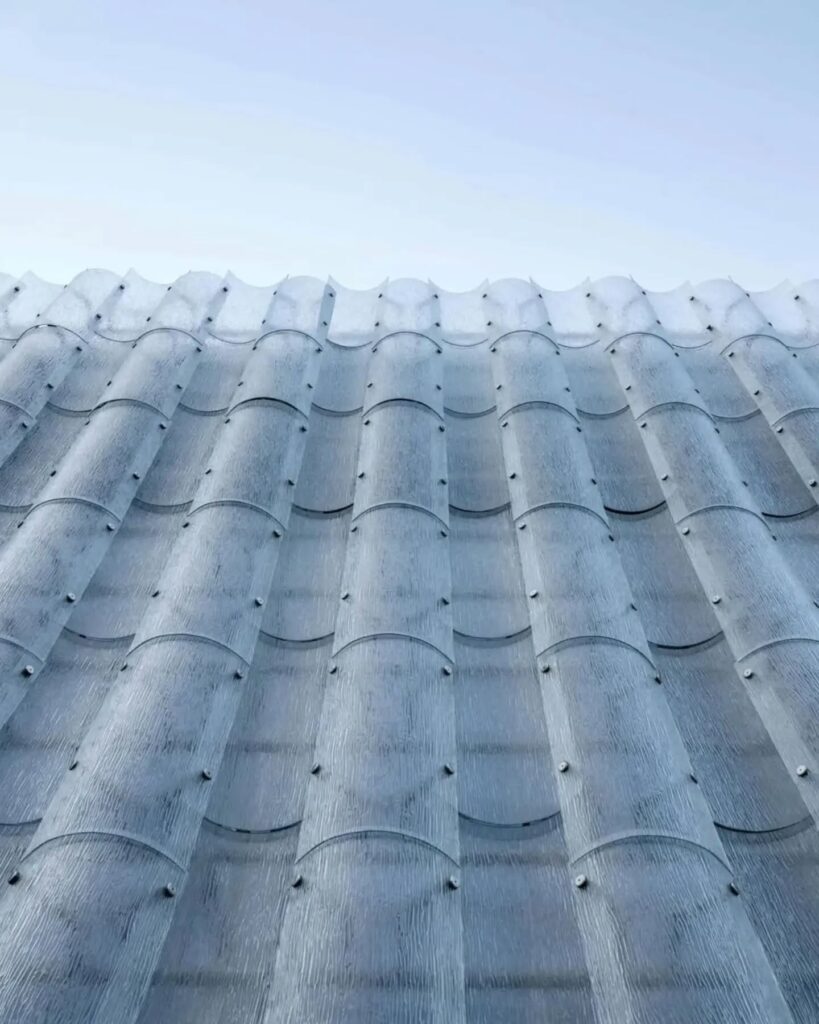
Material execution gives the project much of its character. More than 2,000 bespoke glass tiles and 187,000 hand-chiseled Binzhou bluestones were produced and installed through close collaboration between artisans and technical specialists. Each element required precision in fabrication and placement, with glass and stone contributing distinct textures to the architectural composition. The scale of this work places craftsmanship at the centre of the design process, connecting contemporary construction methods with established traditions of material handling.
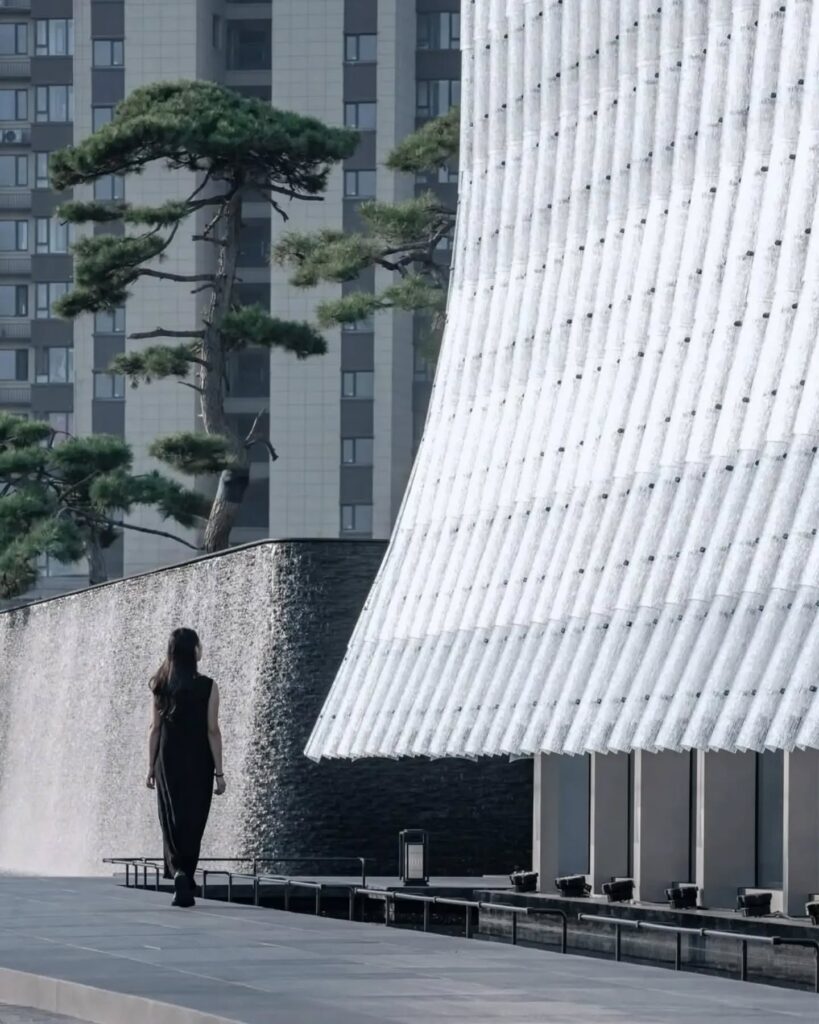
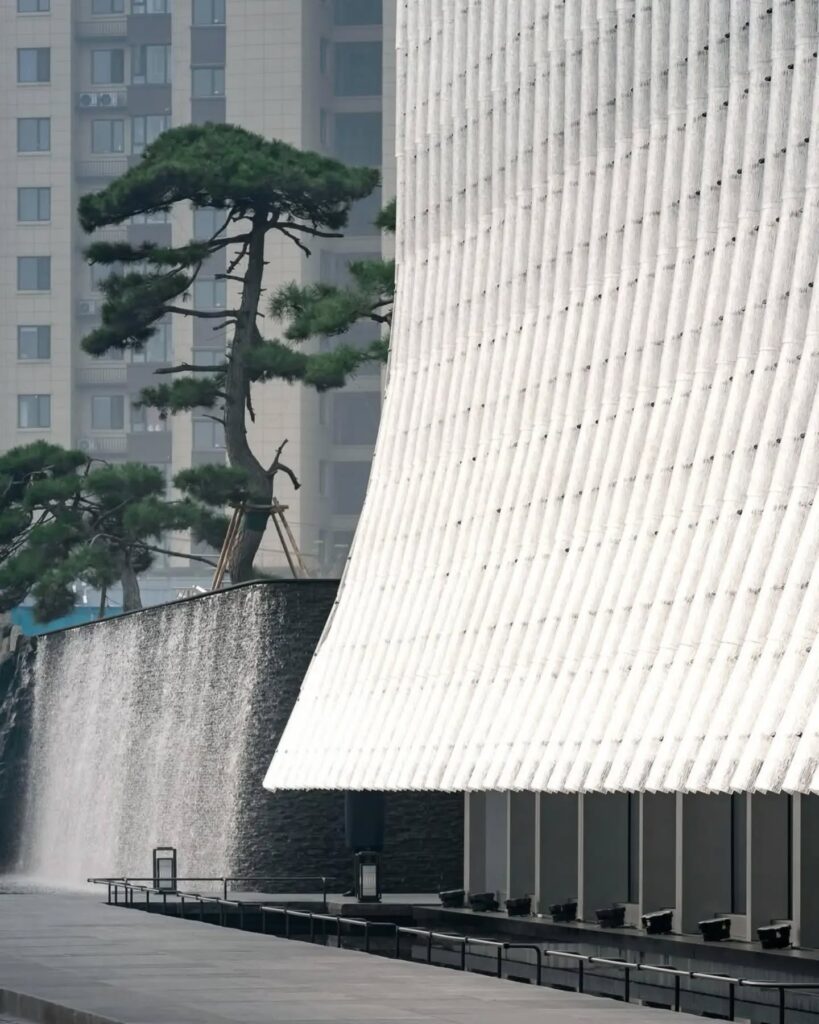
The water installation also presents a substantial engineering challenge. Its conical water-curtain wall was developed to sustain a continuous flow while accounting for water efficiency, requiring the visual ambition of the feature to work alongside the practical demands of its operation. Here, the movement of water depends on an integrated technical system whose performance is essential to the experience of the architecture.
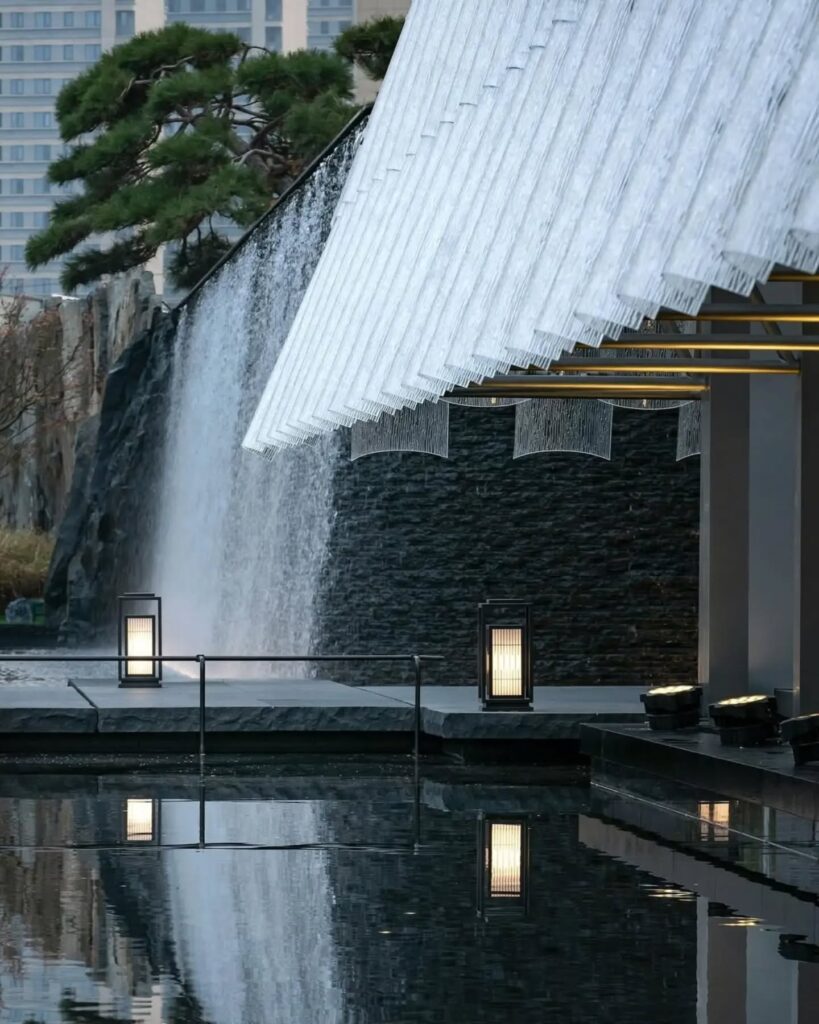
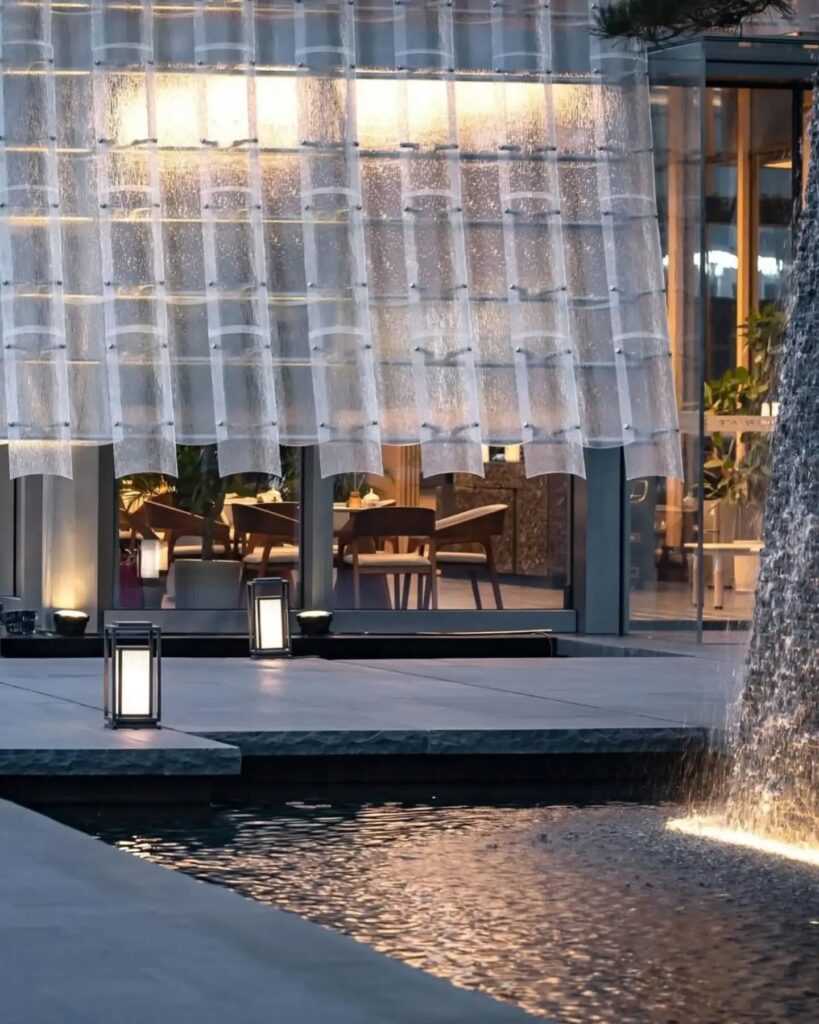
Sino Palace approaches cultural heritage as an active design resource, drawing on historical techniques and artistic references to shape a contemporary architectural language. Glass, stone, water and landscape each carry a specific role within the project, bringing together the precision of modern engineering and the accumulated knowledge of traditional craftsmanship. The result is an environment in which architecture becomes a means of engaging with cultural memory through the materials and spaces of the present.
Guangzhou S.P.I Design Co. online:
Facebook