Five years after the previous generation left production, the Mitsubishi Pajero is back, and this time it arrives as the brand’s new global flagship. The fifth-generation SUV returns to a ladder-frame chassis, turbo-diesel power, low-range gearing and a locking rear differential, placing it among pickup-based rivals such as the Ford Everest, Isuzu MU-X and Toyota Fortuner, while its price pushes it closer to the Toyota Land Cruiser Prado.

The Pajero name carries considerably more history than that positioning suggests. First launched in 1982, the model went on to sell more than 3.29 million units across more than 170 countries and regions. Its reputation was built partly through Dakar, where Mitsubishi took 12 overall victories, including seven consecutive wins. Stéphane Peterhansel became one of the defining figures of that period, while Kenjiro Shinozuka and Hiroshi Masuoka also wrote their names into the Pajero’s competition history.
Away from rally stages, the Pajero had a less glamorous but arguably more important career. Families used it for long-distance travel, owners took it camping, governments added it to fleets, and its diesel four-wheel-drive configuration made it useful wherever roads became questionable.
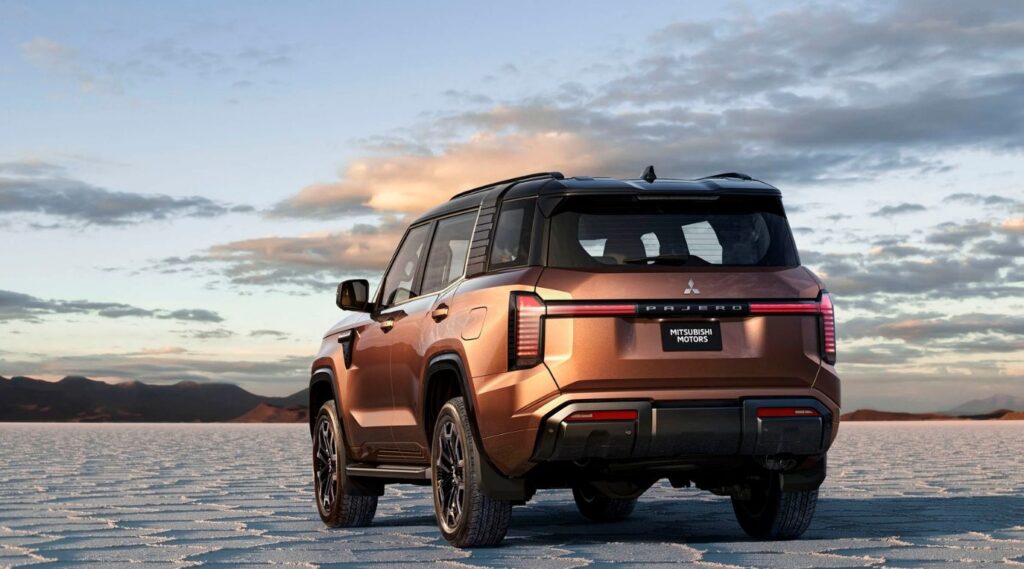
The new model borrows its platform architecture from the Triton pickup, but Mitsubishi has made substantial changes. The wheelbase is shorter, the frame has been reinforced, and the rear suspension switches from leaf springs to a five-link rigid axle with coils. A 2.4-litre turbo-diesel produces 204 PS and 480 Nm, paired with an eight-speed automatic. Super Select 4WD-II provides multiple four-wheel-drive configurations, joined by a rear differential lock, S-AWC and seven terrain modes.
Design director Norihiko Yoshimine, who has said the original Pajero influenced his decision to become a car designer, approached the new model without simply copying an older generation. The upright stance and horizontal proportions reference the first Pajero, while the C-pillar recalls its roll-bar structure. At the rear, the familiar tailgate-mounted spare wheel returns as a hexagonal graphic rather than an actual spare.
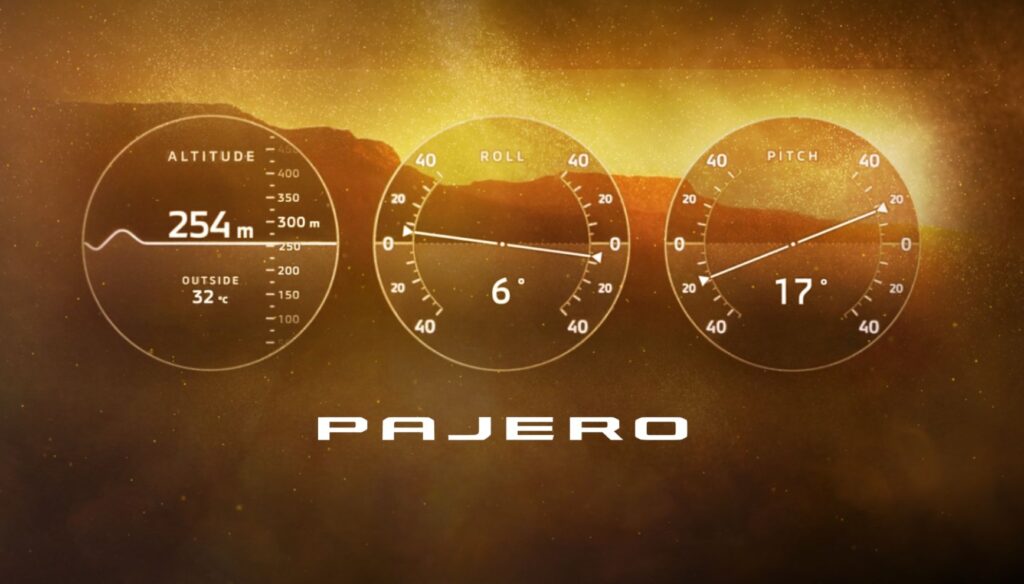
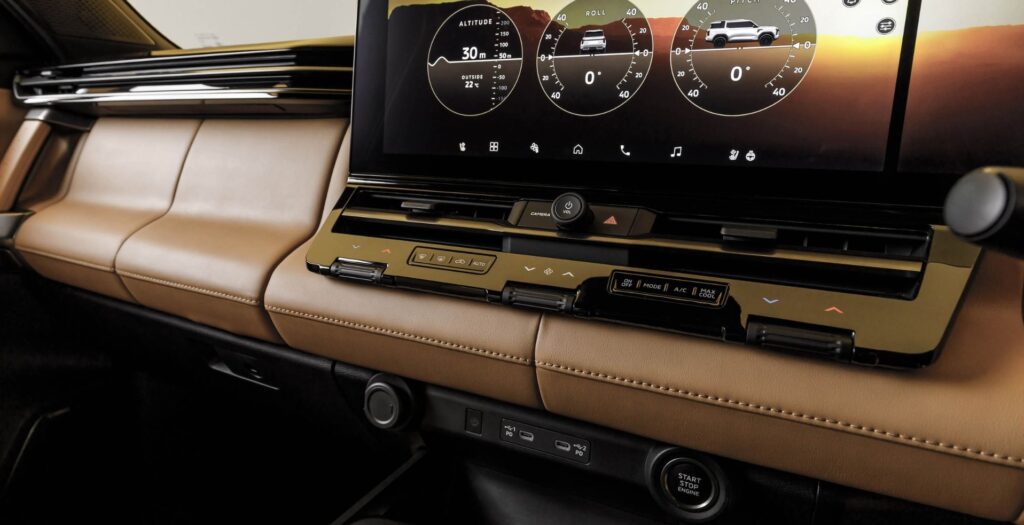
Inside, the same principle appears in the Multi Meter. Inspired by the old Pajero’s prominent triple gauges, the digital display provides altitude, compass direction, temperature, pitch, roll and four-wheel-drive data.
The result is a Pajero that remembers exactly where it came from without dressing itself in nostalgia. Its history informs the details. The hardware decides what happens next.